
Loading, please wait...
LOT 1335
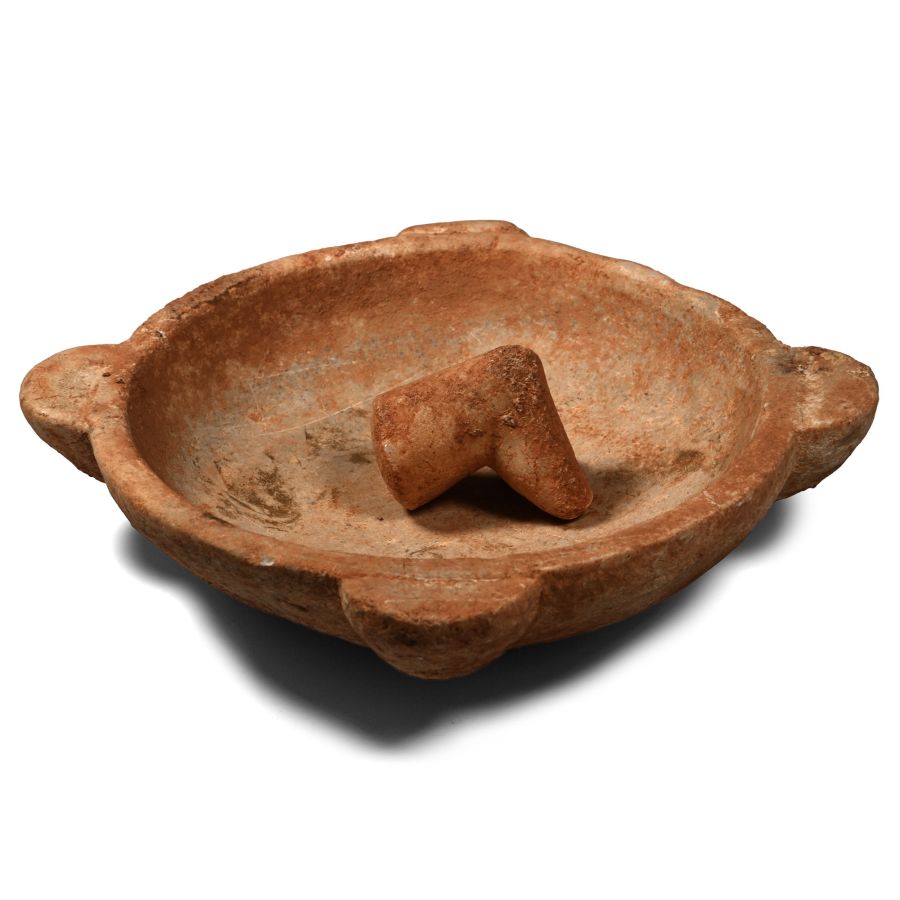
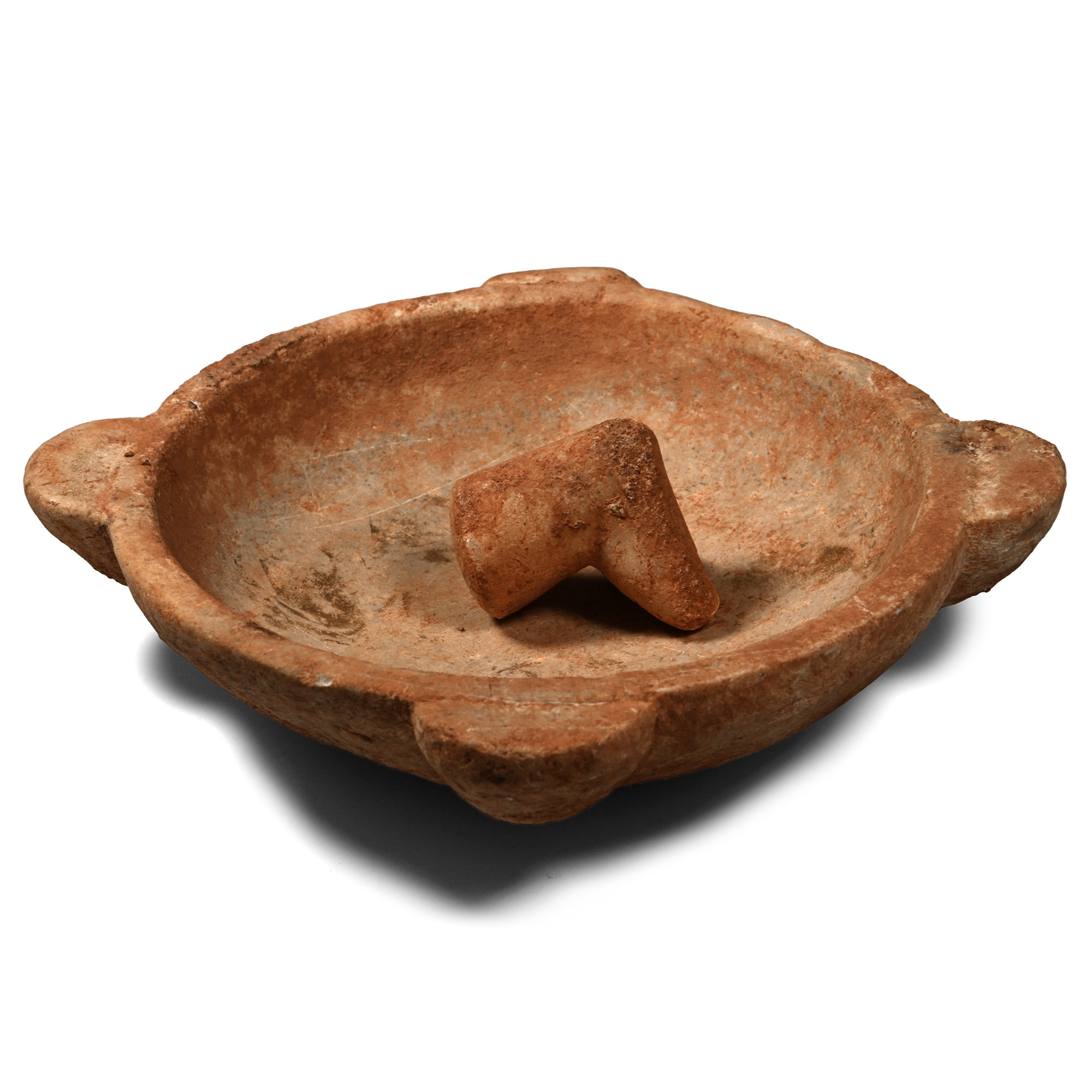
Mesopotamian Marble Mortar with Pestle
2ND MILLENNIUM B.C.
2 1/4 - 9 3/4 in. (1.96 kg total, 5.6-24.8 cm).
Broad squat carved mortarium with basal pad and four D-section ribs to the outer face; separate pestle shaped like a thumb. [2]
ProvenanceEx private collection, Mrs L.S., 1990s.
Acquired from the above, 2000.
Private European collection.
This lot has been checked against the Interpol Database of stolen works of art and is accompanied by a search certificate number no.12095-218195.
This lot has been cleared against the Art Loss Register database, and is accompanied by an illustrated lot declaration signed by the Head of the Antiquities Department, Dr Raffaele D'Amato.
TimeLine Auctions follows a vetting process to ensure the authenticity and legality of all items, reinforcing our commitment to integrity and responsible trading. Each antiquity, antique, and coin lot undergoes thorough examination by a vetting committee of at least ten external specialists, professional trade association members, scientists, and archaeologists: Our Vetting Process
AUCTIONS:
TimeLine is a leading auction house specialising in antiquities, ancient art, collectables, natural history, coins, medals, and books. Our auctions offer museums, collectors, historians, and enthusiasts the opportunity to acquire unique and historically significant pieces.
-
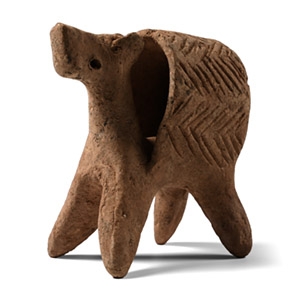
Amorite Terracotta Animal
2000-1700 B.C.Sold for (Inc. bp): £715
Modelled in the round standing quadruped with pinched detailing, pierced at jaw to accept reins, hollow-formed canopy to the rear body. 93 grams, 72 mm
Ex E. Boustros collection, 1970s. Private collection, Switzerland, thence by descent. Private collection, since the late 1990s. This lot has been cleared against the Art Loss Register database, and is accompanied by an illustrated lot declaration signed by the Head of the Antiquities Department, Dr Raffaele D'Amato. -
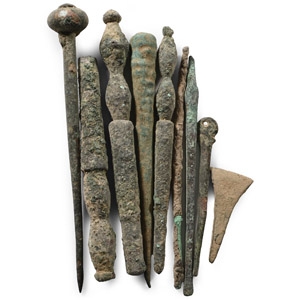
Western Asiatic Jeweller's Chisel and Pin Collection
3rd-1st millennium B.C.Sold for (Inc. bp): £65
Comprising: an awl, a chisel, various pins and pin finials. 102 grams total, 31-93 mm
Ex London art market, 1980-1990s. This lot has been cleared against the Art Loss Register database, and is accompanied by an illustrated lot declaration signed by the Head of the Antiquities Department, Dr Raffaele D'Amato.
Similar complete pins excavated by the Italian Archaeological Mission in Homs have been subdivided into two well-known categories, the melon headed pins and the simple pins, both here represented. This distinction in shape corresponds to a distinction in size: although the diameters are more or less the same. -
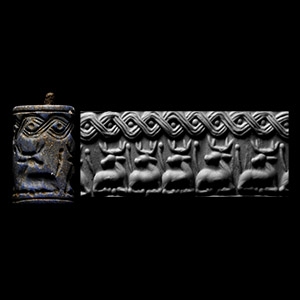
Mesopotamian Lapis Lazuli Cylinder Seal with Animal Frieze
Early 2nd millennium B.C.Sold for (Inc. bp): £1,430
Above: guilloche of two bands with 'eye' motifs in the voids; below: zebu and other animals on a baseline; supplied with a museum-quality impression. 14 grams, 31 mm
From the 'S' collection, acquired 1970-1990s. The collection was seen and studied by W.G. Lambert, late Professor of Assyriology at the University of Birmingham, 1970-1993. This lot has been cleared against the Art Loss Register database, and is accompanied by an illustrated lot declaration signed by the Head of the Antiquities Department, Dr Raffaele D'Amato.
