
Loading, please wait...
LOT 0220
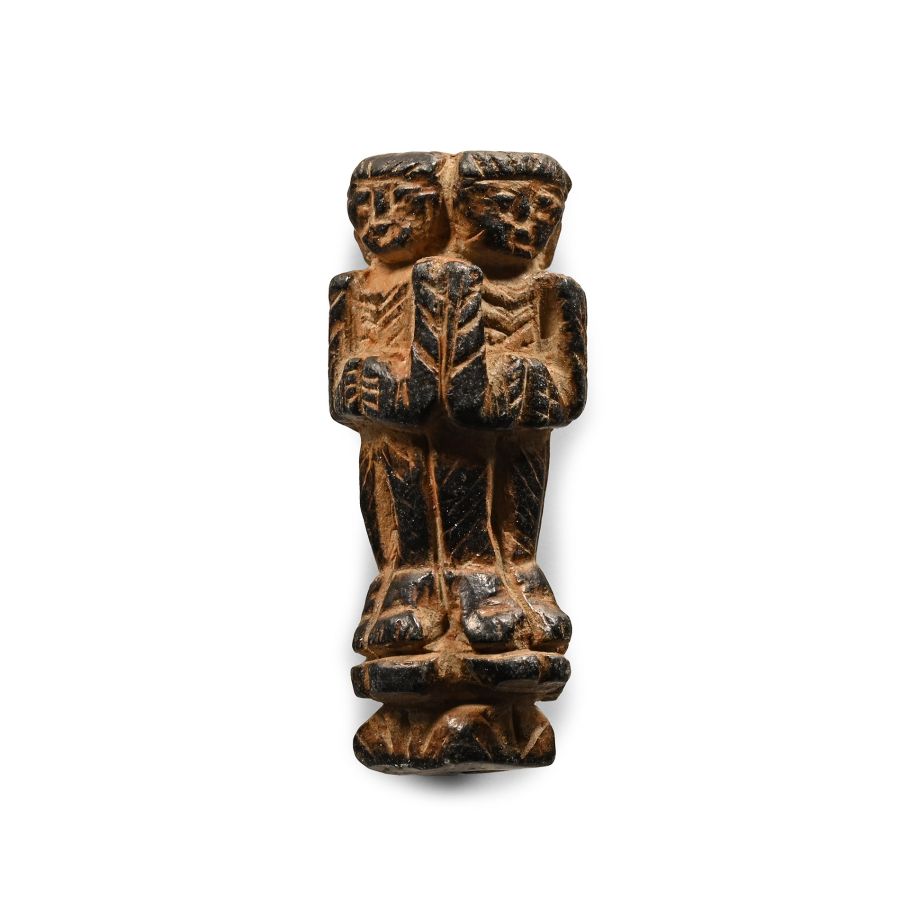
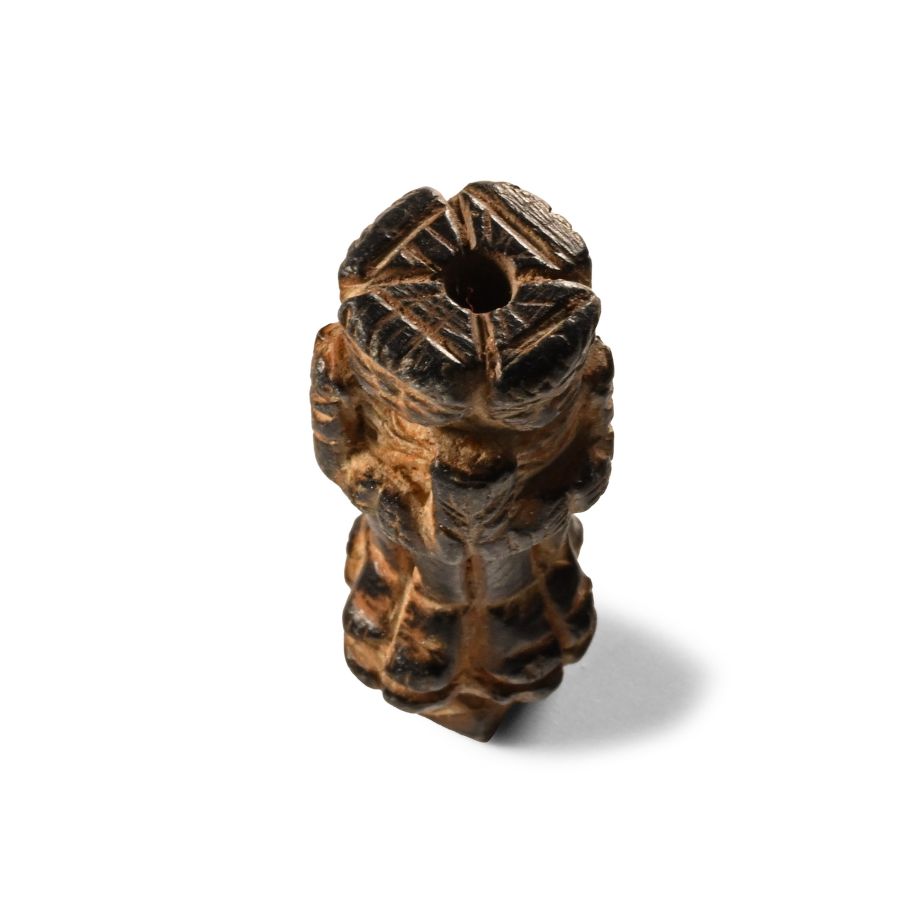
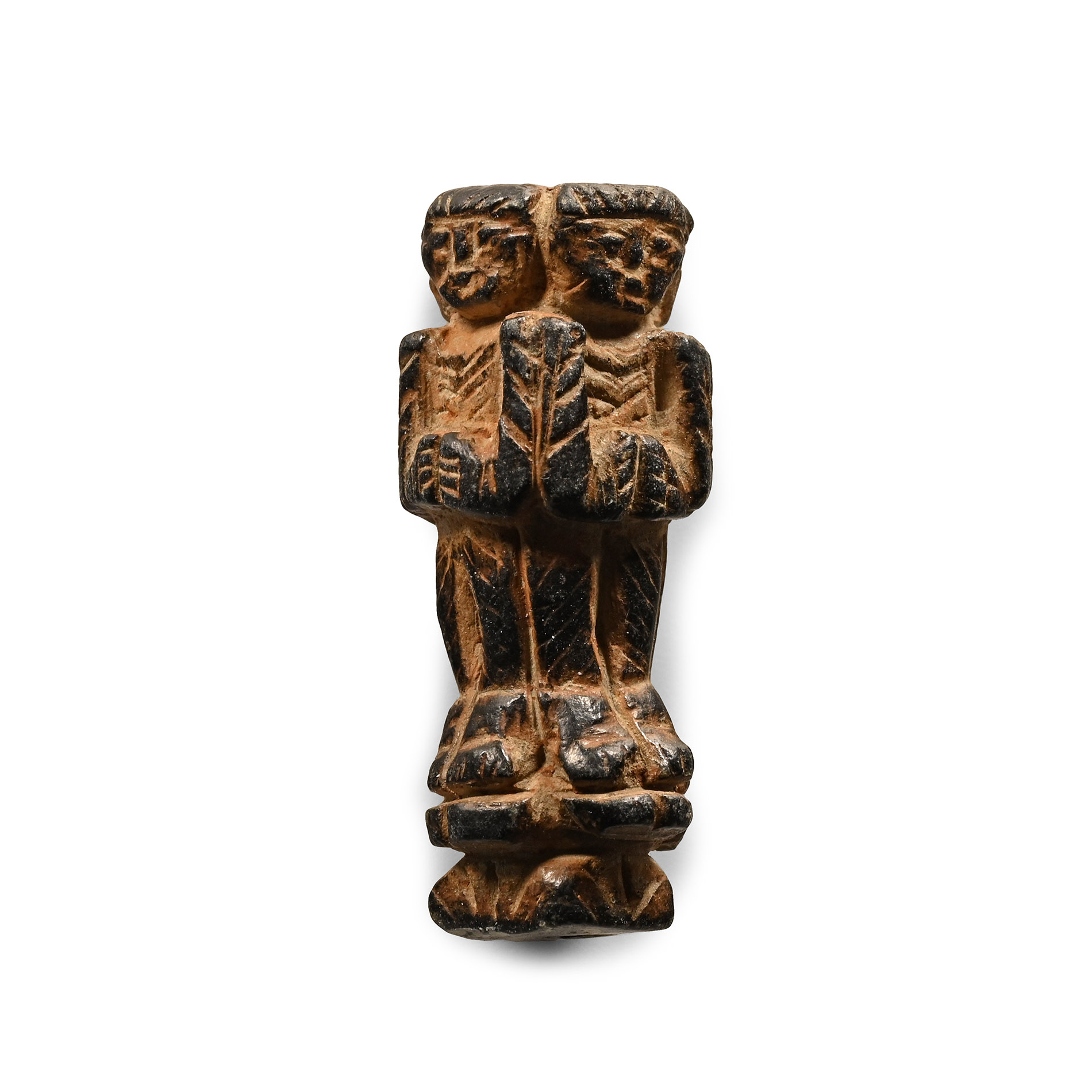
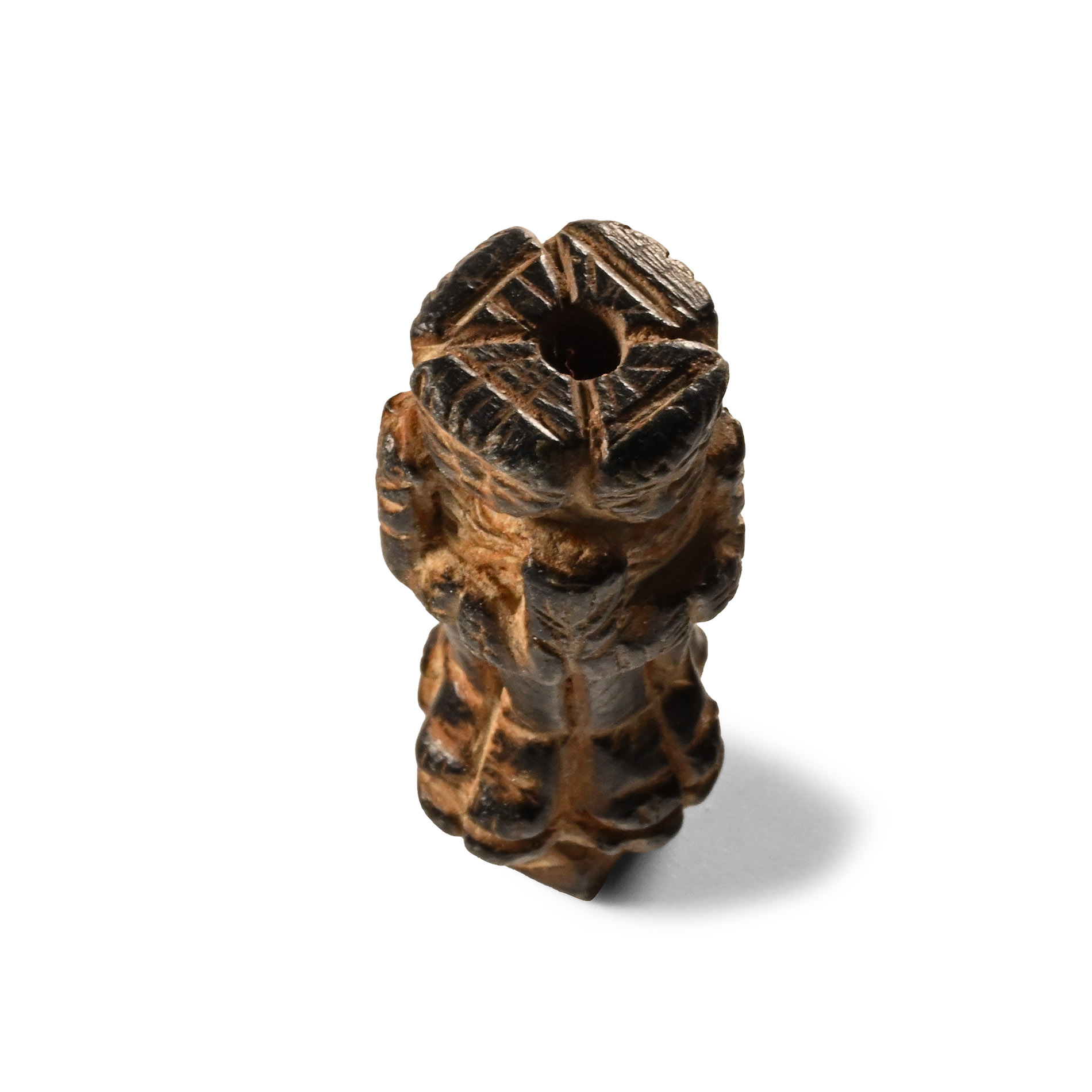
Mesopotamian Hardstone Amulet
1ST MILLENNIUM B.C.
1 3/8 in. (11.2 grams, 36 mm).
Carved with four outward-facing figures on a plinth, with their hands clasped at the chest. [No Reserve]
ProvenanceAcquired in the 1960s-1970s.
From the private collection of N.S. and A.L., Bavaria, Germany.
Acquired from Gorny and Mosch, Munich, 12 December 2015, no.855 (Part).
Property of a French collector.
TimeLine Auctions follows a vetting process to ensure the authenticity and legality of all items, reinforcing our commitment to integrity and responsible trading. Each antiquity, antique, and coin lot undergoes thorough examination by a vetting committee of at least ten external specialists, professional trade association members, scientists, and archaeologists: Our Vetting Process
AUCTIONS:
TimeLine is a leading auction house specialising in antiquities, ancient art, collectables, natural history, coins, medals, and books. Our auctions offer museums, collectors, historians, and enthusiasts the opportunity to acquire unique and historically significant pieces.
-
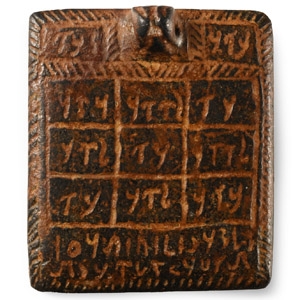
Western Asiatic Magical Aramaic Plaque Pendant
Circa 2nd-8th century A.D.Sold for (Inc. bp): £390
Square pendant with integral loop, ropework border and header, grid with numerical notation. 13.9 grams, 38 mm
From the collection of a gentleman, acquired on the London art market in the 1990s. -
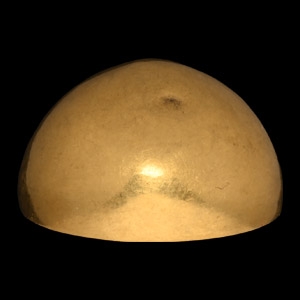
Western Asiatic Gold Bell-Shaped Pendant
Circa 1st millennium B.C.Sold for (Inc. bp): £293
Hemispherical with loop to the inner face to accept a clapper. 3.85 grams, 23 mm
From a late Japanese specialist collector, 1970-2000s. -
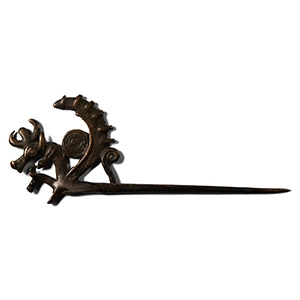
Luristan Zoomorphic Pin Finial
8th-7th century B.C.Sold for (Inc. bp): £650
With complex finial incorporating the foreparts of an ibex surmounted by a winged gryphon with cow-horns and coiled disc between the neck and arched wing. 118 grams, 21.5 cm
Acquired in 1967. Property of a London, UK, gentleman.
