
Loading, please wait...
LOT 1198
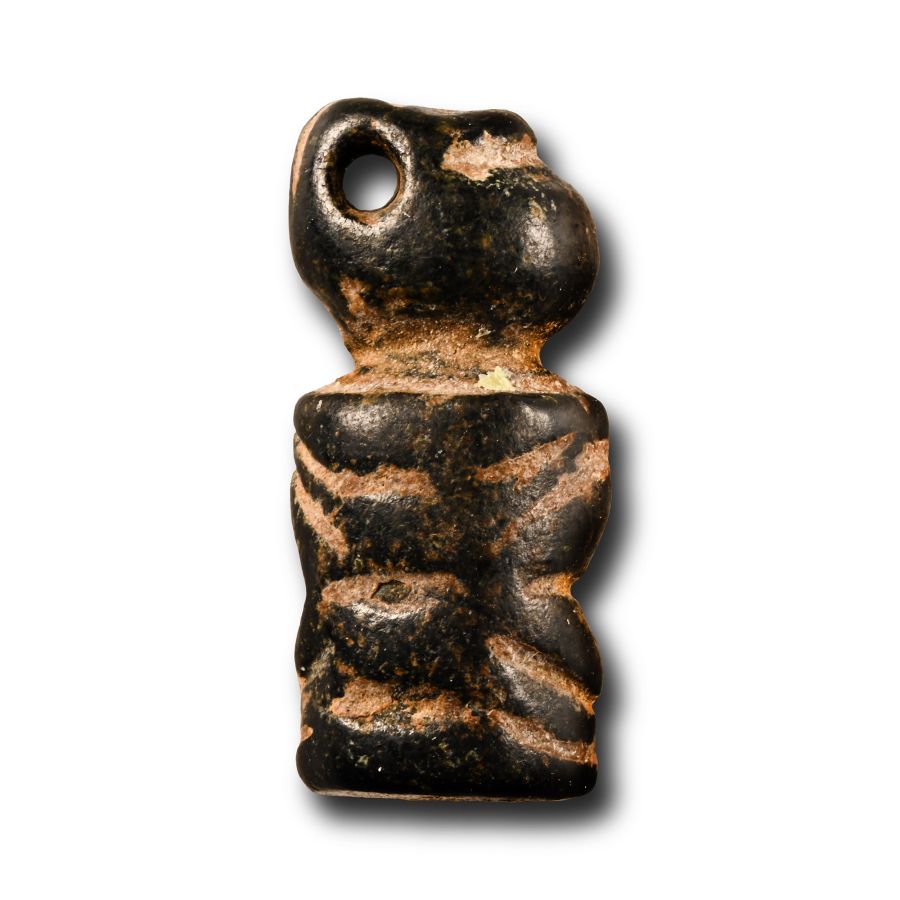
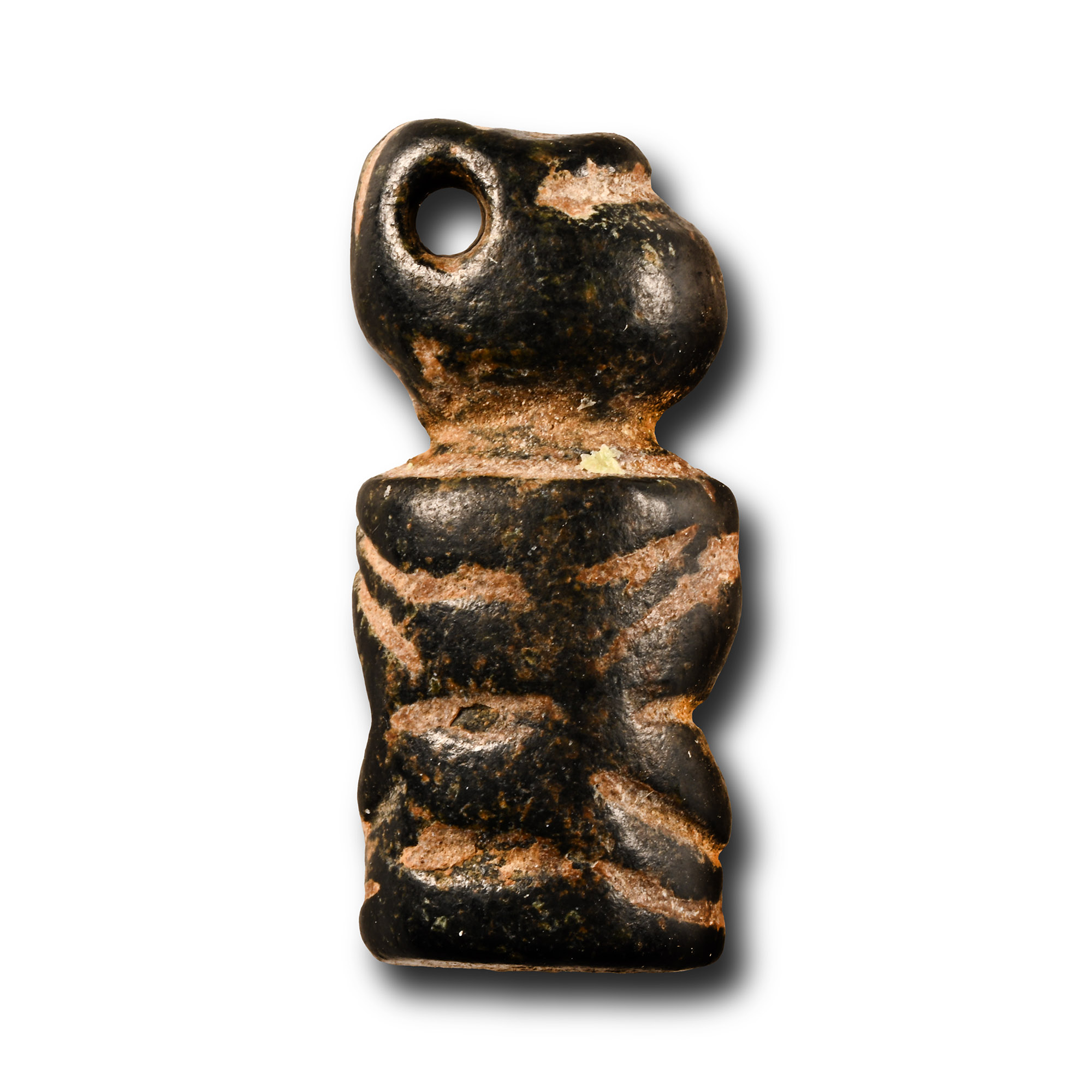
Mesopotamian Grey Stone Geometric Cylinder Pendant
3RD MILLENNIUM B.C.
7/8 in. (3.94 grams, 22 mm).
Linear design with knop finial pierced to form a suspension loop. [No Reserve]
ProvenanceAnonymous sale; Christie's, London, 25 April 2001, lot 504 (haematite) and 513 (part).
with Petit Musée, Montreal, acquired at the above sale; thence by descent.
Property of an East Sussex, UK, gentleman.
TimeLine Auctions follows a vetting process to ensure the authenticity and legality of all items, reinforcing our commitment to integrity and responsible trading. Each antiquity, antique, and coin lot undergoes thorough examination by a vetting committee of at least ten external specialists, professional trade association members, scientists, and archaeologists: Our Vetting Process
AUCTIONS:
TimeLine is a leading auction house specialising in antiquities, ancient art, collectables, natural history, coins, medals, and books. Our auctions offer museums, collectors, historians, and enthusiasts the opportunity to acquire unique and historically significant pieces.
-
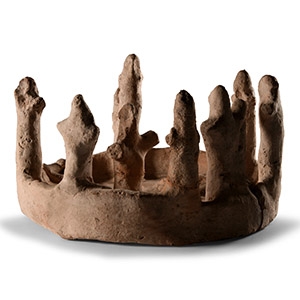
Persian Terracotta Votive Group
Circa 2nd millennium B.C.Sold for (Inc. bp): £845
Depicting seven worshippers standing around the edge of a circular platform, facing inwards towards a smaller central figure, some with outstretched arms, others holding offerings, repaired. 830 grams, 17.6 cm
French private collection, Paris, formed between the 1960s-1980s. Acquired Bonhams, London, 13 April 2011, no.61. From an important Cambridgeshire estate; thence by descent. Accompanied by copies of the relevant Bonhams catalogue pages. -
.jpg)
Western Asiatic Bronze Rhyton Bull Head
Early 1st millennium B.C.Sold for (Inc. bp): £2,080
Hollow-formed head of a bull with short curved horns, large bulbous eyes, lateral scooped ears, short muzzle with flared nostrils, dewlap beneath; possibly from a rhyton; mounted on a custom-made display stand. 1.3 kg total, 22 cm high including stand
Excellent condition, very rare.
Acquired between 1980-1983. From the collection of a London, UK, gentleman. Accompanied by an academic report by Dr Raffaele D’Amato. This lot has been checked against the Interpol Database of stolen works of art and is accompanied by search certificate number no.12019-213616.
The rhyton was dipped into a krater and held above the drinker's mouth with the spout covered by a thumb, then opened to release a stream of wine into the mouth. The bull was a symbol of man’s control over the nature. Not only were these heads used to serve wine in the banquets, but they were also destined to hold blood from sacrificial animals, that was collected and then poured on the ground as a libation. -
.jpg)
Western Asiatic Bronze Lamp Bowl with Flared Rim
13th-14th century A.D.Sold for (Inc. bp): £65
With hemispherical body and broad rim, decorative band to exterior at neck. 760 grams, 17.3 cm wide
Fine condition; evidence of alteration to base.
London art market 1979. Property of a gentleman living in central London.
