
Loading, please wait...
LOT 0227
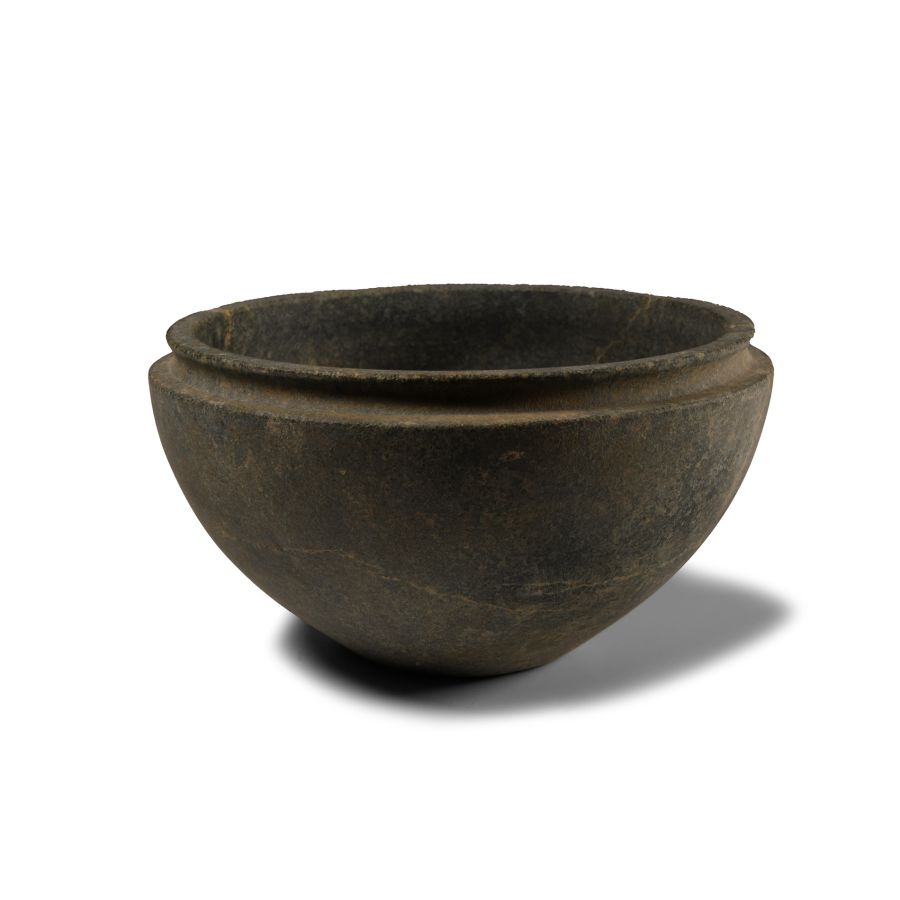
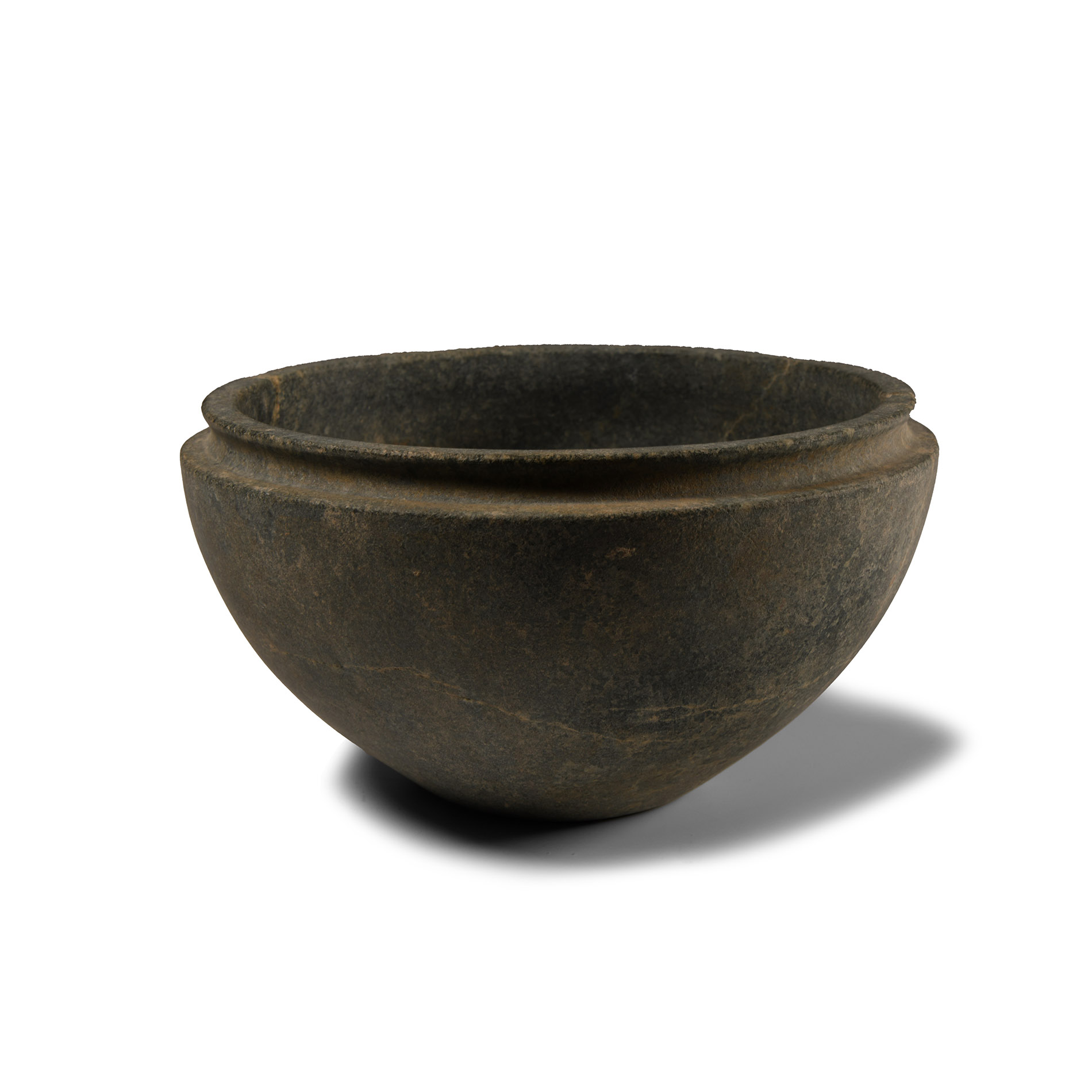
Mesopotamian Green Stone Bowl
EARLY DYNASTIC, MID 3RD MILLENNIUM B.C.
6 in. (614 grams, 15.1 cm wide).
Hemispherical in profile with flat base. carinated shoulder and flat rim to the mouth.
ProvenanceEx private collection, Mrs L.S., 1990s.
Acquired from the above, 2001.
Private European collection.
TimeLine Auctions follows a vetting process to ensure the authenticity and legality of all items, reinforcing our commitment to integrity and responsible trading. Each antiquity, antique, and coin lot undergoes thorough examination by a vetting committee of at least ten external specialists, professional trade association members, scientists, and archaeologists: Our Vetting Process
AUCTIONS:
TimeLine is a leading auction house specialising in antiquities, ancient art, collectables, natural history, coins, medals, and books. Our auctions offer museums, collectors, historians, and enthusiasts the opportunity to acquire unique and historically significant pieces.
-
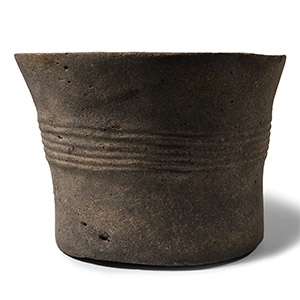
Western Asiatic Basalt Mortar with Linear Decoration
1st millennium B.C.Sold for (Inc. bp): £78
Tubular with slightly flared profile, rounded rim, five circumferential ribs above the equator. 3.6 kg, 20 cm wide
From a collection acquired on the UK art market from various auction houses and collections mostly before 2000. From an important Cambridgeshire estate; thence by descent. -
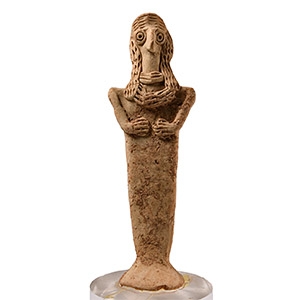
Syro-Hittite Terracotta Fertility Figure
Circa 2nd-1st millennium B.C.Sold for (Inc. bp): £572
Flat-section figurine with flared base; applied annular eyes, pinched nose, applied textured hair, collar and necklace; arms held bent across the chest; mounted on a custom-made stand. 361 grams total, 22 cm high including stand
Mounted on a perspex column in the 1970s. From the property of late Mr SM, London, UK, 1969-1999. -
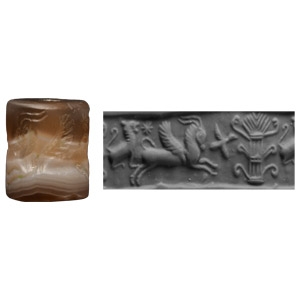
Western Asiatic Agate Cylinder Seal with Zoomorphic Motifs
Circa 2nd-1st millennium B.C.Sold for (Inc. bp): £338
The frieze depicting a leaping winged ibex followed by a small bird in flight, behind the ibex a seated growling feline, a large fount-topped column before the animals with curving lines on each side, likely depicting the Neo-Assyrian 'sacred tree'; accompanied by a museum-quality impression. 3.78 grams, 14 mm
From the property of late Mr SM, London, UK, 1969-1999. Accompanied by an old collection ticket.
