
Loading, please wait...
LOT 1266
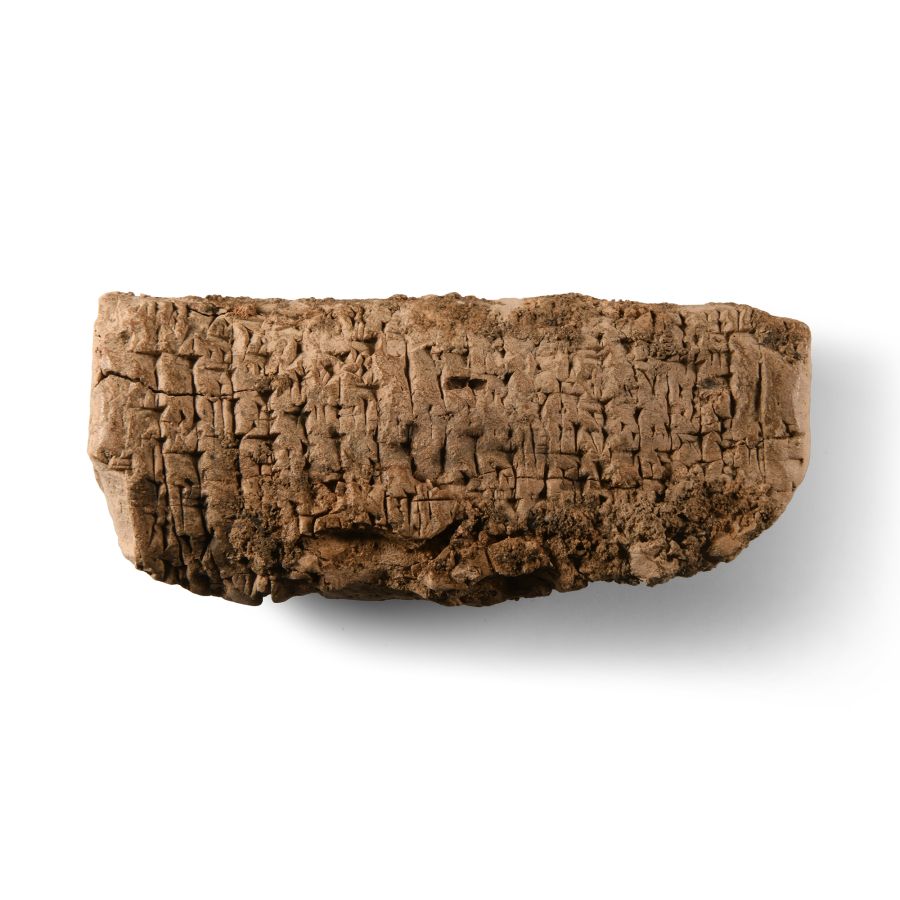
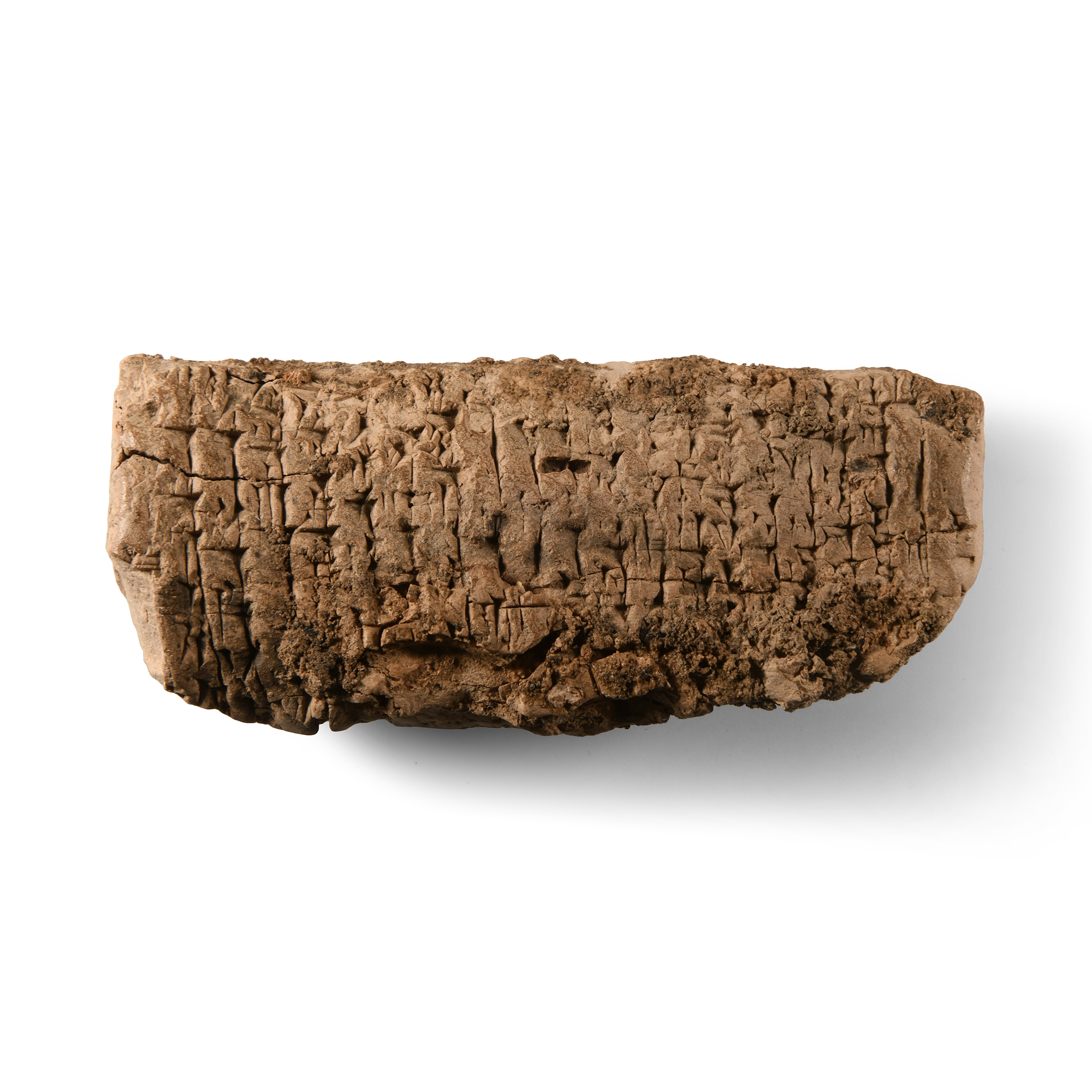
Mesopotamian Cuneiform Tablet
2ND MILLENNIUM B.C.
4 in. (124 grams, 10 cm).
Pillow-shaped terracotta bar with impressed cuneiform text to the outer face; repaired. [No Reserve]
ProvenanceFrom a collection acquired from various auction houses in the UK.
From the estate of Mr R.W., a private Wiltshire, UK, collector; thence by descent.
TimeLine Auctions follows a vetting process to ensure the authenticity and legality of all items, reinforcing our commitment to integrity and responsible trading. Each antiquity, antique, and coin lot undergoes thorough examination by a vetting committee of at least ten external specialists, professional trade association members, scientists, and archaeologists: Our Vetting Process
AUCTIONS:
TimeLine is a leading auction house specialising in antiquities, ancient art, collectables, natural history, coins, medals, and books. Our auctions offer museums, collectors, historians, and enthusiasts the opportunity to acquire unique and historically significant pieces.
-
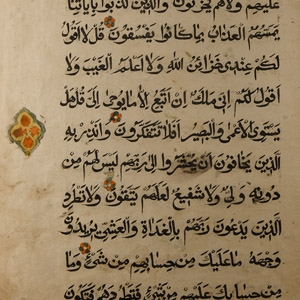
Paper Qu'ran Page
Circa 18th-19th century A.D.Sold for (Inc. bp): £33
With thirteen lines of Naskh script text to each side, red interlinear diacritics, rosettes, and handwritten note at bottom. 11 grams, 34.4 x 21.5 cm
From the private collection of M. Cummings, Lincolnshire, UK, 1990s. -
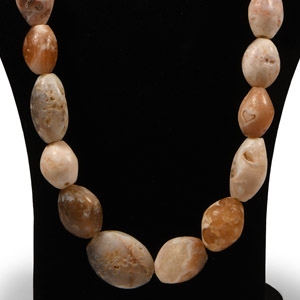
Western Asiatic Large Agate Bead Necklace
2nd-1st millennium B.C.Estimate: £600 - 800 (+bp*)
Opening Bid: £300
Composed of graduating opaque rounded biconical beads with a large flattened bead to the centre. 345 grams, 84 cm long
Ex French gallery, 1970-1990. Paris collection, France. -
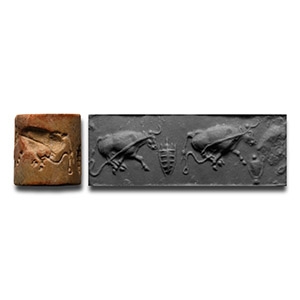
Western Asiatic Stone Cylinder Seal with Advancing Bulls
Early 2nd millennium B.C.Sold for (Inc. bp): £2,210
With frieze depicting two bovines advancing, each with a bridle and trailing a rope, amphorae in the field; old collector's label '10100' to base; possibly unfinished as centre not pierced; supplied with a museum-quality impression. 36.6 grams, 27 mm
Private collection, London, UK; acquired prior to 2010.
