
Loading, please wait...
LOT 1221
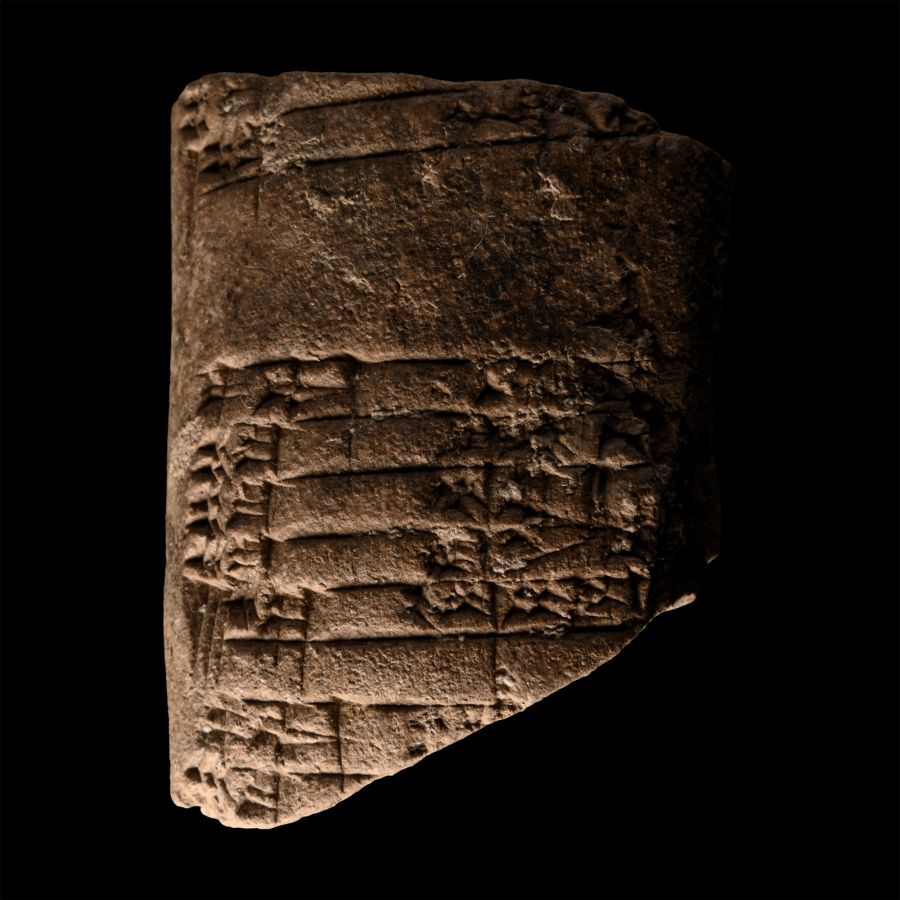
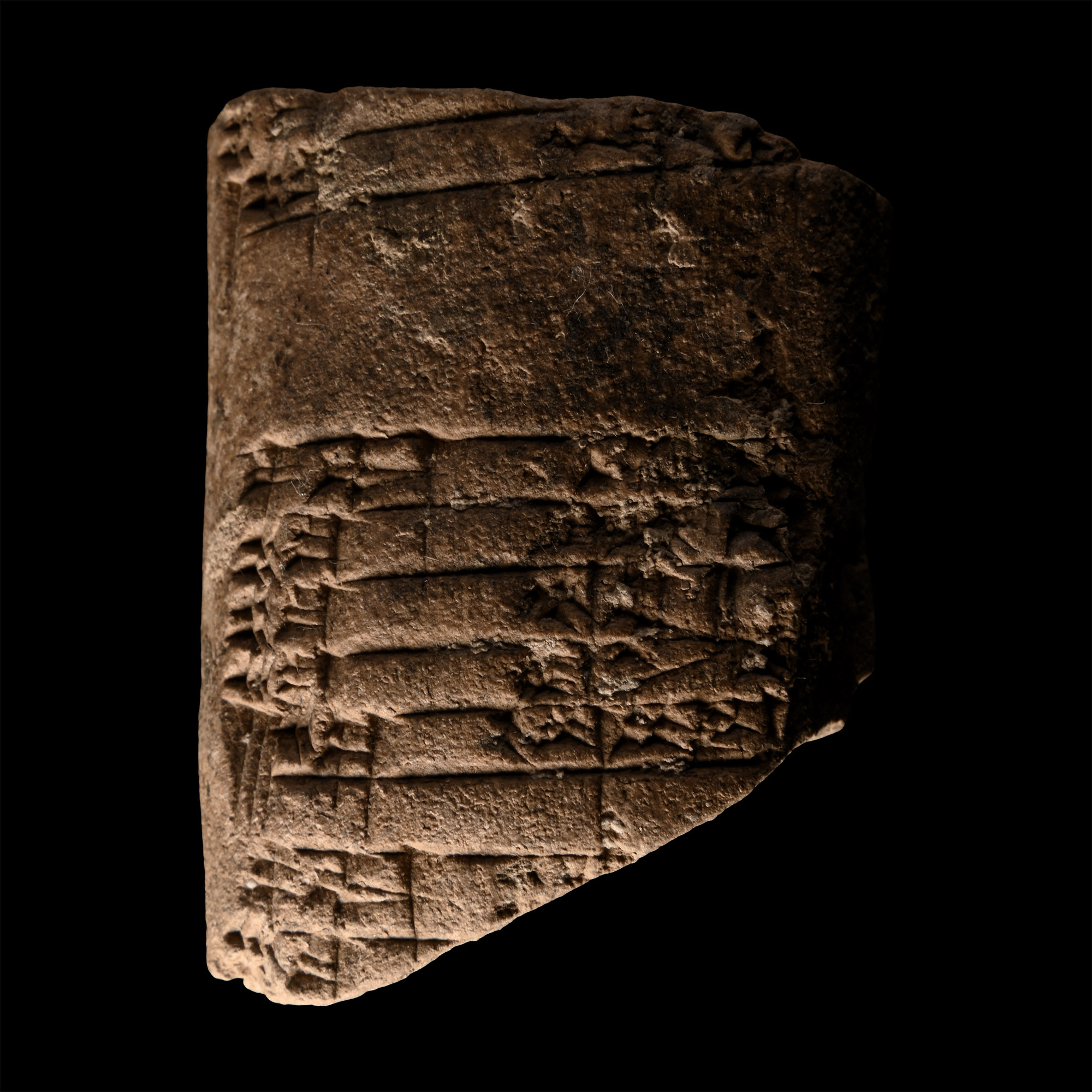
Mesopotamian Cuneiform Tablet Fragment
2ND MILLENNIUM B.C.
2 3/8 in. (95 grams, 61 mm).
With rounded edges, obverse with an incised grid and dense cuneiform text across about half the available surface; reverse with remains of two columns of text; both ends absent. [No Reserve]
ProvenanceSpecialised collection of cuneiform texts, the property of a London gentleman and housed in London before 1992.
Thence by descent to family members.
Examined by Professor Wilfrid George Lambert FBA (1926-2011), historian, archaeologist, and specialist in Assyriology and Near Eastern archaeology, in the late 1980s and early 1990s.
This small collection is exceptional for the variety of types, including some very rare and well preserved examples.
TimeLine Auctions follows a vetting process to ensure the authenticity and legality of all items, reinforcing our commitment to integrity and responsible trading. Each antiquity, antique, and coin lot undergoes thorough examination by a vetting committee of at least ten external specialists, professional trade association members, scientists, and archaeologists: Our Vetting Process
AUCTIONS:
TimeLine is a leading auction house specialising in antiquities, ancient art, collectables, natural history, coins, medals, and books. Our auctions offer museums, collectors, historians, and enthusiasts the opportunity to acquire unique and historically significant pieces.
-
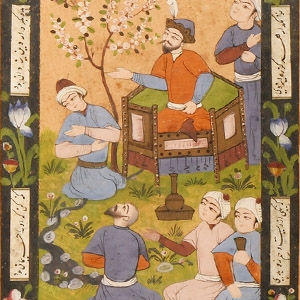
Persian Framed Watercolour Painting Group
Late 19th-early 20th century A.D.Estimate: £100 - 140 (+bp*)
Opening Bid: £50
Framed and glazed and displaying polychrome figural scenes bordered by flowering plants and panels of script: one depicting a tea(?) ceremony set in a landscape featuring blossoming trees and birds; a prince or other figure seated on a bolster, in a landscape featuring a brook and blossoming trees, surrounded by attendants. 932 grams total, 31 x 21.5 cm each
Acquired by the vendor's father on the UK art market, before 1990. -
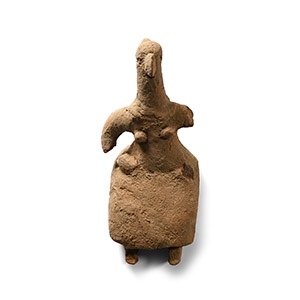
Chalcolithic Seated Terracotta Figure
3rd millennium B.C.Sold for (Inc. bp): £293
Modelled in the round seated figure with looped arms and applied collar, pinched nose. 128 grams, 13 cm high
Ex important collection of a late gentleman, 1980s. This lot has been cleared against the Art Loss Register database, and is accompanied by an illustrated lot declaration signed by the Head of the Antiquities Department, Dr Raffaele D'Amato. -
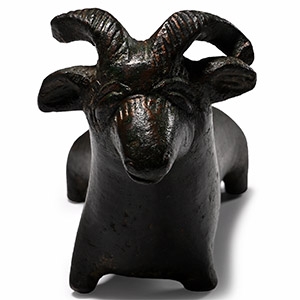
Western Asiatic Bronze Ram-Shaped Kohl Vessel
Circa 1500 B.C.Estimate: £800 - 1,000 (‡+bp*)
Opening Bid: £444
Modelled as a stylised ram with stocky body and short legs, exaggerated head with curving horns and large ears, tubular mouth with remains of the applicator closing the opening. 425 grams, 11.4 cm
Private collection Dr Rudolf and Leonora Blum, Zumikon, Switzerland. with Galerie Rhéa, Zurich, Switzerland.
