
Loading, please wait...
LOT 1135
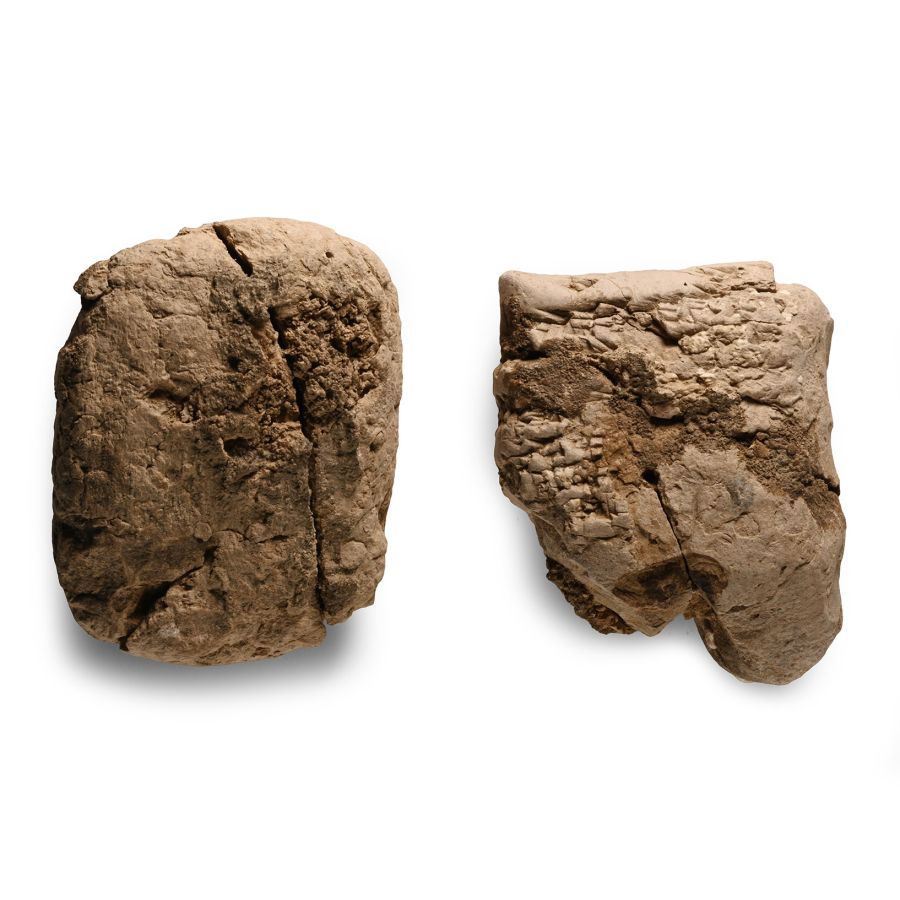
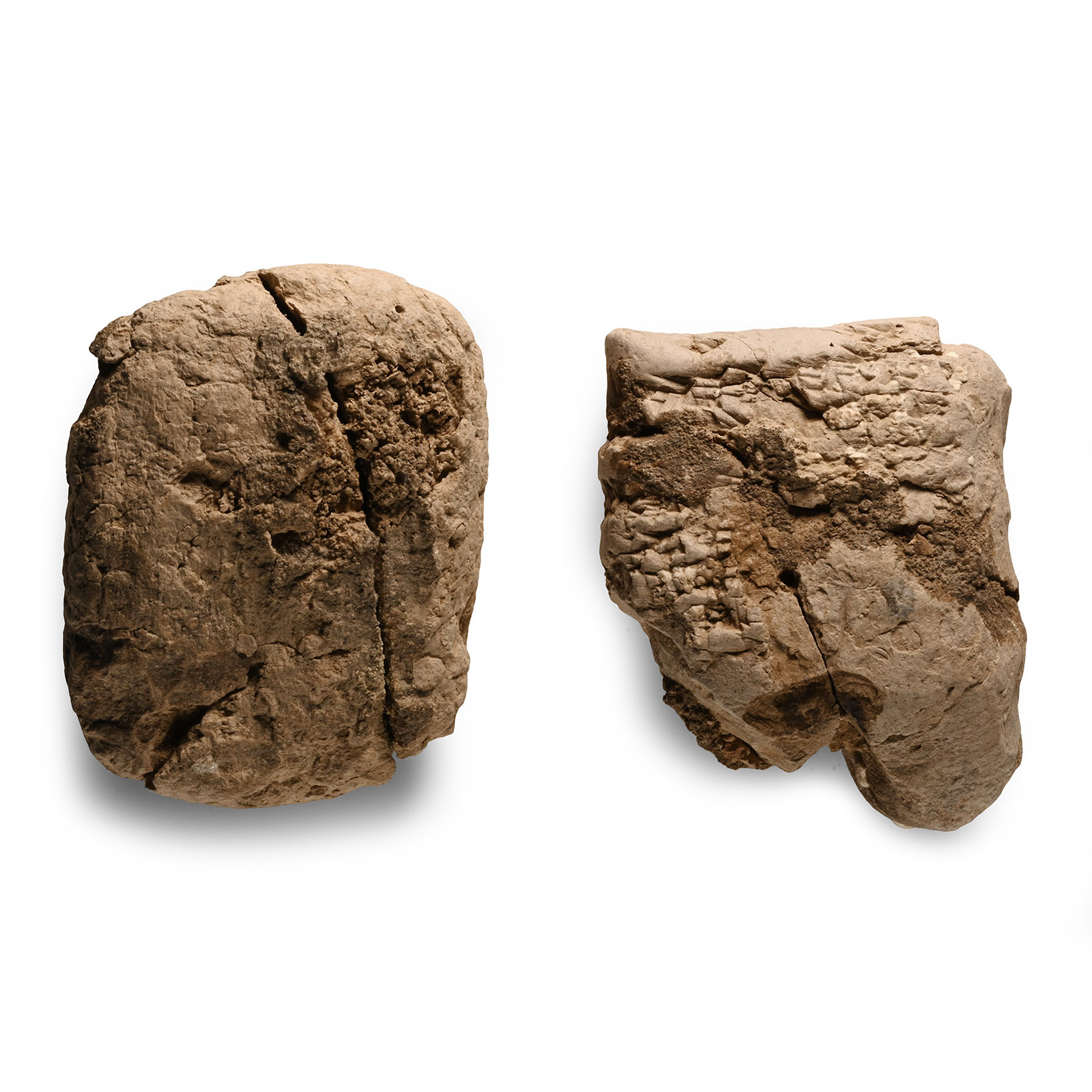
Mesopotamian Cuneiform Tablet Fragment Group
2ND MILLENNIUM B.C.
2 1/8 in. (123 grams total, 55-58 mm).
Group of two pillow-shaped clay tablets each with cuneiform text to both broad faces; repaired. [2, No Reserve]
ProvenanceSpecialised collection of cuneiform texts, the property of a London gentleman and housed in London before 1992.
Thence by descent to family members.
Examined by Professor Wilfrid George Lambert FBA (1926-2011), historian, archaeologist, and specialist in Assyriology and Near Eastern archaeology, in the late 1980s and early 1990s.
This small collection is exceptional for the variety of types, including some very rare and well preserved examples.
TimeLine Auctions follows a vetting process to ensure the authenticity and legality of all items, reinforcing our commitment to integrity and responsible trading. Each antiquity, antique, and coin lot undergoes thorough examination by a vetting committee of at least ten external specialists, professional trade association members, scientists, and archaeologists: Our Vetting Process
AUCTIONS:
TimeLine is a leading auction house specialising in antiquities, ancient art, collectables, natural history, coins, medals, and books. Our auctions offer museums, collectors, historians, and enthusiasts the opportunity to acquire unique and historically significant pieces.
-
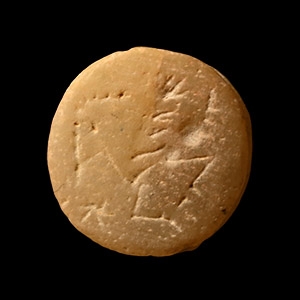
Urartu Alabaster Stamp Seal
8th-7th century B.C.Estimate: £100 - 140 (+bp*)
Opening Bid: £50
Bifacial round seal with mythical creatures, likely winged ibexes; pierced hole for suspension. 3.36 grams, 16 mm
Ex London, UK, collection, before 1988.
Animal-headed creatures are often winged bird-headed figures with human body in the Urartu and Northern-Syrian seals of ‘dnplţ ‘bd ‘mndb type, but often winged, apparently ibex-headed figures appear on the seals of the type bqšt bt ‘bdyrh. The ibex-headed figures might belong to same group of semi-divine beings visible on the Assyrian art. -
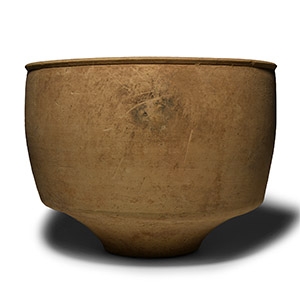
Large Western Asiatic Buff Ware Footed Storage Jar
1st millennium B.C.Sold for (Inc. bp): £130
Comprising a drum-shaped body of irregular plan, turned rim with flange, carination with scooped foot. 3.05 kg, 29.5 cm wide
From a collection acquired on the UK art market from various auction houses and collections mostly before 2000. From an important Cambridgeshire estate; thence by descent. -
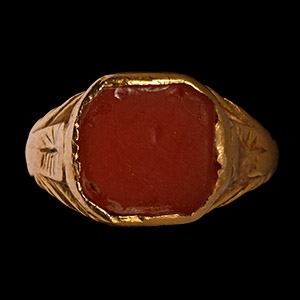
Seljuk Gold Ring with Square Carnelian Bezel
12th-13th century A.D.Estimate: £1,000 - 1,400 (‡+bp*)
Opening Bid: £400
With frond detailing to the shoulders, square bezel with hatched ornament, inset carnelian gemstone. 9.34 grams, 23.69 mm overall, 16.86 mm internal diameter (approximate size British J 1/2, USA 5, Europe 9.32, Japan 9)
Ex private collection, acquired in the 1980s. with Christie's, New York, 'Ancient Jewellery', 11 December 2003, no.455. Private European collection. Accompanied by a copy of the relevant Christie's pages.
