
Loading, please wait...
LOT 0998
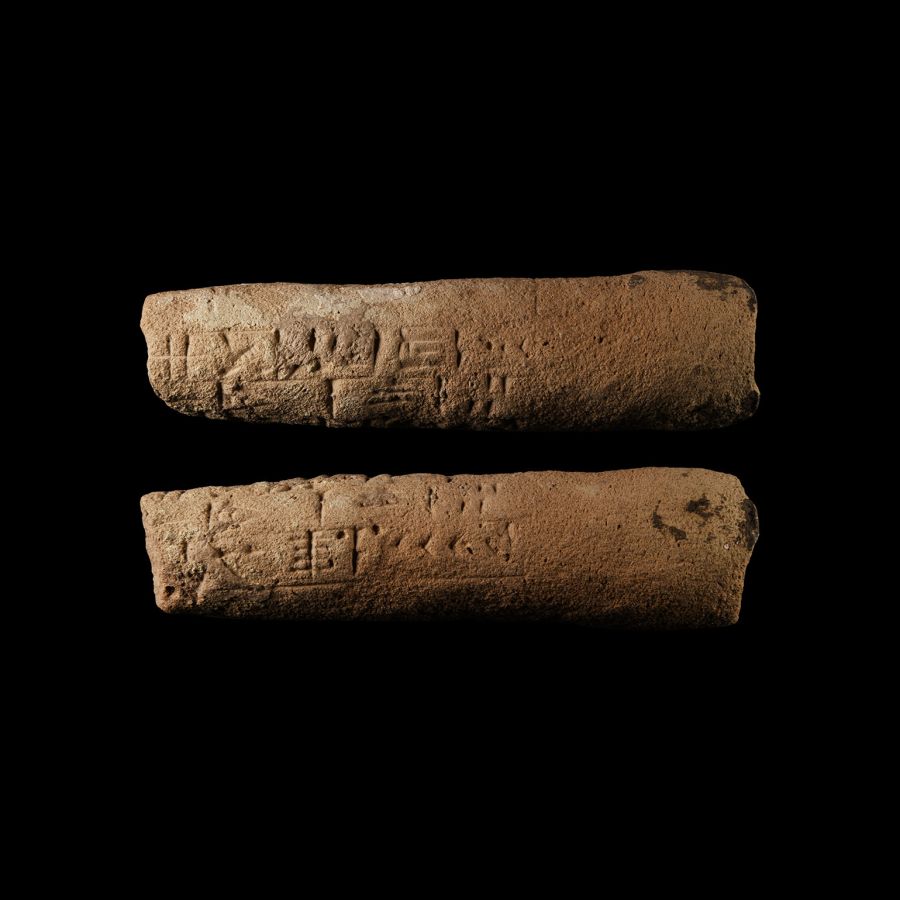
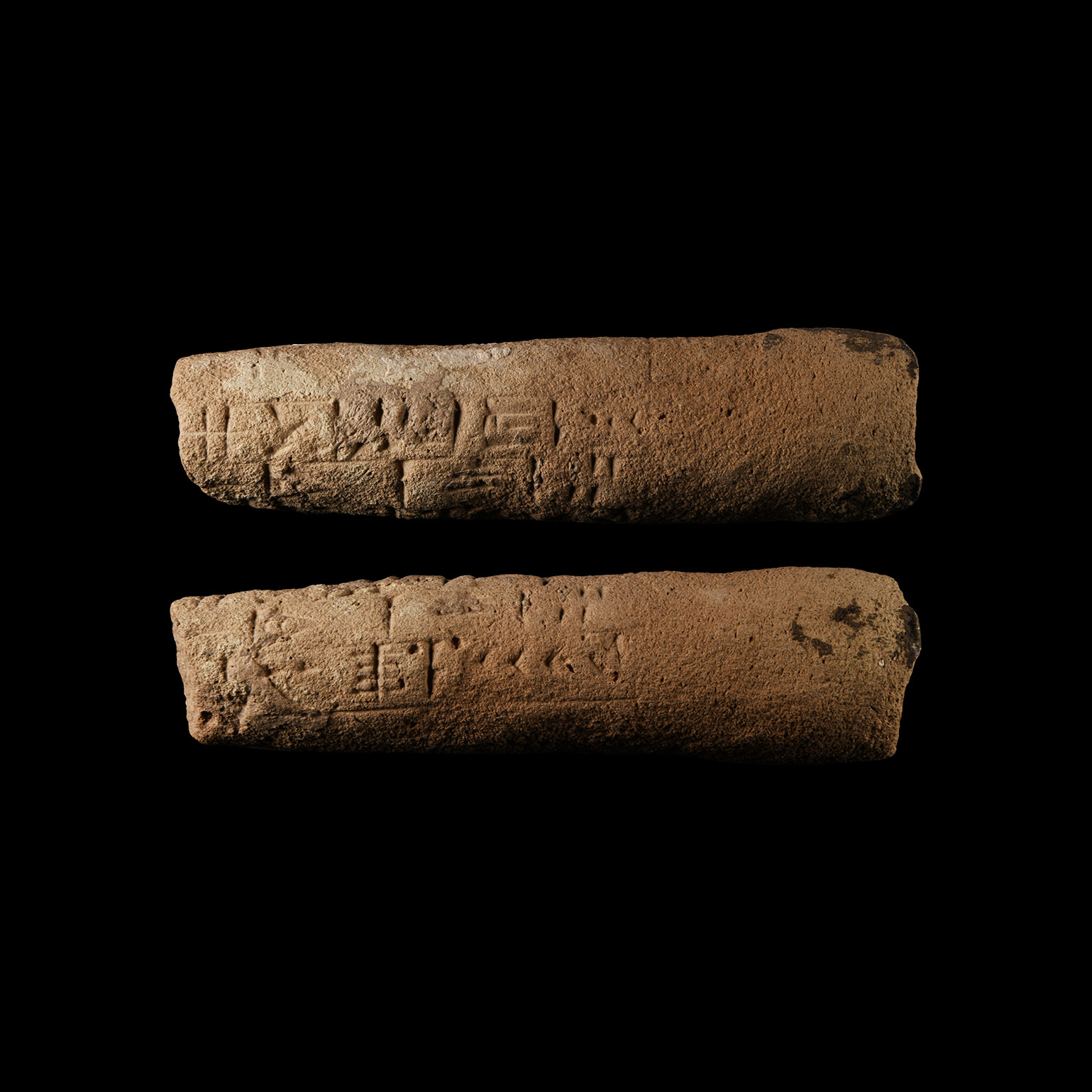
Mesopotamian Cuneiform Clay Foundation Cone
1ST MILLENNIUM B.C.
4 3/8 in. (105 grams, 11.1 cm).
Formed with a slight taper and a concave base; cuneiform text incised to one face; top chipped in antiquity. [No Reserve]
ProvenanceEx private UK collection formed in the 1980s.
Ex London, UK, gallery.
TimeLine Auctions follows a vetting process to ensure the authenticity and legality of all items, reinforcing our commitment to integrity and responsible trading. Each antiquity, antique, and coin lot undergoes thorough examination by a vetting committee of at least ten external specialists, professional trade association members, scientists, and archaeologists: Our Vetting Process
AUCTIONS:
TimeLine is a leading auction house specialising in antiquities, ancient art, collectables, natural history, coins, medals, and books. Our auctions offer museums, collectors, historians, and enthusiasts the opportunity to acquire unique and historically significant pieces.
-
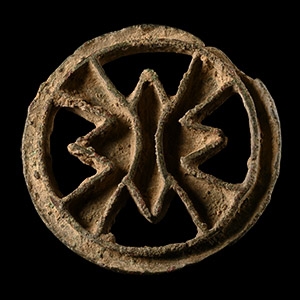
Central Asian Bronze Compartmented Seal Matrix
2300-2000 B.C.Sold for (Inc. bp): £26
Wheel-shaped stamp seal; accompanied by an old scholarly note, typed and signed by W.G. Lambert, late Professor of Assyriology, University of Birmingham, 1970-1993, which states: 'Stamp Seal of Bronze. 38 x 37 x 15 mm. This is round, with flat face and flat back, on which is a handle of inverted U-shape. The design, which is compartmented and open-work, consists of a plain outer band, and within it but not touching it is a central rhomb, joined to the outer band by two rough crescent shapes, bulging at the ends, and close to each other in the middle. This comes from west central Asia and dates to c. 2300-2000 B.C. It is in very good condition save that the outer rim is worn down.' 15 grams, 37 mm
From an important London, UK, collection, 1970s. Accompanied by a scholarly note by Professor Wilfrid George Lambert FBA (1926-2011), historian, archaeologist, and specialist in Assyriology and Near Eastern archaeology. -
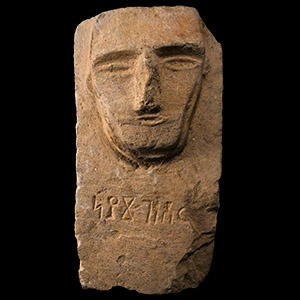
South Arabian Stone Stele with Personal Name
3rd-1st century B.C.Sold for (Inc. bp): £780
Bearing a stylised male face carved in relief above a Himyarite inscription. 13.9 kg, 39 cm high
Acquired 1960s-1990s. Late Alison Barker collection, a retired London barrister.
Likely a funerary stele bearing the name of the deceased individual commemorated with the stone. -
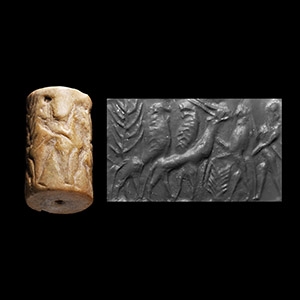
Large Mesopotamian Limestone Cylinder Seal with Animals
3rd-2nd millennium B.C.Sold for (Inc. bp): £234
Bearing an incuse frieze comprising an ibex standing before two advancing figures, the rear-most with a sword and frond behind, a pair of facing lions to the background; drilled vertically through the centre for suspension; accompanied by a museum-quality impression. 53.5 grams, 45 mm
Fine condition, worn.
Acquired in the 1980s-1990s. Previously with Mansour Gallery, London W1. Property of a North West London gentleman.
