Loading, please wait...

Mesopotamian Cream Stone Macehead Mesopotamian Cream Stone Macehead Mesopotamian Cream Stone Macehead
Use mousewheel to zoom in and out, click to enlarge
Details

LOT 1235

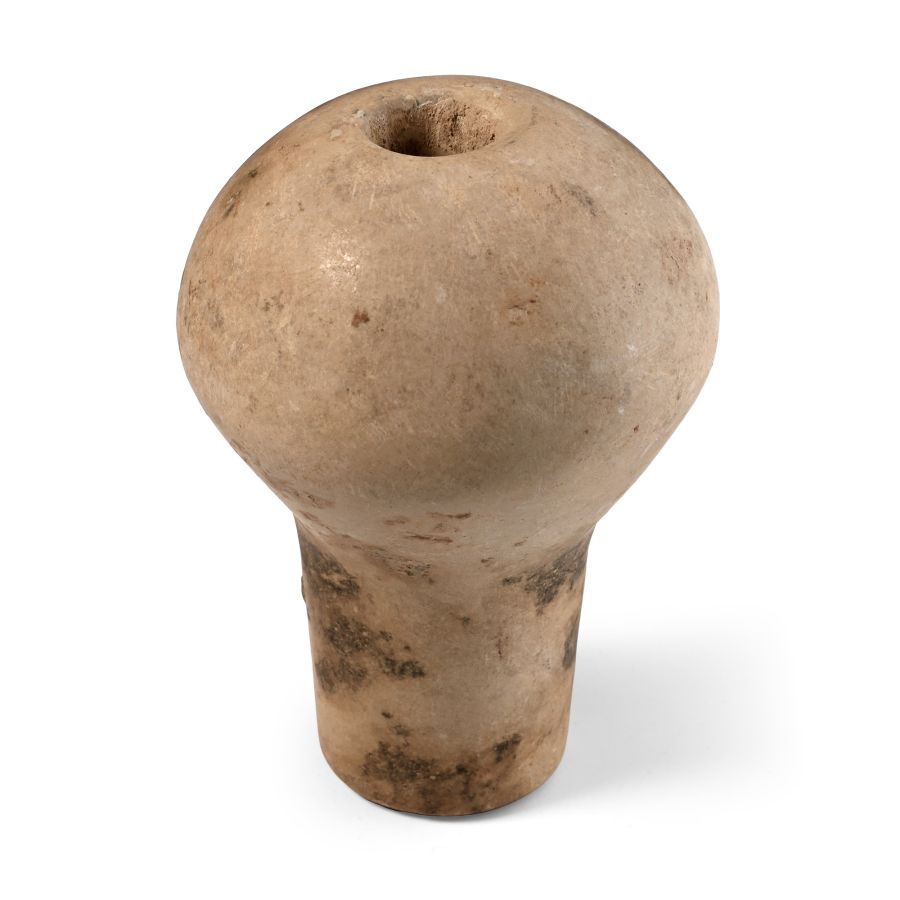
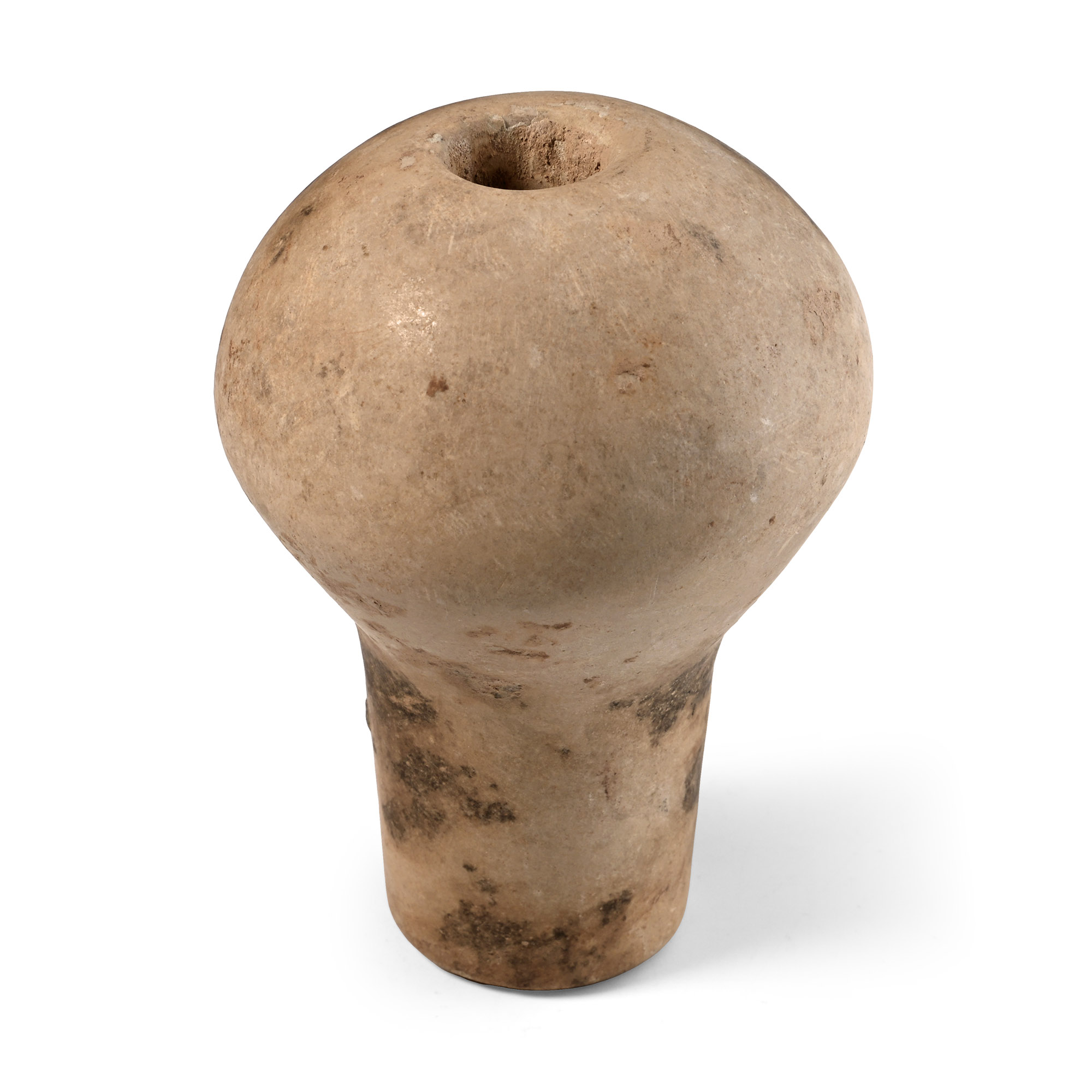
Mesopotamian Cream Stone Macehead

3RD-2ND MILLENNIUM B.C.

3 3/4 in. (417 grams, 96 mm).

With slightly carinated equator to the globular body and tubular shaft.

Provenance

Ex 1990s collection and with a central London gallery.

Literature

See Gorelik, M., Weapons of Ancient East, IV millennium BC-IV century BC, Saint Petersburg, 2003, pl.XXX, no.47, mace of a deity, detail of the image on the “Stela of Kites” Eanatuma, Ngirsu, mid-3rd millennium B.C.

CONDITION
VETTING:

TimeLine Auctions follows a vetting process to ensure the authenticity and legality of all items, reinforcing our commitment to integrity and responsible trading. Each antiquity, antique, and coin lot undergoes thorough examination by a vetting committee of at least ten external specialists, professional trade association members, scientists, and archaeologists: Our Vetting Process


AUCTIONS:

TimeLine is a leading auction house specialising in antiquities, ancient art, collectables, natural history, coins, medals, and books. Our auctions offer museums, collectors, historians, and enthusiasts the opportunity to acquire unique and historically significant pieces.

LOT 1235

Mesopotamian Cream Stone Macehead

Estimate £100 - 140€120 - 160 (for guidance only)$140 - 190 (for guidance only)

Print page

RELATED LOTS
  • Anatolian White Marble Stamp Seal with Owners Name
    Anatolian White Marble Stamp Seal with Owner's Name
    2nd millennium B.C.

    Sold for (Inc. bp): £1,820

    Comprising a thick discoid body with a tapering handle above, accompanied by a copy of an old scholarly note, typed and signed by W.G. Lambert, late Professor of Assyriology, University of Birmingham, 1970-1993, which states: 'Stamp Seal of White Marble, 28 x 25 mm. The base of the stamp is round, with a flat bottom and slightly outcurving sides. The handle rises from the base with decreasing diameter, and eight sides, to the knob, which is roughly oval and pierced from side to side, with a raised band over the top. This shape is a typical Hittite stamp seal shape. The design consists of a band of design around the edge surrounding hieroglyphs in the middle. The band consists of four sections of pattern: three kinds of guilloche and one section of dots, interspersed with two opposite animal heads, and two opposite unidentified items. The hieroglyphs are no doubt the owner's name. This seal comes from Anatolia, and dates to the 17/16th century B.C. It is in good state of preservation.' 26.7 grams, 35 mm


    UK private collection, acquired 1990-1993. Accompanied by a copy of a scholarly note, typed and signed by Professor Wilfrid George Lambert in 1991.

    Seals were the working signatures of the ancient Near East. Pressed or rolled into wet clay, they secured jars, bags, doors and tablets, and left a distinct impression that identified the owner, authorised a transaction, and showed whether a container had been opened. Stamp seals (pressed once to leave a single emblem) appear from the 7th–4th millennia BC and continue throughout later periods; cylinder seals (rolled to create a repeating frieze) developed in Mesopotamia in the late 4th millennium BC and are used into the 1st millennium BC. Beyond administration, seals were miniature artworks and amulets. Their images—gods and worshippers, royal hunts, banquets, heroes and mythic beasts—broadcast rank, piety and profession, and were believed to protect the owner. Materials range from soft stones to hard chalcedonies, haematite and lapis, worked with drills and abrasives to achieve crisp intaglio cutting. Many were worn on cords or rings and followed their owners through life, sometimes into the grave. Seals matter because they underpin the earliest systems of record-keeping and trade. Impressions on tablets and bullae are primary documents for ancient law, economy and religion; the seals themselves preserve that imagery in the round. For collectors, well-cut examples with sharp impressions, good polish and honest ancient wear are especially desirable, and pieces with early collection histories are keenly sought.

    Lot Details

  • Oxus Culture Terracotta Jar
    Oxus Culture Terracotta Jar
    3rd-2nd millennium B.C.

    Sold for (Inc. bp): £104

    A round-bottomed jar decorated with impressed branch motifs, thick everted rim to the mouth. 985 grams, 23 cm

    Fine condition, chip to rim.

    From the property of an London gentleman; formerly in a important European collection. From the private collection of John Meredith, acquired since the 1990s; thence by descent.

    Lot Details

  • West Central Asian Bronze Stamp Seal Matrix with Walking Quadruped
    West Central Asian Bronze Stamp Seal Matrix with Walking Quadruped
    Circa 2000-1500 B.C.

    Sold for (Inc. bp): £94

    Discoid with large looped handle to the reverse; accompanied by typed and signed note by the late W.G. Lambert, Professor of Assyriology at the University of Birmingham, 1970-1993, which states: 'Stamp Seal of Bronze, 22 x 20 x 26mm. This has a round, slightly concave face and a back which rises steeply to a stalk handle with pierced loop. The design on the face, done in intaglio, consists of a walking winged quadruped with tail raised. This comes from west central Asia and dates to c. 2000-1500 B.C. It is a less common type, and the metal is sound.' 21 grams, 26 mm


    Ex collection of a late London gentleman, 1990s. Accompanied by an original typed and signed scholarly note by the late W.G. Lambert, Professor of Assyriology at the University of Birmingham, 1970-1993. This lot has been cleared against the Art Loss Register database, and is accompanied by an illustrated lot declaration signed by the Head of the Antiquities Department, Dr Raffaele D'Amato.

    Lot Details

Stay up-to-date with the latest from TimeLine Auctions by joining our mailing list