
Loading, please wait...
LOT 1256
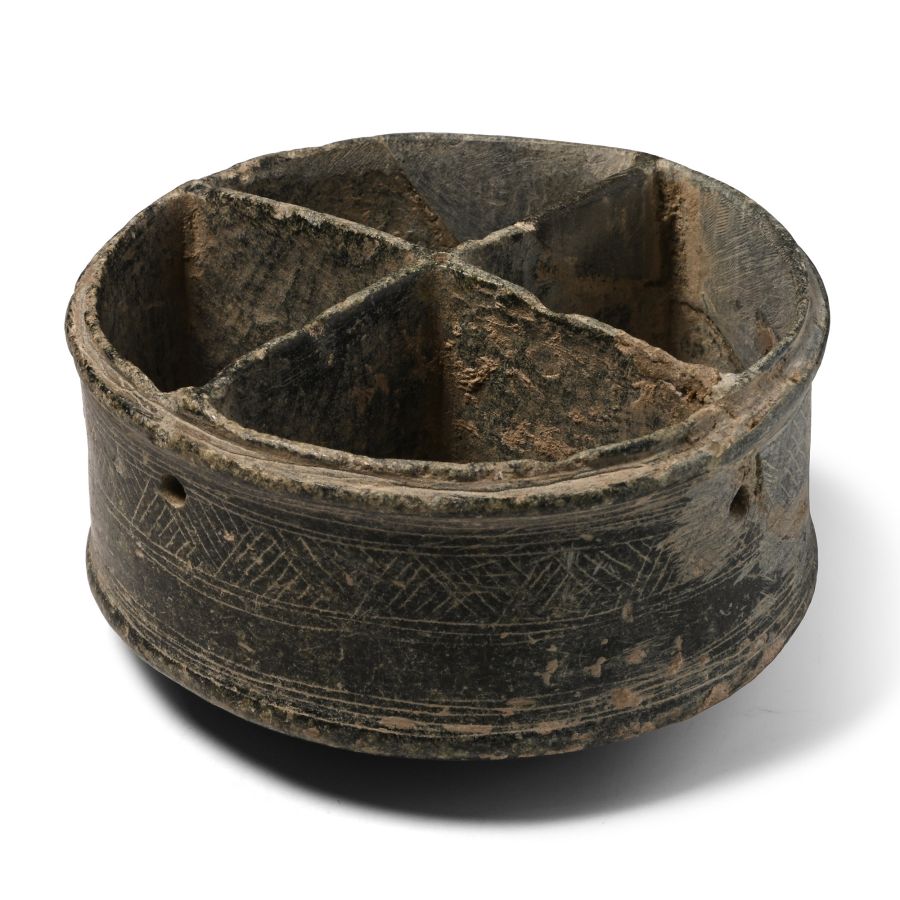
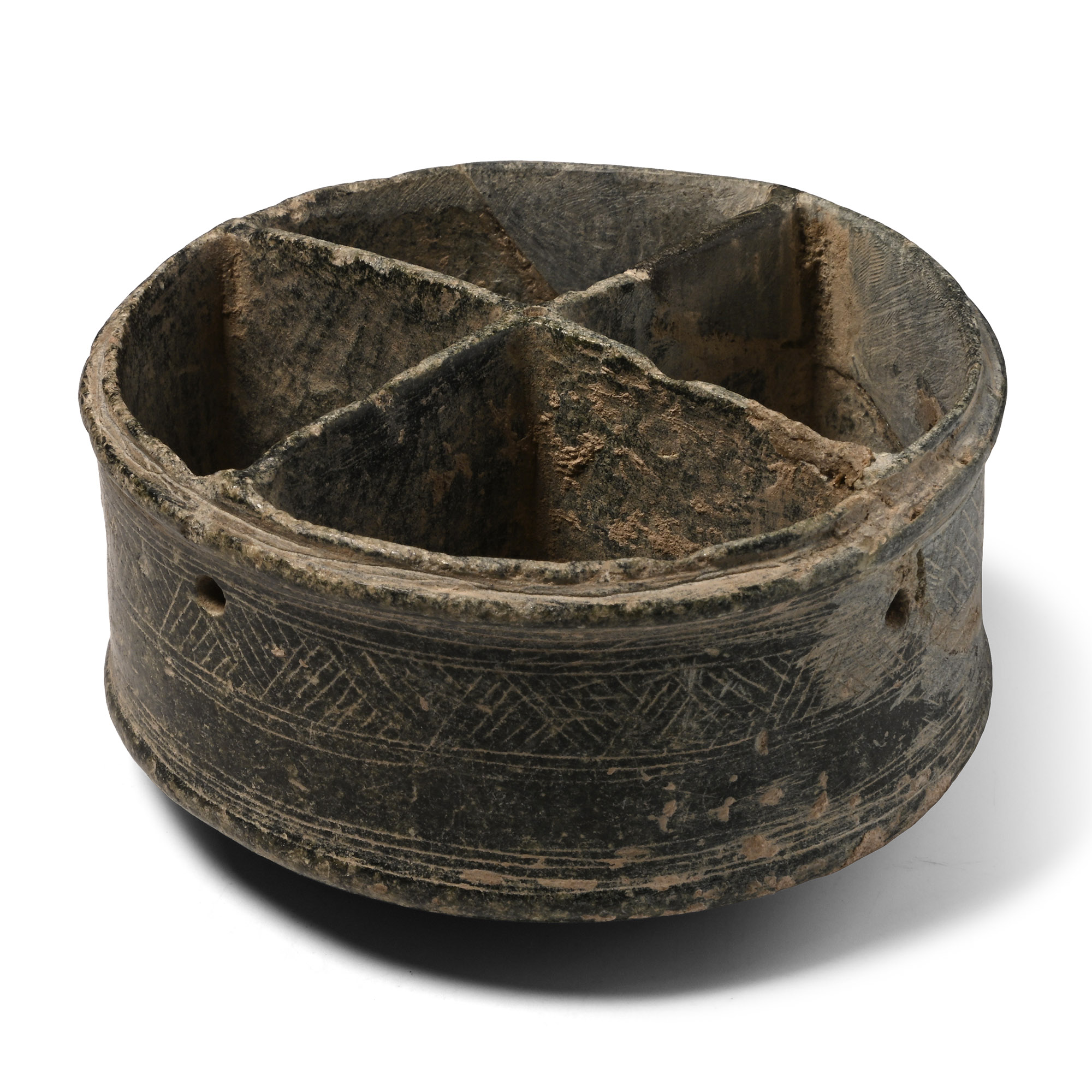
Mesopotamian Compartmented Stone Vessel
1ST MILLENNIUM B.C.
3 3/8 in. (256 grams, 86 mm wide).
Squat and broad with hatched band below the everted rim, segmented internally.
ProvenanceEx Mayfair, London, UK, gallery, 2000s.
CONDITIONTimeLine Auctions follows a vetting process to ensure the authenticity and legality of all items, reinforcing our commitment to integrity and responsible trading. Each antiquity, antique, and coin lot undergoes thorough examination by a vetting committee of at least ten external specialists, professional trade association members, scientists, and archaeologists: Our Vetting Process
AUCTIONS:
TimeLine is a leading auction house specialising in antiquities, ancient art, collectables, natural history, coins, medals, and books. Our auctions offer museums, collectors, historians, and enthusiasts the opportunity to acquire unique and historically significant pieces.
-
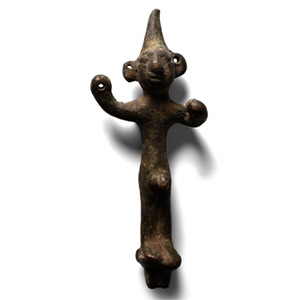
Canaanite Bronze Male Warrior God Statuette
Early 2nd millennium B.C.Estimate: £400 - 600 (+bp*)
Opening Bid: £222
Modelled in the round with holes to the ears to accept separate rings (absent) and right hand open to accept a weapon. 27 grams, 68 mm
Acquired in Paris and London, 1970s. From a collection of Canaanite gods in bronze, from the collection of a London, UK, gentleman. This lot has been cleared against the Art Loss Register database, and is accompanied by an illustrated lot declaration signed by the Head of the Antiquities Department, Dr Raffaele D'Amato. -
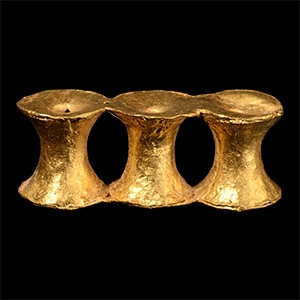
Western Asiatic Spool-Shaped Gold Beads
Late 2nd-1st millennium B.C.Sold for (Inc. bp): £208
Group of three spool-shaped elements, each pierced longitudinally and forming a spacer bead for a multi-strand necklace. 1.91 grams, 19 mm
From the collection of a late Japanese gentleman, 1970s onwards. -
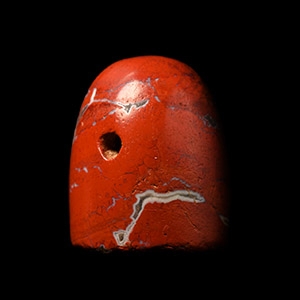
Babylonian Unfinished Hardstone Stamp Seal
1st millennium B.C.Sold for (Inc. bp): £143
A domed polished seal pierced for suspension, with slightly convex stamp face prepared to accept an engraved design. 6.39 grams, 18 mm
From the private collection of the late Mr S.M., 1969-1999, thence by descent.
