
Loading, please wait...
LOT 1237
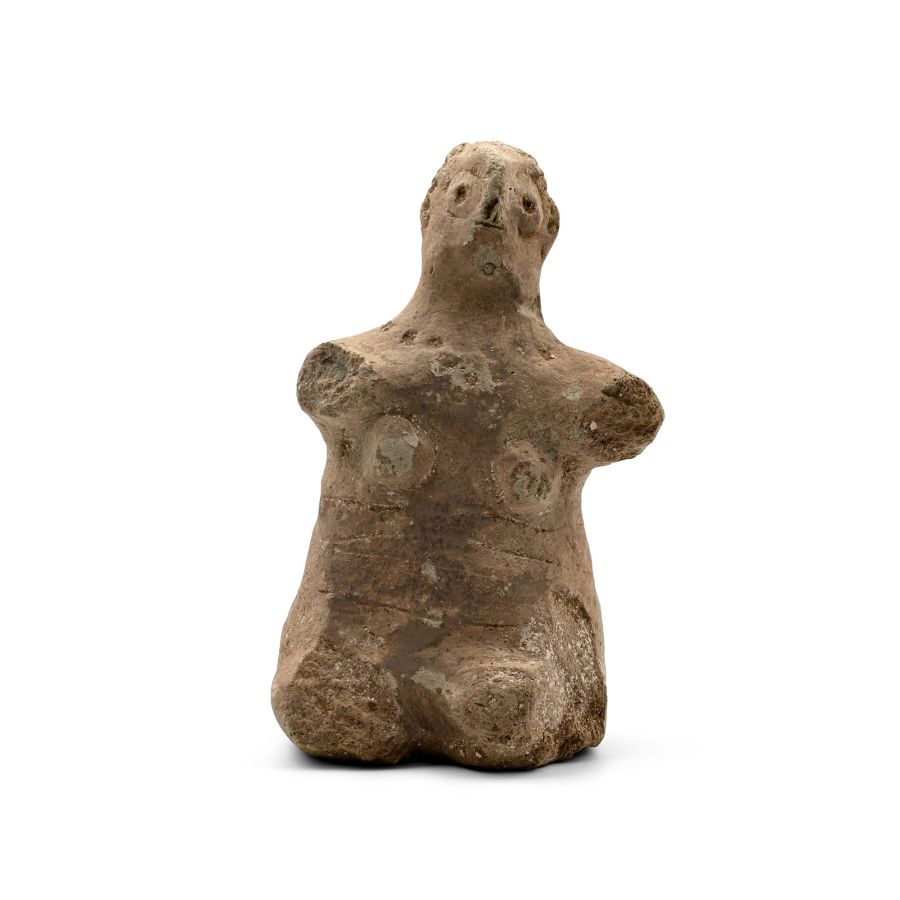
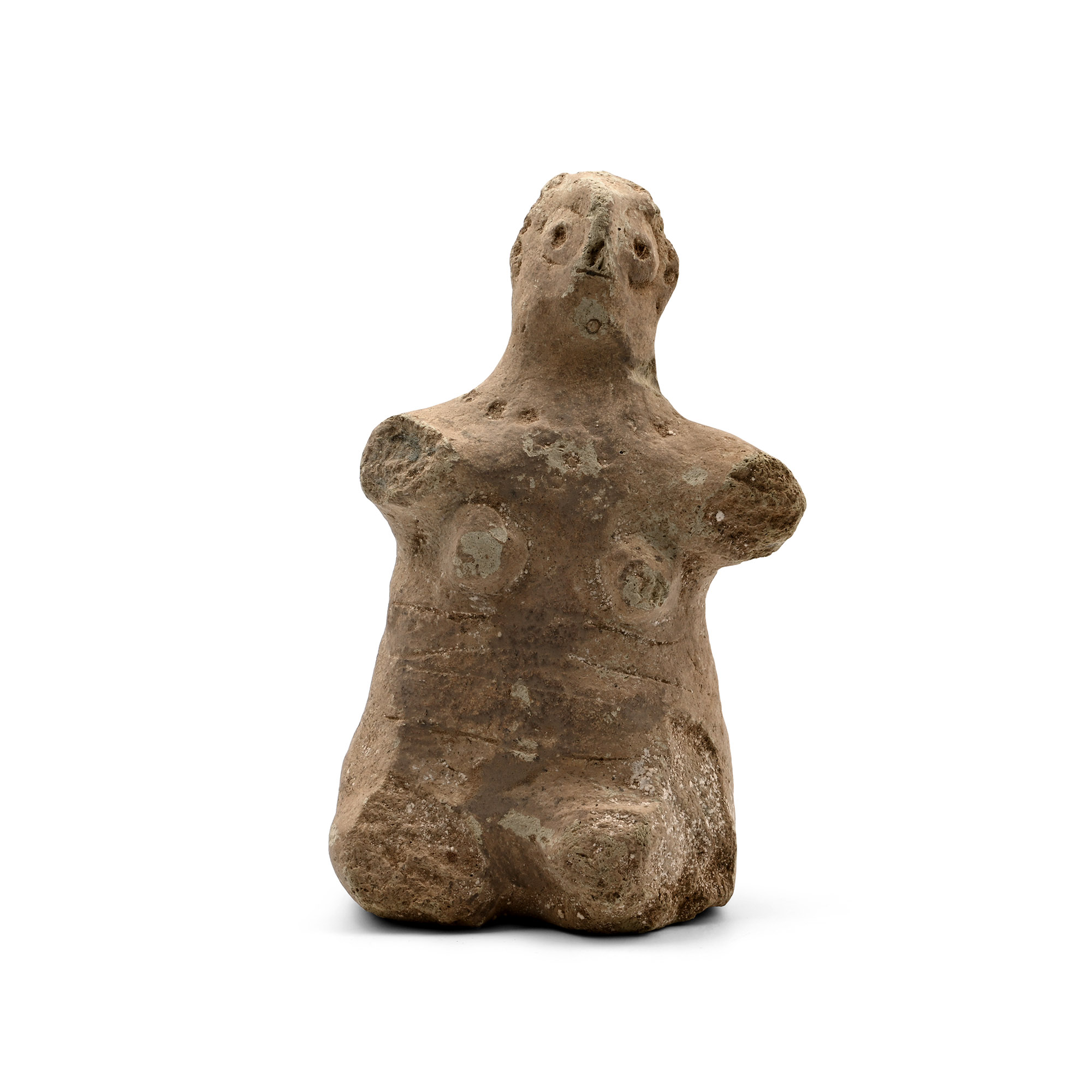
Mesopotamian Clay Fertility Figure
4TH-3RD MILLENNIUM B.C.
4 1/2 in. (225 grams, 11.5 cm high).
Stylised detailing to her face and hair, beaded necklace around her neck and small breasts; remains of outstretched arms; shallow U-shaped channel to reverse delineating her buttocks and spine. [No Reserve]
ProvenanceAcquired 1980-2015.
Ex Abelita family collection.
From the private collection of John Meredith, acquired since the 1990s; thence by descent.
TimeLine Auctions follows a vetting process to ensure the authenticity and legality of all items, reinforcing our commitment to integrity and responsible trading. Each antiquity, antique, and coin lot undergoes thorough examination by a vetting committee of at least ten external specialists, professional trade association members, scientists, and archaeologists: Our Vetting Process
AUCTIONS:
TimeLine is a leading auction house specialising in antiquities, ancient art, collectables, natural history, coins, medals, and books. Our auctions offer museums, collectors, historians, and enthusiasts the opportunity to acquire unique and historically significant pieces.
-
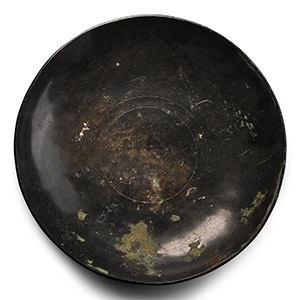
Western Asiatic Bronze Bowl
Mid 1st millennium B.C.Estimate: £100 - 140 (+bp*)
Opening Bid: £50
Broad and shallow with incised concentric rings to the inner face. 220 grams, 19 cm
Ex 1990s collection and with a central London gallery. -
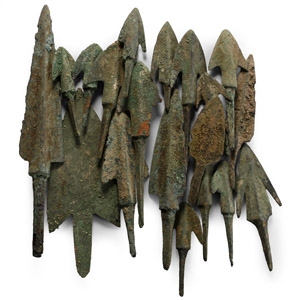
Greek and Luristan Bronze Arrowhead Collection
2nd-1st millennium B.C.Sold for (Inc. bp): £130
Mainly small leaf-shaped and triangular-headed tanged types. 136 grams total, 3.8-11.1 cm
Ex London, UK, collection, 1990s. -
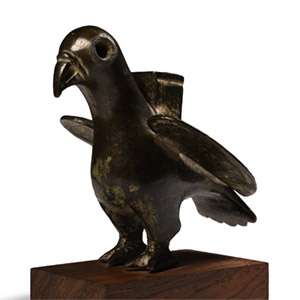
Western Asiatic Bronze Incense Burner in the Shape of an Eagle
9th-11th century A.D.Sold for (Inc. bp): £5,980
With outstretched wings and erect body, open beak and eyes hollowed to accept inserts, five-feather spread tail and a rectangular socket to the back; mounted on a custom-made display stand. 430 grams total, 11 cm including stand
Béla Hein collection, Paris, France, before 1931. Accompanied by an academic report by Dr Raffaele D’Amato. This lot has been checked against the Interpol Database of stolen works of art and is accompanied by a search certificate number no.12569-232077.
Béla Hein (1883-1931) was a prominent dealer and collector of African art in early 20th century Paris. In the early 1920s, he founded a gallery specialising in African art, contemporary sculpture, and a variety of curiosities, including antiquities. Hein's influence extended across the art world, and his collection reflected a keen eye for both historical and aesthetic significance.
