
Loading, please wait...
LOT 1017
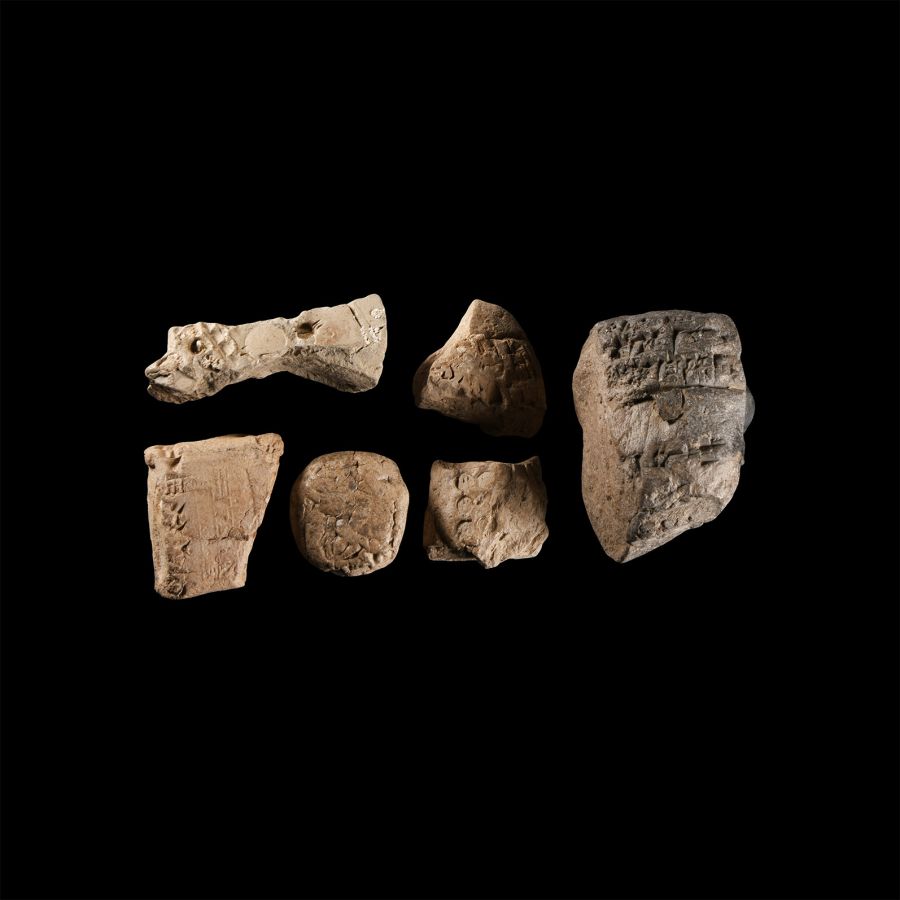
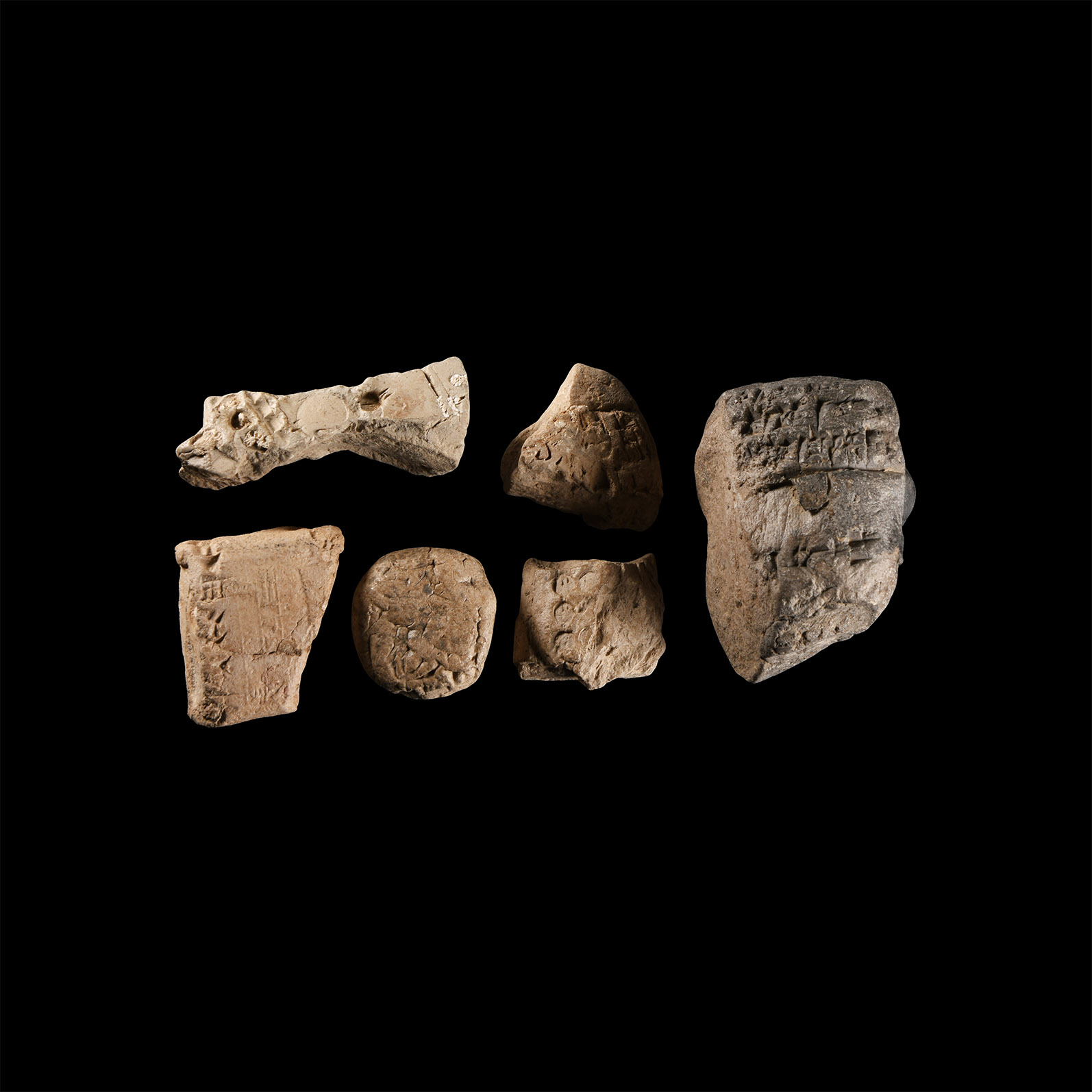
Mesopotamian Clay Cuneiform Tablet Fragment Group
CIRCA 2ND MILLENNIUM B.C.
1 - 1 3/4 in. (93 grams total, 24-46 mm).
Each of the six fragments bearing cuneiform text or pictograms to at least one face. [6, No Reserve]
ProvenanceSpecialised collection of cuneiform texts, the property of a London gentleman and housed in London before 1992.
Thence by descent to family members.
Examined by Professor Wilfrid George Lambert FBA (1926-2011), historian, archaeologist, and specialist in Assyriology and Near Eastern archaeology, in the late 1980s and early 1990s.
This small collection is exceptional for the variety of types, including some very rare and well preserved examples.
TimeLine Auctions follows a vetting process to ensure the authenticity and legality of all items, reinforcing our commitment to integrity and responsible trading. Each antiquity, antique, and coin lot undergoes thorough examination by a vetting committee of at least ten external specialists, professional trade association members, scientists, and archaeologists: Our Vetting Process
AUCTIONS:
TimeLine is a leading auction house specialising in antiquities, ancient art, collectables, natural history, coins, medals, and books. Our auctions offer museums, collectors, historians, and enthusiasts the opportunity to acquire unique and historically significant pieces.
-
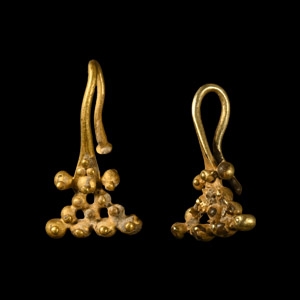
Bactrian Gold Earrings
1st millennium B.C.Sold for (Inc. bp): £338
Each a bifacial triangular plaque composed of gold bulbs adorned with apex granules to both faces, tapering gold hook with conical boss to terminal, bulb to each side of the neck and granulated triangle between. 3.98 grams total, 19-21 mm
Acquired 1980-2015. Ex Abelita family collection. -
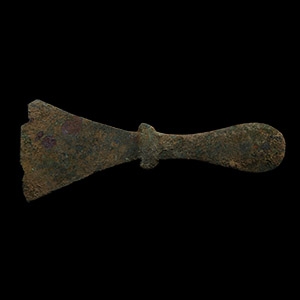
Western Asiatic Bronze Flat Axe
Circa 3rd-2nd millennium B.C.Sold for (Inc. bp): £59
Comprising a wedge-shaped blade and piriform handle. 156 grams, 17.7 cm
UK private collection formed before 2000. Ex North London, UK, gallery.
These blades were fitted directly to the handle or via a sheath. Flat axes, whose axis is parallel to that of the handle, often had a rounded edge like in our specimen, or a flared and bevelled edge, while flat adzes have an axis perpendicular to that of the handle and a bevel edge on one side only. Their shape comes directly from the lithic axes of the Neolithic and Chalcolithic periods. -

Large Jewish Lead Sealing with Menorah
Circa 2nd century A.D.Sold for (Inc. bp): £416
Displaying a menorah within a roundel to one face; blank or worn reverse. 6.58 grams, 21 mm
Acquired 1969-1999. From the private collection of the late Mr S.M., London, UK, thence by descent.
