
Loading, please wait...
LOT 0242
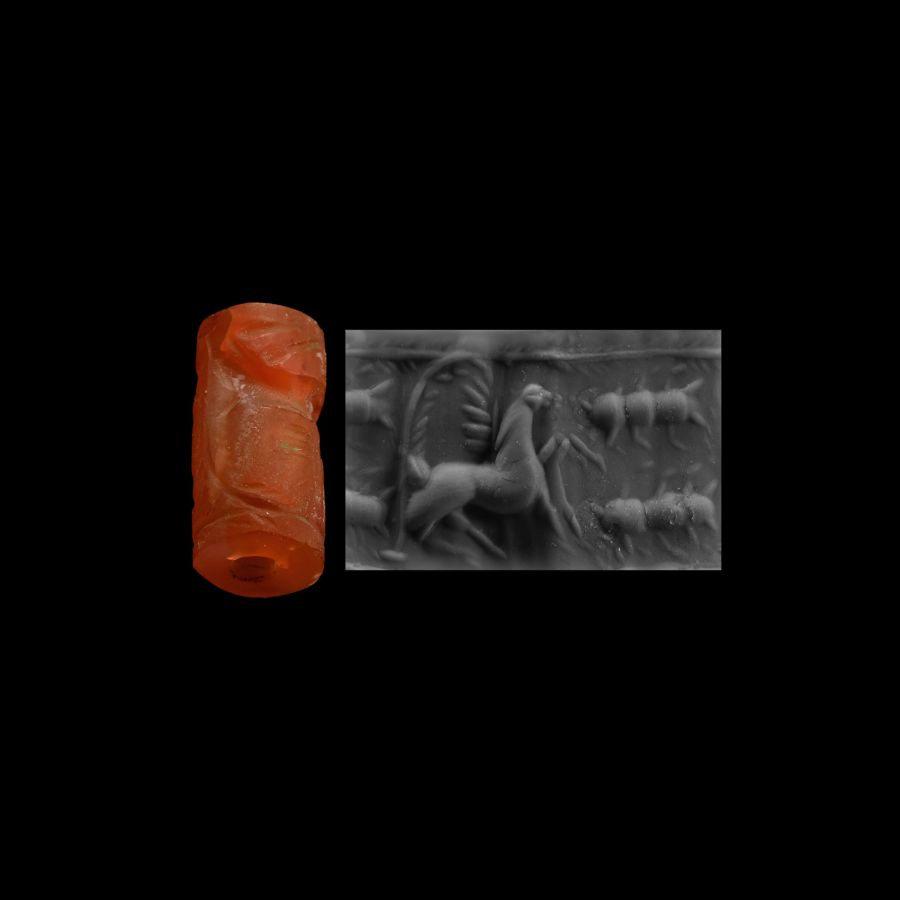
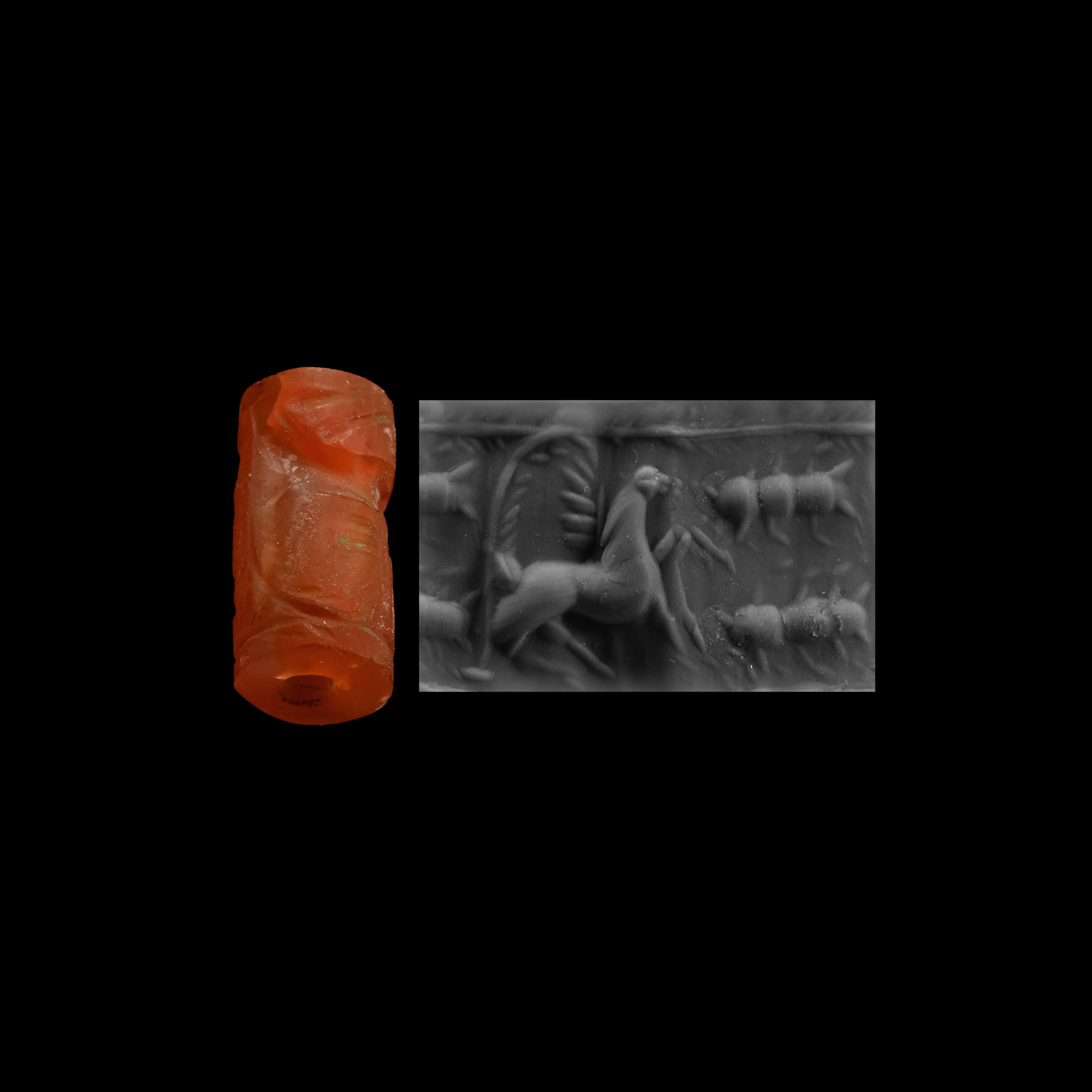
Mesopotamian Carnelian Cylinder Seal with Winged Horse
CIRCA 7TH CENTURY B.C.
5/8 in. (1.81 grams, 16 mm).
With intaglio frieze depicting a winged horse with one foreleg raised facing two smaller beasts among trees; supplied with a museum-quality impression.
ProvenanceEx London, UK, collection, before 1988.
Accompanied by a previous catalogue information slip.
TimeLine Auctions follows a vetting process to ensure the authenticity and legality of all items, reinforcing our commitment to integrity and responsible trading. Each antiquity, antique, and coin lot undergoes thorough examination by a vetting committee of at least ten external specialists, professional trade association members, scientists, and archaeologists: Our Vetting Process
AUCTIONS:
TimeLine is a leading auction house specialising in antiquities, ancient art, collectables, natural history, coins, medals, and books. Our auctions offer museums, collectors, historians, and enthusiasts the opportunity to acquire unique and historically significant pieces.
LOT 0242
Mesopotamian Carnelian Cylinder Seal with Winged Horse
Estimate £500 - 700€580 - 810 (for guidance only)$680 - 950 (for guidance only)
-
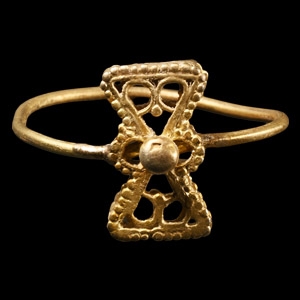
Western Asiatic Openwork Gold Ring
Circa 4th-6th century A.D.Sold for (Inc. bp): £130
Composed of a round-section hoop and bowtie-shaped bezel with openwork filigree front and back face, central pellet to front face. 0.98 grams, 16.47 mm overall, 14.90 mm internal diameter (approximate size British E 1/2, USA 2 1/2, Europe 3, Japan 3)
Acquired 1970-2010. Collection of a late Japanese gentleman. -
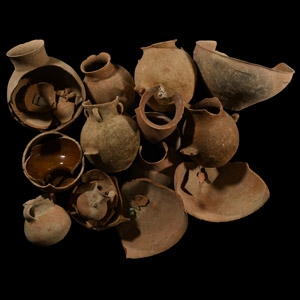
Holy Land and Other Terracotta Pottery Group
3rd-1st millennium B.C.Sold for (Inc. bp): £117
Fragments including bulbous jug with strap handles, bowl with ledge handles and other types. 16 kg total, 3-32 cm
Ex London, UK, gallery, 1980-1990s. -
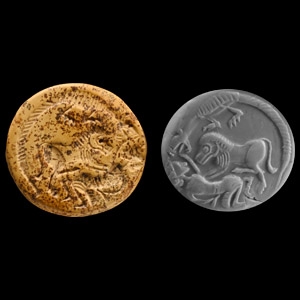
Western Asiatic Jasper Stamp Seal with Contest Scene
2nd-1st millennium B.C.Sold for (Inc. bp): £72
With a pierced domed upper face; engraved underside with a knife-wielding man attacking a rearing lion, a mythical long-tailed beast attacking from above with its tail curving along the edge of the seal. 25.5 grams, 35 mm
UK private collection before 2000. On the UK art market. Property of a London gentleman.
