
Loading, please wait...

LOT 1463
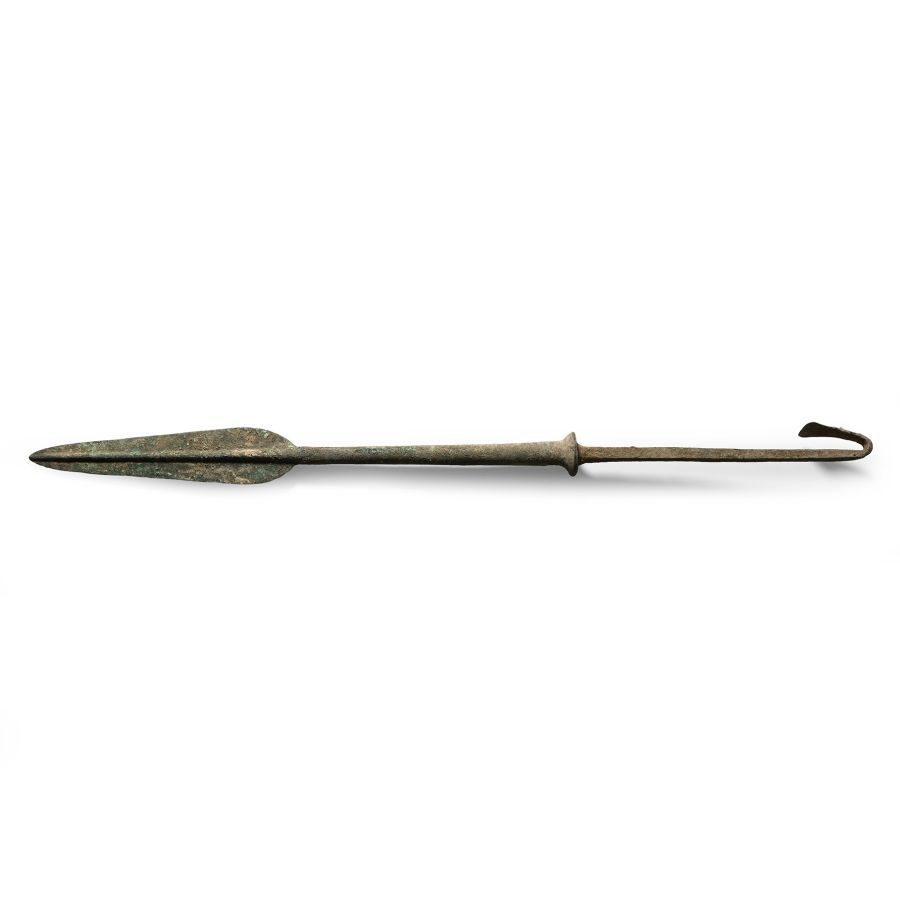
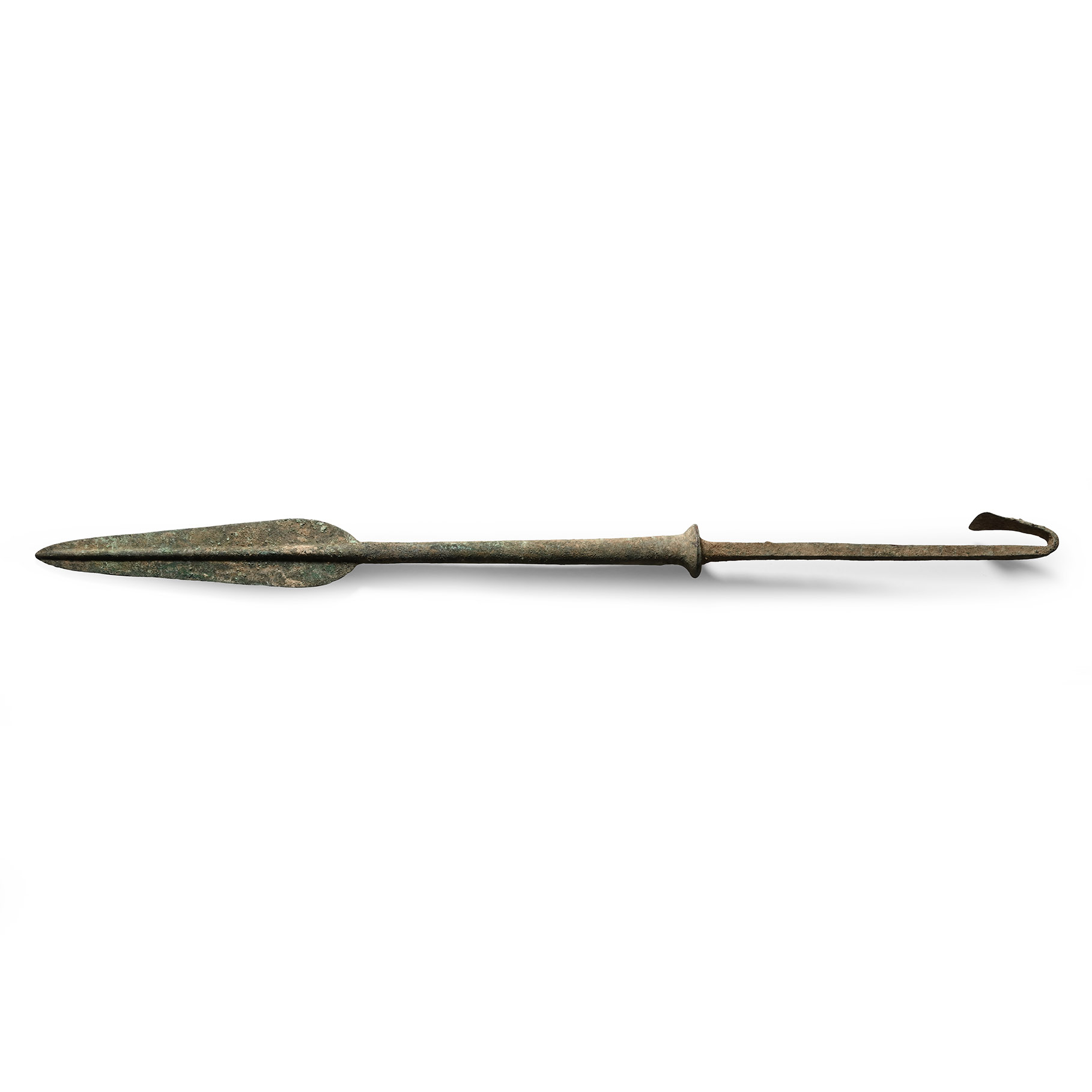
Mesopotamian Bronze Javelin Head
3RD-2ND MILLENNIUM B.C.
17 3/4 in. (262 grams, 45 cm).
With foliate blade, rhomboidal in section, raised mid-rib, medium length stem widening at its base and forming a small stop, quadrangular section tang with bent terminal.
ProvenanceAcquired 1980-2015.
Ex Abelita family collection.
Cf. Gorelik, M., Weapons of Ancient East, IV millennium BC-IV century BC, Saint Petersburg, 2003, in Russian, see pl.XXXIII, no.82, from Tepe Hissar; Gernez, G., L’armament en métal au Proche et Moyen-Orient: des origines a 1750 av. J.C., Paris, 2007, p.301, fig.2.88, subtype L2.B.b.
FootnotesThe specimen belongs to the category of tripartite spears with long pointed biconvex blade and single bevelled tang. They seem to be a Mesopotamian and Susian (Elamite) variant, and this type also includes decorated blades, like the spear from Tello with the inscription 'King of Kish'.
CONDITIONTimeLine Auctions follows a vetting process to ensure the authenticity and legality of all items, reinforcing our commitment to integrity and responsible trading. Each antiquity, antique, and coin lot undergoes thorough examination by a vetting committee of at least ten external specialists, professional trade association members, scientists, and archaeologists: Our Vetting Process
AUCTIONS:
TimeLine is a leading auction house specialising in antiquities, ancient art, collectables, natural history, coins, medals, and books. Our auctions offer museums, collectors, historians, and enthusiasts the opportunity to acquire unique and historically significant pieces.
-
Viking Age and Later Iron Axehead Group
10th-18th century A.D.Sold for (Inc. bp): £286
Mainly comprising socketted axeheads and adzes, adze-axes, wedges and other items. 8.45 kg total, 12-30 cm
Acquired 1990s-early 2000s. East Anglian private collection.
Slavic battle-axes also came into use in Scandinavia, especially in the Eastern part of Gotland, Denmark and Sweden. There were narrow-bladed types, described as being very light. Another characteristic of some of the Eastern axes was an extra long hammer or more rarely a secondary blade protruding from the back of axehead. -
Greek Bronze Arrowhead Collection
Circa 5th-3rd century B.C.Sold for (Inc. bp): £221
Including triangular-section sockettedtype, triangular barbed type, tanged leaf-shaped type and others. 104 grams total, 23-58 mm
Ex London, UK, collection, 1990s. -
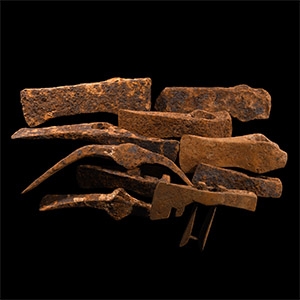
Viking Age and Later Iron Axehead Group
10th-18th century A.D.Sold for (Inc. bp): £130
Mainly comprising socketted axeheads and adzes, together with other items; including at least one stamped with maker's marks. 9.5 kg total, 14.5-28.5 cm
Acquired 1990s-early 2000s. East Anglian private collection.
An axe similar to those of our group was found in the fortified camp of Péran, in Brittany, among the objects that emerged from a conflagration due to the attack of Alain Barbetorte's Bretons on a Viking camp, in 936 A.D. These axes were certainly work tools, although in case of necessity they could also serve as improvised weapons.
