Loading, please wait...

Use mousewheel to zoom in and out, click to enlarge

Details

LOT 1250

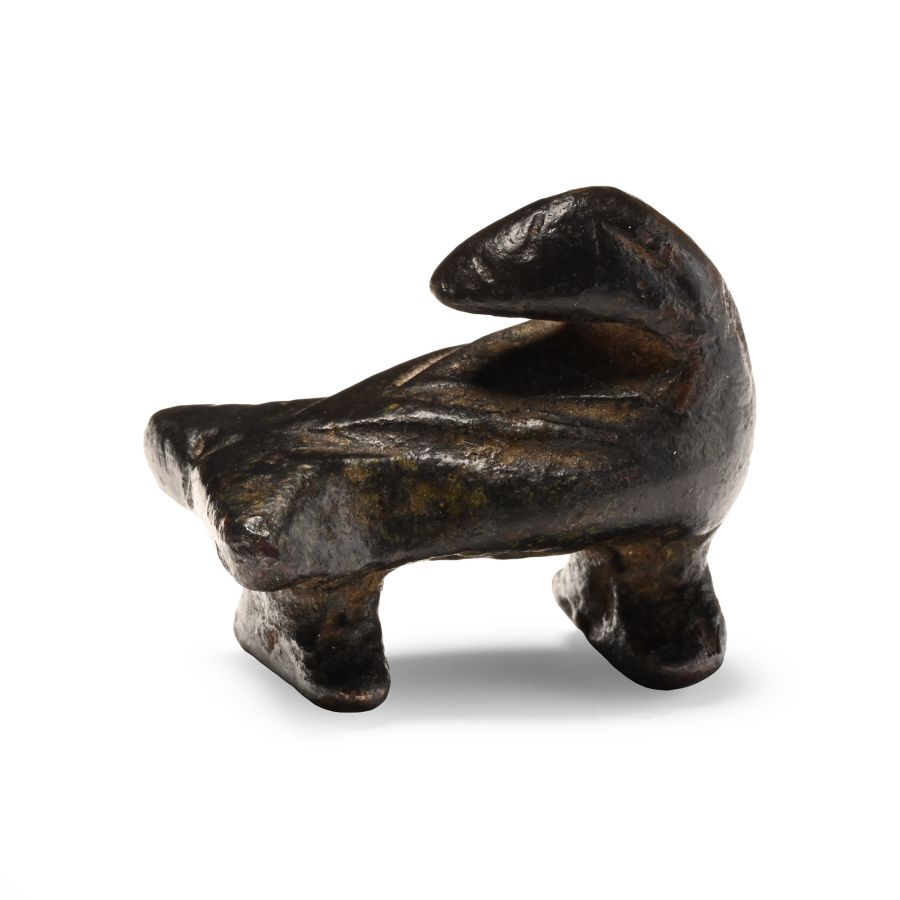
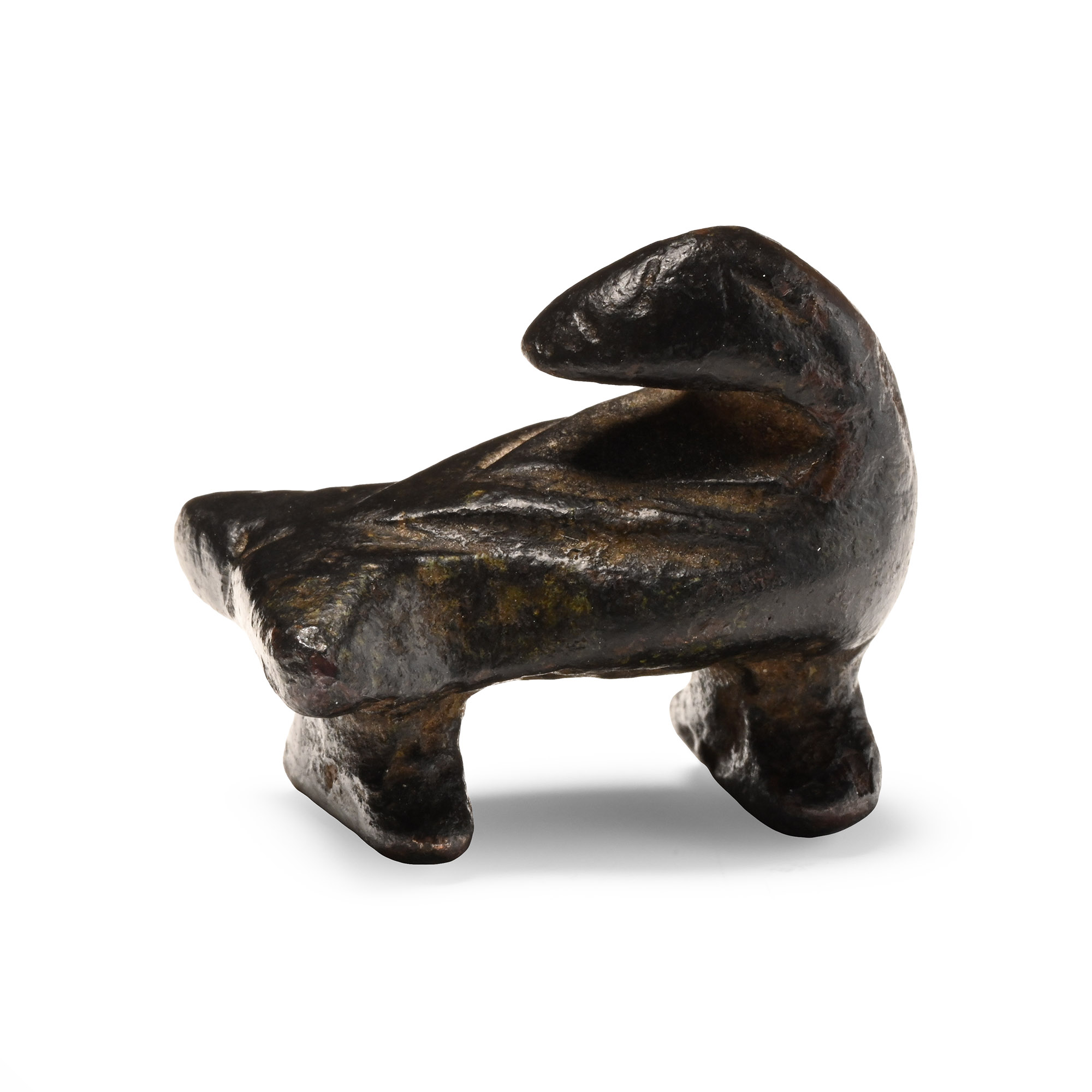
Mesopotamian Bronze Duck Weight

LATE 1ST MILLENNIUM B.C.

1 1/4 in. (41.9 grams, 31 mm).

Carved in the round with flared tail and had reversed, two T-shaped toggles to the underside. [No Reserve]

Provenance

Acquired over 40 years ago.
Private collection, London, UK.

CONDITION

VETTING:

TimeLine Auctions follows a vetting process to ensure the authenticity and legality of all items, reinforcing our commitment to integrity and responsible trading. Each antiquity, antique, and coin lot undergoes thorough examination by a vetting committee of at least ten external specialists, professional trade association members, scientists, and archaeologists: Our Vetting Process


AUCTIONS:

TimeLine is a leading auction house specialising in antiquities, ancient art, collectables, natural history, coins, medals, and books. Our auctions offer museums, collectors, historians, and enthusiasts the opportunity to acquire unique and historically significant pieces.

LOT 1250

Mesopotamian Bronze Duck Weight

Sold for (Inc. bp): £85

Print page

RELATED LOTS

  • Sasanian Banded Agate Stamp Seal
    Sasanian Banded Agate Stamp Seal
    3rd-7th century A.D.

    Sold for (Inc. bp): £78

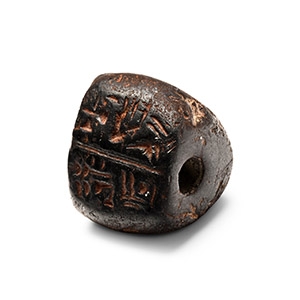
    Comprising a domed body carved from banded agate and having a natural crystal-lined cavity to one side, drilled through the base, underside with engraved linear motif, possibly an altar. 14.3 grams, 23 mm


    UK private collection before 2000. Acquired on the UK art market. Property of a London gentleman.

    Lot Details

  • Anatolian Bronze Cylinder Seal Surmounted by Horned Animal
    Anatolian Bronze Cylinder Seal Surmounted by Horned Animal
    Late 3rd millennium B.C.

    Sold for (Inc. bp): £1,105

    Cylindrical body topped with a standing quadruped, likely a mouflon, accompanied by a copy of an old scholarly note, typed and signed by W.G. Lambert, late Professor of Assyriology, University of Birmingham, 1970-1993, which states: 'Cylinder Seal of Bronze, surmounted by a Horned Animal Maximum height 42mm., Diameter of seal: 15mm. The animal has big, back-curving horns, and was probably meant as a mouflon sheep. It is decorative, makes an imposing piece of a simple seal shape. The design of the seal is a wavey line creating triangular spaces, which are filed with triangles of a smaller size or arrow-heads. In one case the latter and a v-shaped extra wavey line are used. The date of these ornamented seals has been disputed. Some scholars have put them in the third millennium B.C., some in the first millennium. The seal design is well known for the latter half of the third millennium and the beginning of the second millennium B.C., and the animal gives the impression of being related to such creatures in bronze from third millennium Anatolia. Thus this is a late-third-millennium seal, and is to be placed somewhere in the area from Anatolia to Kurdistan. Its condition is fine, and the metal sculpture is well done.' 25.7 grams, 41 mm


    UK private collection, acquired 1990-1993. Accompanied by a copy of a scholarly note, typed and signed by Professor Wilfrid George Lambert in 1990.

    Seals were the working signatures of the ancient Near East. Pressed or rolled into wet clay, they secured jars, bags, doors and tablets, and left a distinct impression that identified the owner, authorised a transaction, and showed whether a container had been opened. Stamp seals (pressed once to leave a single emblem) appear from the 7th–4th millennia BC and continue throughout later periods; cylinder seals (rolled to create a repeating frieze) develop in Mesopotamia in the late 4th millennium BC and are used into the 1st millennium BC. Beyond administration, seals were miniature artworks and amulets. Their images—gods and worshippers, royal hunts, banquets, heroes and mythic beasts—broadcast rank, piety and profession, and were believed to protect the owner. Materials range from soft stones to hard chalcedonies, haematite and lapis, worked with drills and abrasives to achieve crisp intaglio cutting. Many were worn on cords or rings and followed their owners through life, sometimes into the grave. Seals matter because they underpin the earliest systems of record-keeping and trade. Impressions on tablets and bullae are primary documents for ancient law, economy and religion; the seals themselves preserve that imagery in the round.

    Lot Details

  • Western Asiatic Red-Painted Terracotta Vessel
    Western Asiatic Red-Painted Terracotta Vessel
    8th-9th century A.D.

    Estimate: £150 - 200 (+bp*)

    Opening Bid: £75

    With broad shoulder and a wide neck, flared rim; ribbed loop handle with applied pellet above; polychrome painted scroll and mesh designs. 320 grams, 11.5 cm wide


    UK collection, 1990s. Acquired on the UK art market, before 2000. Private collection, Mr M.V., a London-based businessman.

    Lot Details

Stay up-to-date with the latest from TimeLine Auctions by joining our mailing list