
Loading, please wait...
LOT 1387
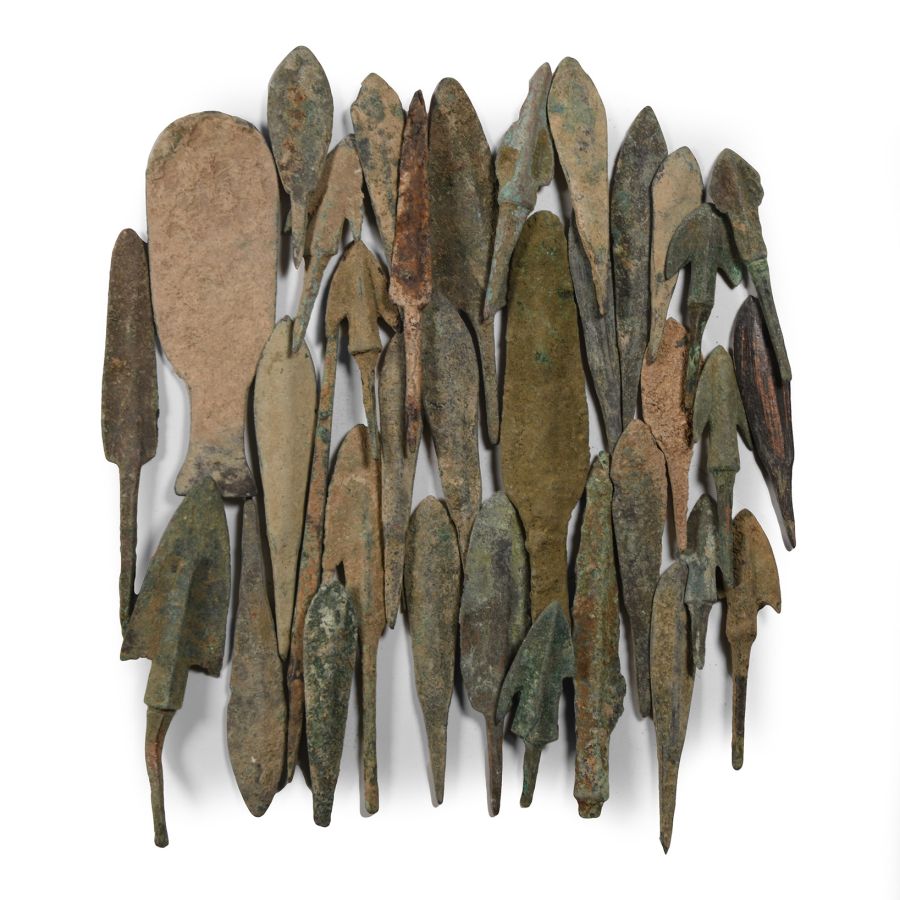
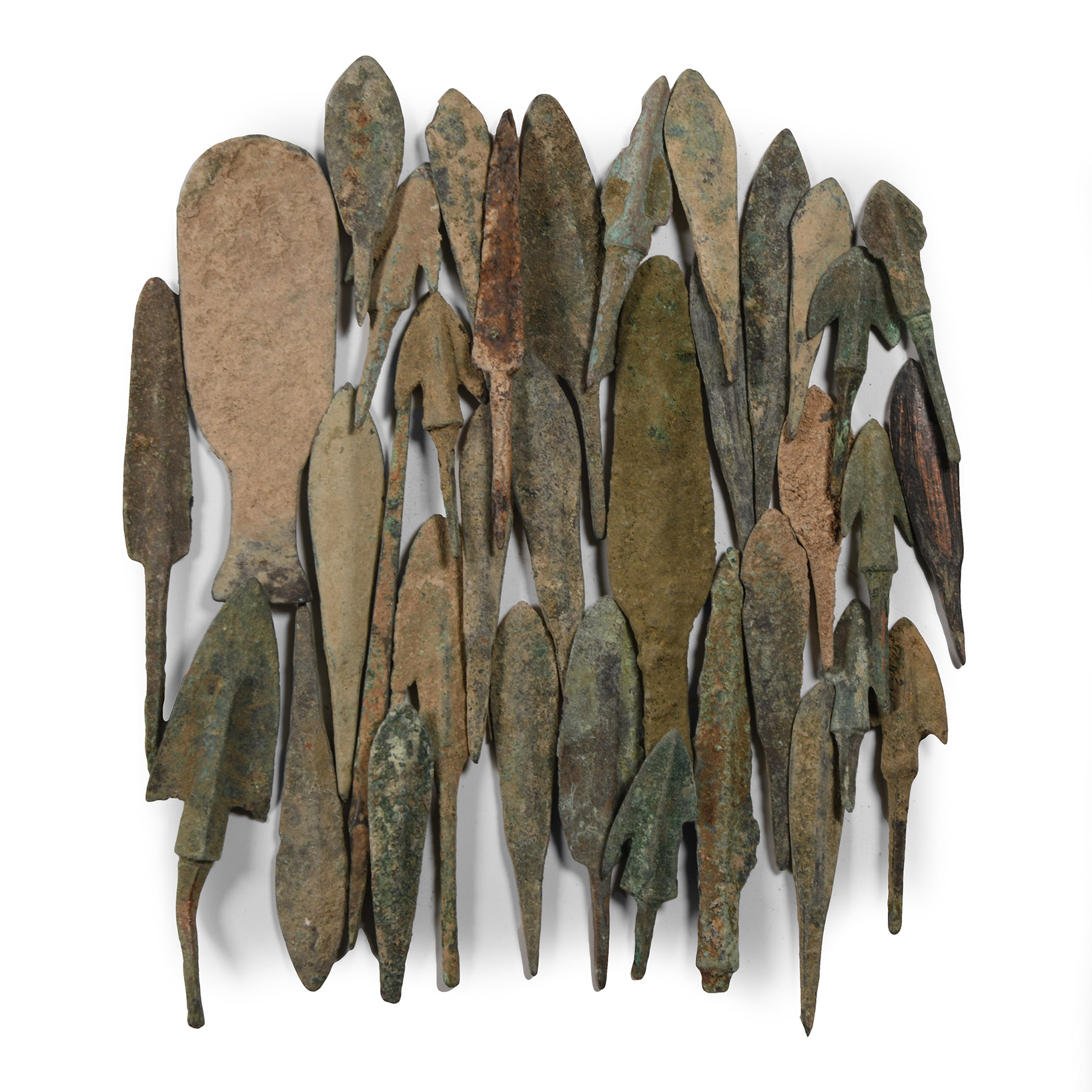
Mesopotamian Bronze Arrowhead Collection
CIRCA 1800-900 B.C.
1 5/8 - 4 3/4 in. (353 grams total, 4-12 cm).
Including triangular-section, barbed, paddle-shaped, and other types. [35]
ProvenanceEx London, UK, collection, 1990s.
LiteratureSee Muscarella, O.W., Bronze and Iron Ancient Near Eastern Artifacts in the Metropolitan Museum of Art, New York, 1988, pp.289ff., for similar arrowheads; Khorasani, M.M., Arms and Armour from Iran. The Bronze Age to the End of the Qajar Period, Tübingen, 2006, fig.467, for the barbed and triangular type.
FootnotesPaddle-shaped arrowheads with a flat, comparatively wide mid-rib and the blade shaped to a point were typical of Old Babylonian Empire. The shoulders were pronounced and the arrowhead had a rectangular-section tapering tang. They are the majority in this group, which comprises also barbed triangular arrowheads of type V from Marlik-Luristan, and one interesting specimen of trilobate arrowhead.
CONDITIONTimeLine Auctions follows a vetting process to ensure the authenticity and legality of all items, reinforcing our commitment to integrity and responsible trading. Each antiquity, antique, and coin lot undergoes thorough examination by a vetting committee of at least ten external specialists, professional trade association members, scientists, and archaeologists: Our Vetting Process
AUCTIONS:
TimeLine is a leading auction house specialising in antiquities, ancient art, collectables, natural history, coins, medals, and books. Our auctions offer museums, collectors, historians, and enthusiasts the opportunity to acquire unique and historically significant pieces.
-
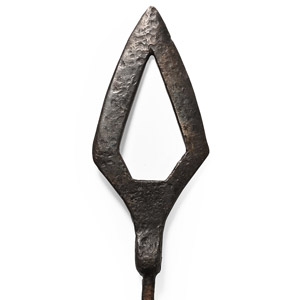
Large Medieval Iron Incendiary Fire Arrowhead
Circa 12th-14th century A.D.Sold for (Inc. bp): £442
A tanged arrowhead with openwork lozengiform blade, the centre with a truncated vesica-shaped void. 52 grams, 21 cm
Acquired on the French art market. From the private collection of a Buckinghamshire, UK, gentleman.
The central void was included to allow cloth soaked in tallow to be bound around the arrowhead; this was ignited before shooting. -
.jpg)
100 Civil War Period Lead Musket Balls
Circa 17th-18th century A.D.Sold for (Inc. bp): £143
Mixed group of lead-alloy musket and carbine balls, some with casting seam and sprue nipple. 1.74 kg total, 9-19 mm
Found Hertfordshire, UK. -
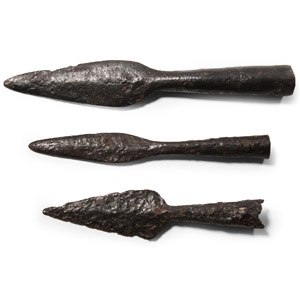
Saxon to Medieval Iron Spearhead Collection
7th-15th century A.D.Sold for (Inc. bp): £546
Comprising socketted spearheads or javelin heads with small lanceolate and lozenge-shaped heads, lentoid in section; one with a split socket and fastening rivet, another with the fastening hole for the shaft still in situ. 286 grams total, 14.5-19.5 cm
From the collection of the famous author, writer and speaker, Gordon Bailey, Essex, UK; formed since 1968.
The distinction between the early medieval lance and spear is difficult, However the lance (or the javelin), normally employed by mounted warriors, had a small slender and stouter blade, and a short wider socket. Both the spear and javelins could be used as throwing weapons by the 14th-15th century light cavalry, like the Spanish Jinetes.
