
Loading, please wait...
LOT 1398
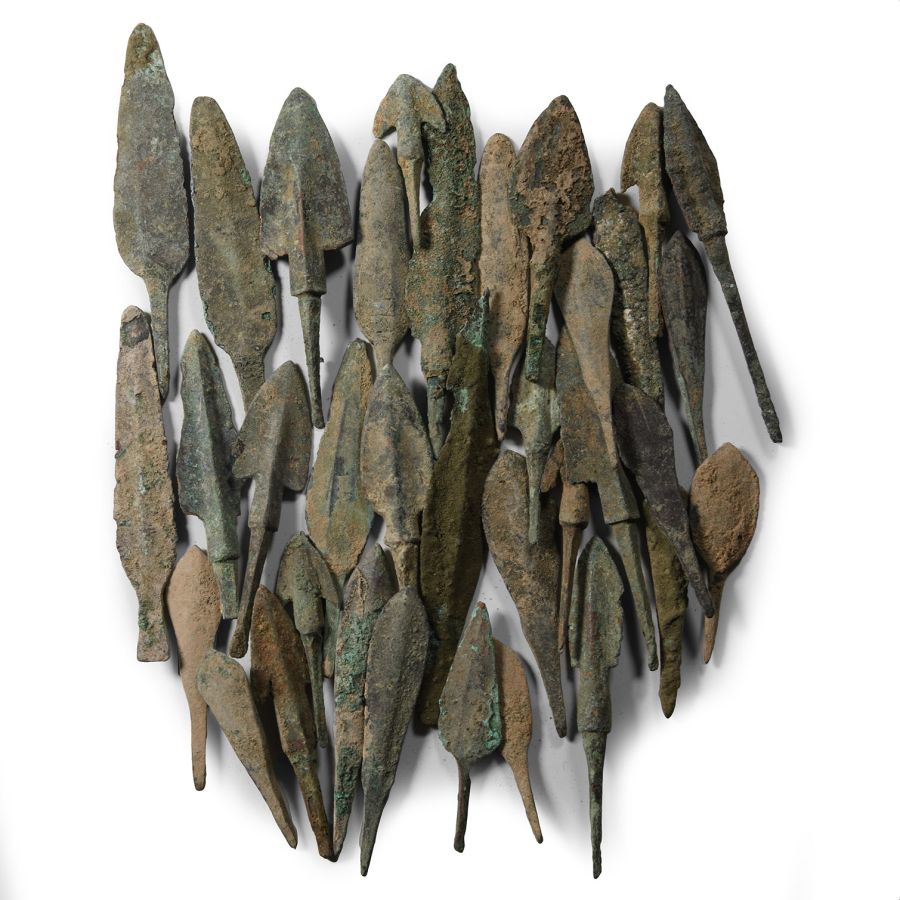
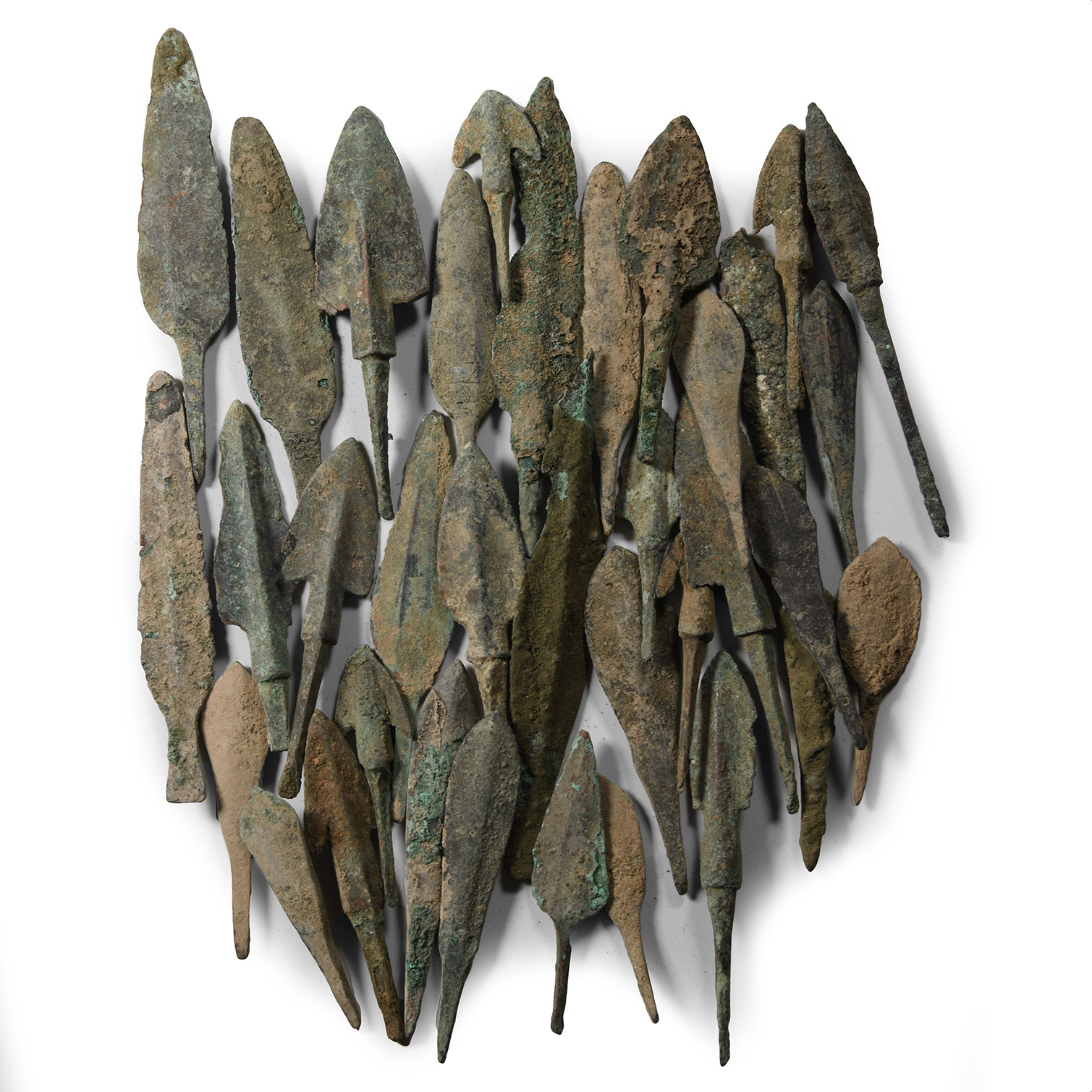
Mesopotamian Bronze Arrowhead Collection
CIRCA 1800-900 B.C.
1 3/4 - 3 1/2 in. (330 grams total, 44-90 mm).
Including leaf-shaped, barbed, and other small types. [35]
ProvenanceEx London, UK, collection, 1990s.
LiteratureSee Muscarella, O.W., Bronze and Iron Ancient Near Eastern Artifacts in the Metropolitan Museum of Art, New York, 1988, pp.289ff, for similar.
FootnotesPaddle-shaped arrowheads with a flat, comparatively wide mid-rib and the blade shaped to a point were typical of Old Babylonian Empire. The shoulders were pronounced and the arrowhead had a rectangular section tapering tang.
CONDITIONTimeLine Auctions follows a vetting process to ensure the authenticity and legality of all items, reinforcing our commitment to integrity and responsible trading. Each antiquity, antique, and coin lot undergoes thorough examination by a vetting committee of at least ten external specialists, professional trade association members, scientists, and archaeologists: Our Vetting Process
AUCTIONS:
TimeLine is a leading auction house specialising in antiquities, ancient art, collectables, natural history, coins, medals, and books. Our auctions offer museums, collectors, historians, and enthusiasts the opportunity to acquire unique and historically significant pieces.
-
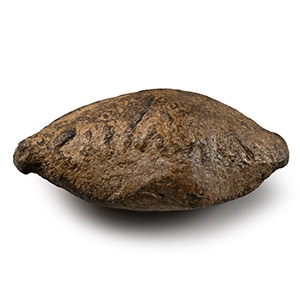
Roman 'Pompey the Great' Lead Slingshot
1st century B.C.Sold for (Inc. bp): £182
Biconical lead slingshot (glans) with inscription in Latin letters 'CN' (Cneius) 'MAG' (Magnus) on one side, and 'IMP' for 'IMPERATOR' (victorious general) to the other side, i.e Gnaeus Pompeius Magnus Imperator (Pompey the Great the victorious general). 59.6 grams, 40 mm
Ex German art market, 2000s. Acquired from an EU collector living in London. From the collection of Surrey, UK, gentleman. Accompanied by an academic paper by military specialist Dr Raffaele D'Amato, dated 4th May 2022 and titled 'Roman Res Publica - Lead Slingshots (glandes) of Caesarian Age - 45 B.C circa'.
The shot (Völling type 1C) is marked with the abbreviated name of Gnaeus Pompey; it was used in quantity at the Battle of Monda (or Munda) against Julius Caesar, 17th March 45 BC. The projectiles were made of different materials: lead (glandes) or in pottery or stone (lapides missiles). Sometimes they were signed with the name of the general, like our specimen. -
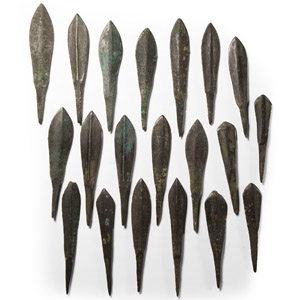
Old Babylonian Bronze Arrowhead Collection
1800-1500 B.CSold for (Inc. bp): £364
Comprising paddle-shaped arrowheads with a flat, comparatively wide mid-rib. 177 grams total, 57-80 mm
UK private collection before 2000. Acquired on the UK art market. Property of a London gentleman.
These kind of arrowheads were typical of the Old Babylonian Empire. The shoulders were pronounced and the arrowhead had a rectangular-section tapering tang. This simple form was popular throughout and show comparative common finds in the Holy Land. -
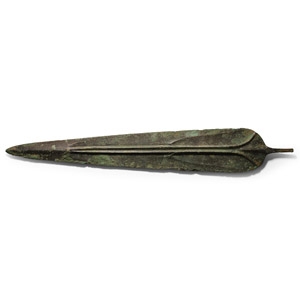
Luristan Wide-Bladed Bronze Sword with Blood Channels
1st millennium B.C.Sold for (Inc. bp): £390
Two-edged leaf-shaped blade with short rectangular tang, corrugated midrib extending almost to the tip and flared at the shoulders. 671 grams, 48.5 cm
Acquired 1980-2015. Ex Abelita family collection.
Luristan was hardly an ethnic or political entity, but the people of Luri had relations through warfare and trade with Sumerians, Lullubi, Assyrians, Babylonians and Elamites in a large time period, spanning from the 3rd to the 2nd millennium BC. The ruling elites of warrior horsemen were buried in the graves with their weapons and horses.
