
Loading, please wait...
LOT 0222
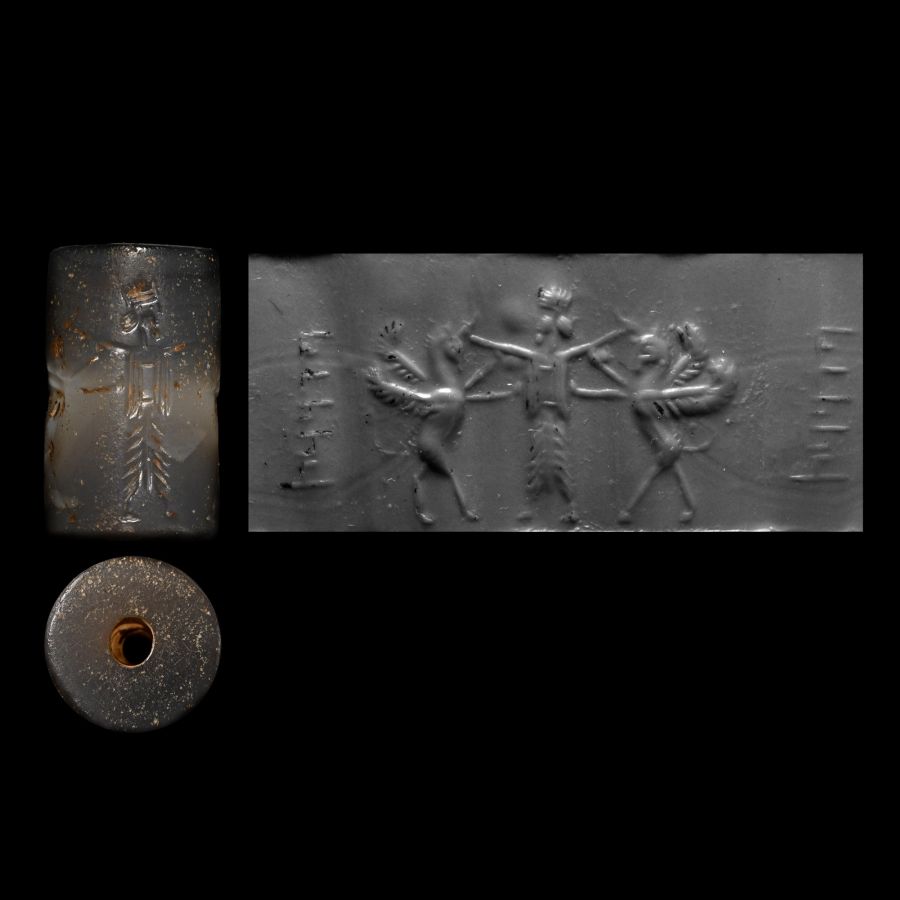
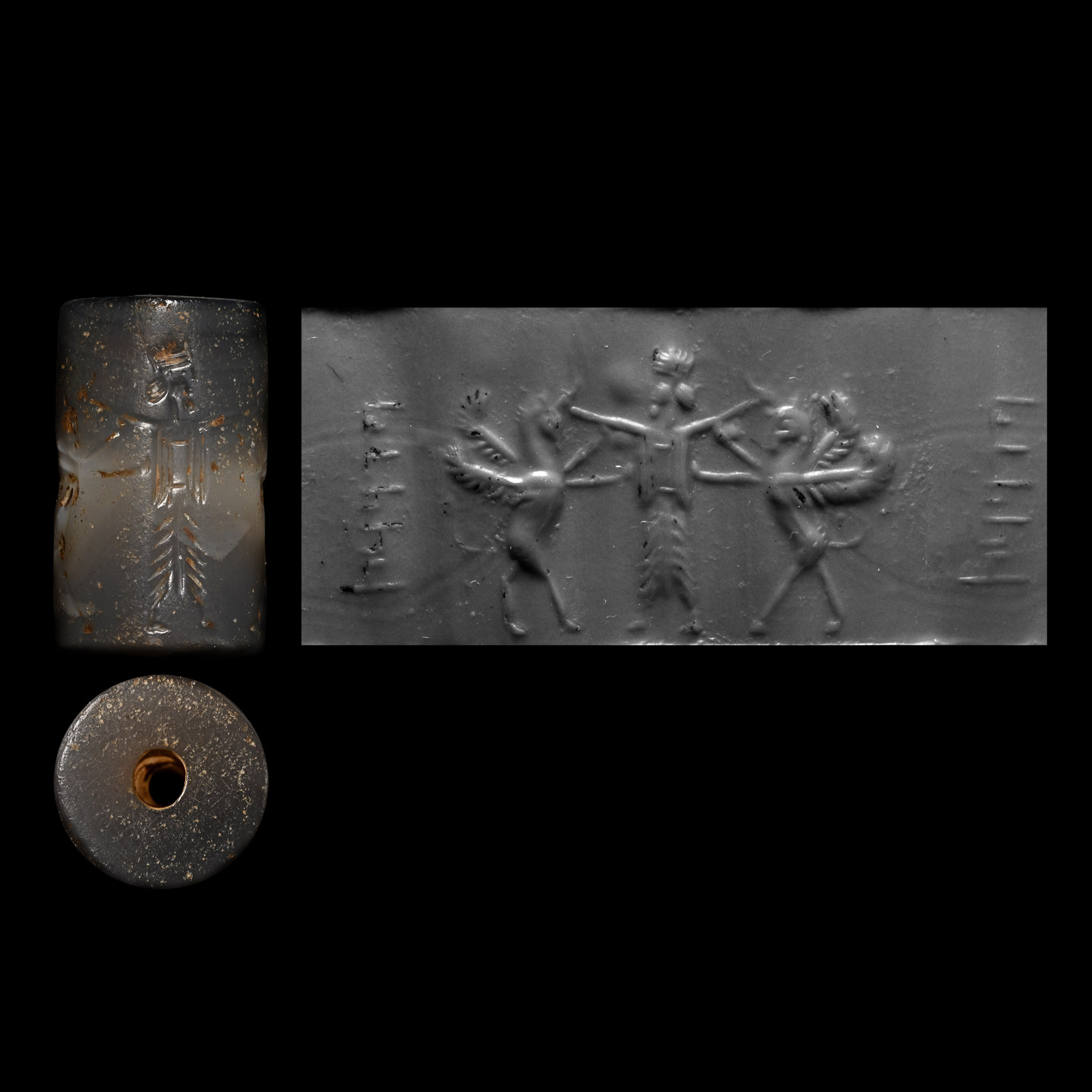
Mesopotamian Banded Agate Cylinder Seal with Gryphons and God
2ND-1ST MILLENNIUM B.C.
3/4 in. (5.43 grams, 20.53 mm).
With combat scene depicting two rearing gryphons flanking a standing bearded figure; supplied with a museum-quality impression.
ProvenanceFrom the 'S' collection, acquired 1970-1990s.
The collection was seen and studied by W.G. Lambert, late Professor of Assyriology at the University of Birmingham, 1970-1993.)
This lot has been cleared against the Art Loss Register database, and is accompanied by an illustrated lot declaration signed by the Head of the Antiquities Department, Dr Raffaele D'Amato.
TimeLine Auctions follows a vetting process to ensure the authenticity and legality of all items, reinforcing our commitment to integrity and responsible trading. Each antiquity, antique, and coin lot undergoes thorough examination by a vetting committee of at least ten external specialists, professional trade association members, scientists, and archaeologists: Our Vetting Process
AUCTIONS:
TimeLine is a leading auction house specialising in antiquities, ancient art, collectables, natural history, coins, medals, and books. Our auctions offer museums, collectors, historians, and enthusiasts the opportunity to acquire unique and historically significant pieces.
LOT 0222
Mesopotamian Banded Agate Cylinder Seal with Gryphons and God
Sold for (Inc. bp): £780
-

Anatolian Black Stone Cylinder Seal with Figures Holding Clubs
Circa 2600-2300 B.C.Sold for (Inc. bp): £234
Cylinder with cord and bead handles; accompanied by a copy of an old scholarly note, typed and signed by W.G. Lambert, late Professor of Assyriology, University of Birmingham, 1970-1993, which states: 'Description of Cylinder Seal of Soft Black Stone, 19.5 x 13 mm. Two standing human figures are striking with big clubs, the one at a seated (fallen?) human, the other at an uncertain depiction. A third standing human (inactive) and two quadrupeds make up the scene. From Syria or Anatolia, c. 2600-2300 B.C. Condition: edges worn, but the design still sharp.'; supplied with a museum-quality impression. 6.76 grams, 19 mm
UK private collection, acquired 1980-1983. Accompanied by a copy of a scholarly note, typed and signed by Professor Wilfrid George Lambert in October 1987. This lot has been cleared against the Art Loss Register database, and is accompanied by an illustrated lot declaration signed by the Head of the Antiquities Department, Dr Raffaele D'Amato. -
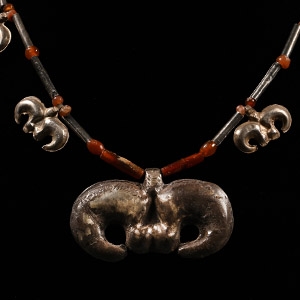
Large Elamite Silver Pendant Necklace
3rd-mid 2nd millennium B.C.Estimate: £1,500 - 2,000 (+bp*)
Opening Bid: £750
Restrung necklace of tubular sheet-silver and carnelian beads with oblate spacers, four small and one large pendant, each formed as a pair of crescent horns. 38.94 grams, 46 cm
Acquired before 1983. Ex London gallery, 1990s. This lot has been cleared against the Art Loss Register database, and is accompanied by an illustrated lot declaration signed by the Head of the Antiquities Department, Dr Raffaele D'Amato. -
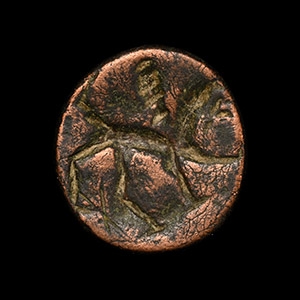
West Central Asian Bronze Stamp Seal Matrix with Walking Quadruped
Circa 2000-1500 B.C.Estimate: £100 - 140 (+bp*)
Opening Bid: £50
Discoid with large looped handle to the reverse; accompanied by typed and signed note by the late W.G. Lambert, Professor of Assyriology at the University of Birmingham, 1970-1993, which states: 'Stamp Seal of Bronze, 22 x 20 x 26mm. This has a round, slightly concave face and a back which rises steeply to a stalk handle with pierced loop. The design on the face, done in intaglio, consists of a walking winged quadruped with tail raised. This comes from west central Asia and dates to c. 2000-1500 B.C. It is a less common type, and the metal is sound.' 21 grams, 26 mm
Ex collection of a late London gentleman, 1990s. Accompanied by an original typed and signed scholarly note by the late W.G. Lambert, Professor of Assyriology at the University of Birmingham, 1970-1993. This lot has been cleared against the Art Loss Register database, and is accompanied by an illustrated lot declaration signed by the Head of the Antiquities Department, Dr Raffaele D'Amato.
