
Loading, please wait...
LOT 1247
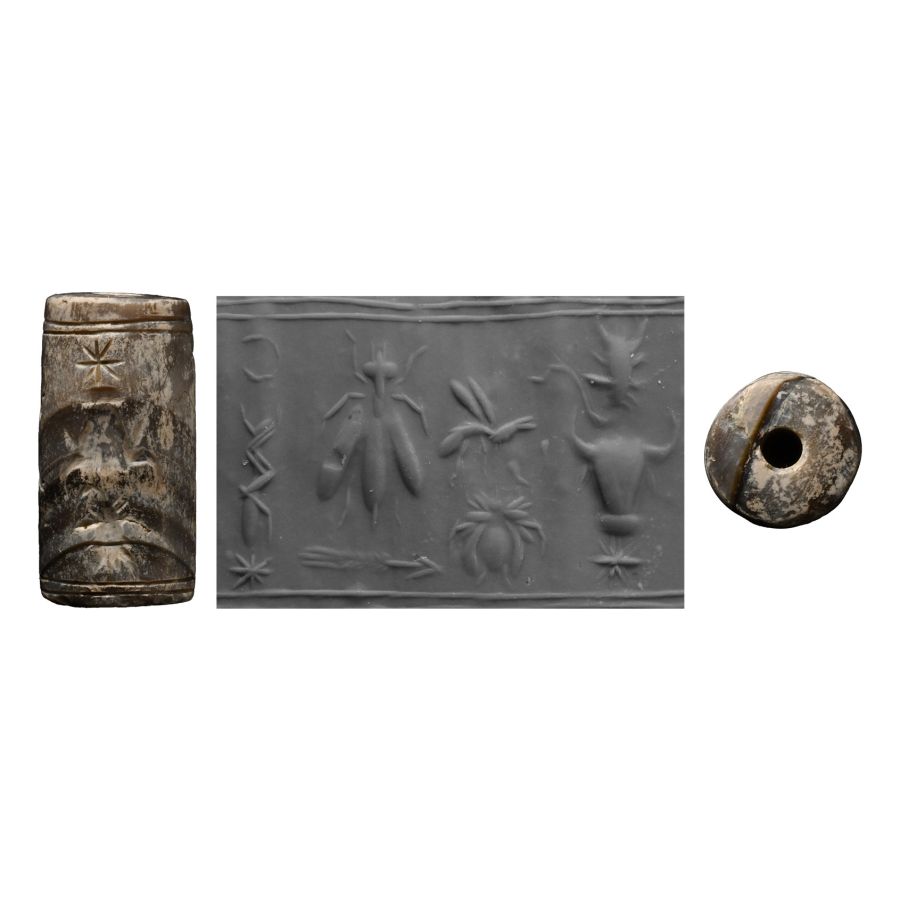
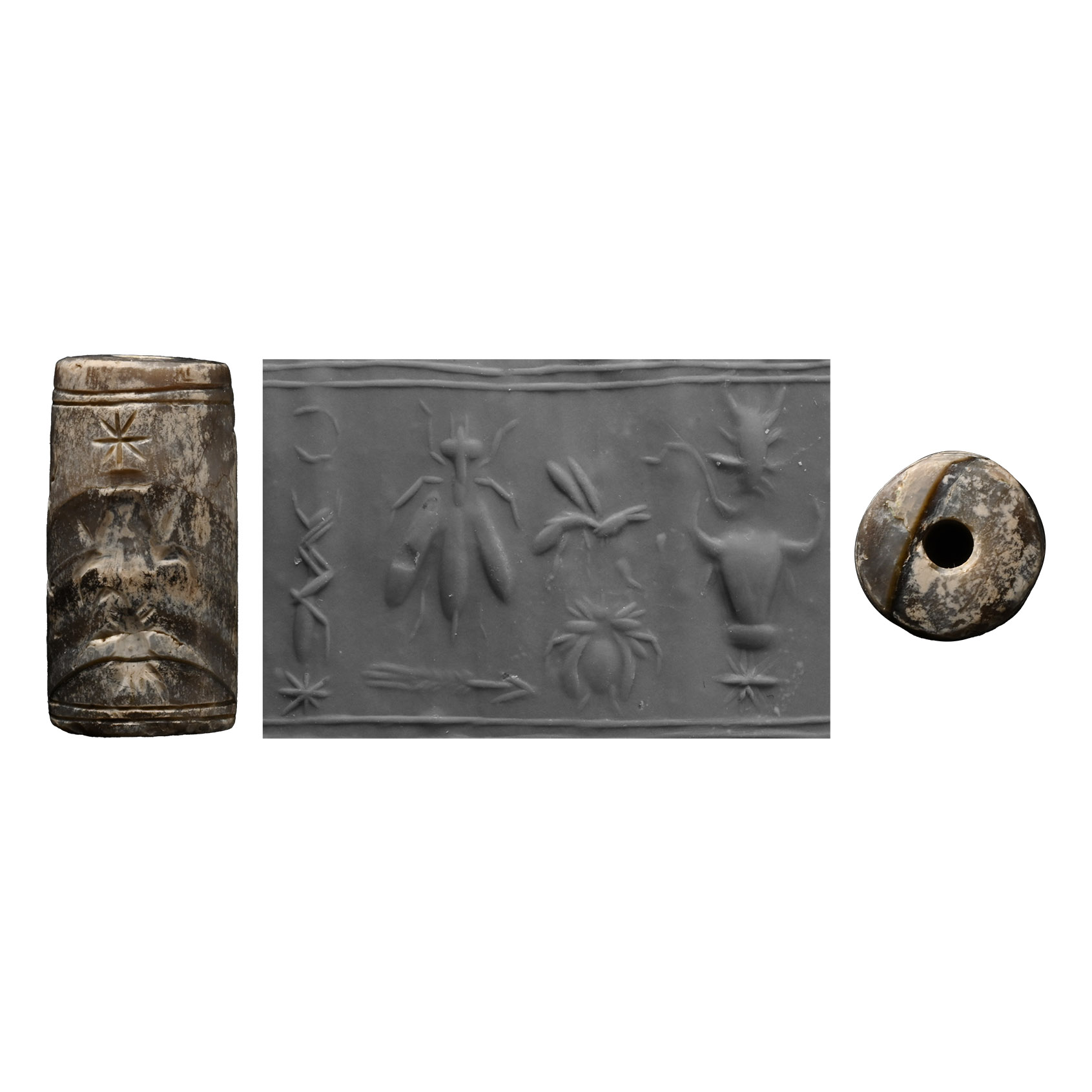
Mesopotamian Agate Cylinder Seal with Bull's Head
1ST MILLENNIUM B.C.
1 in. (6.78 grams, 24 mm).
Carved with zoomorphic figures, astrological symbols and geometric decoration, central bull's head with a star below and two large insects on the field.
ProvenanceFrom the property of late Mr SM, London, UK, 1969-1999.
Accompanied by an old collection ticket.
TimeLine Auctions follows a vetting process to ensure the authenticity and legality of all items, reinforcing our commitment to integrity and responsible trading. Each antiquity, antique, and coin lot undergoes thorough examination by a vetting committee of at least ten external specialists, professional trade association members, scientists, and archaeologists: Our Vetting Process
AUCTIONS:
TimeLine is a leading auction house specialising in antiquities, ancient art, collectables, natural history, coins, medals, and books. Our auctions offer museums, collectors, historians, and enthusiasts the opportunity to acquire unique and historically significant pieces.
-
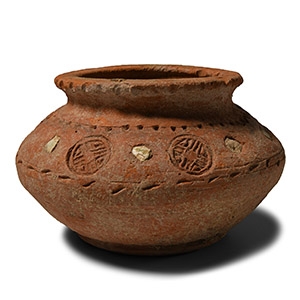
Bactrian Ceramic Jar with Stamped Decoration
1st millennium B.C.Sold for (Inc. bp): £468
Squat in profile with broad foot, carinated rim with notched edge, band of impressed rosettes and inset shell studs to the shoulder, notched borders. 540 grams, 13.8 cm wide
with a London, UK gallery 1971-early 2000s. -
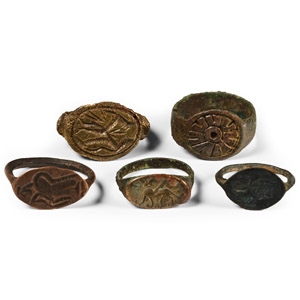
Western Asiatic Decorated Bronze Ring Group
Circa 1st millennium A.D.Sold for (Inc. bp): £98
Comprising five rings with large decorative bezels, three with standing figure, one with a waking sphinx and one with a rosette. 16.5 grams total, 19-23 mm
UK private collection before 2000. On the UK art market. Property of a London gentleman. -
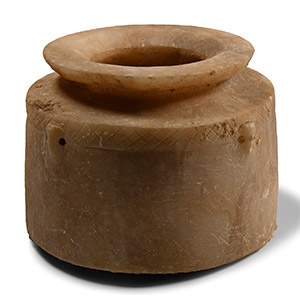
Proto-Sumerian Alabaster Vessel
Circa 3000 B.C.Estimate: £4,000 - 6,000 (‡+bp*)
Opening Bid: £1,600
Jar with slightly tapering cylindrical sidewall, flared rim to the mouth; incised hatched band to the shoulder and four pierced lugs. 1.02 kg, 11.7 cm wide
with Gwain McKinley, London, 1980s. Acquired from the above, 1993. Private European collection, thence by family descent. This lot has been checked against the Interpol Database of stolen works of art and is accompanied by a search certificate number no.12125-218132.
