
Loading, please wait...
LOT 2425
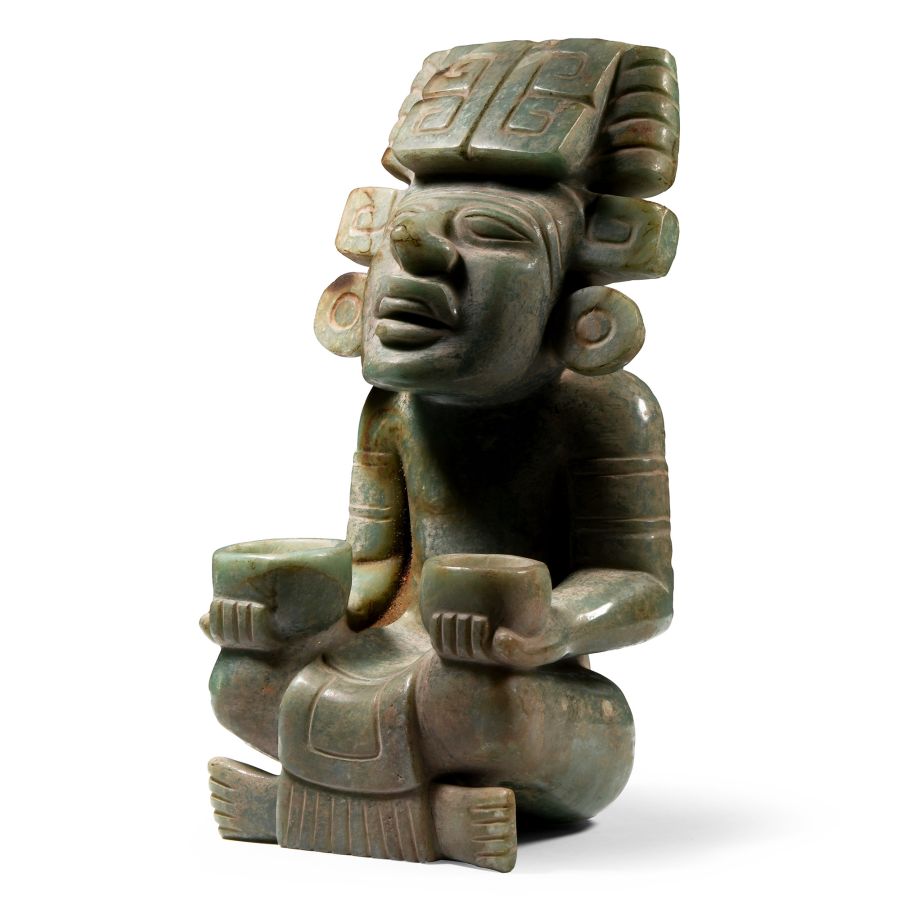
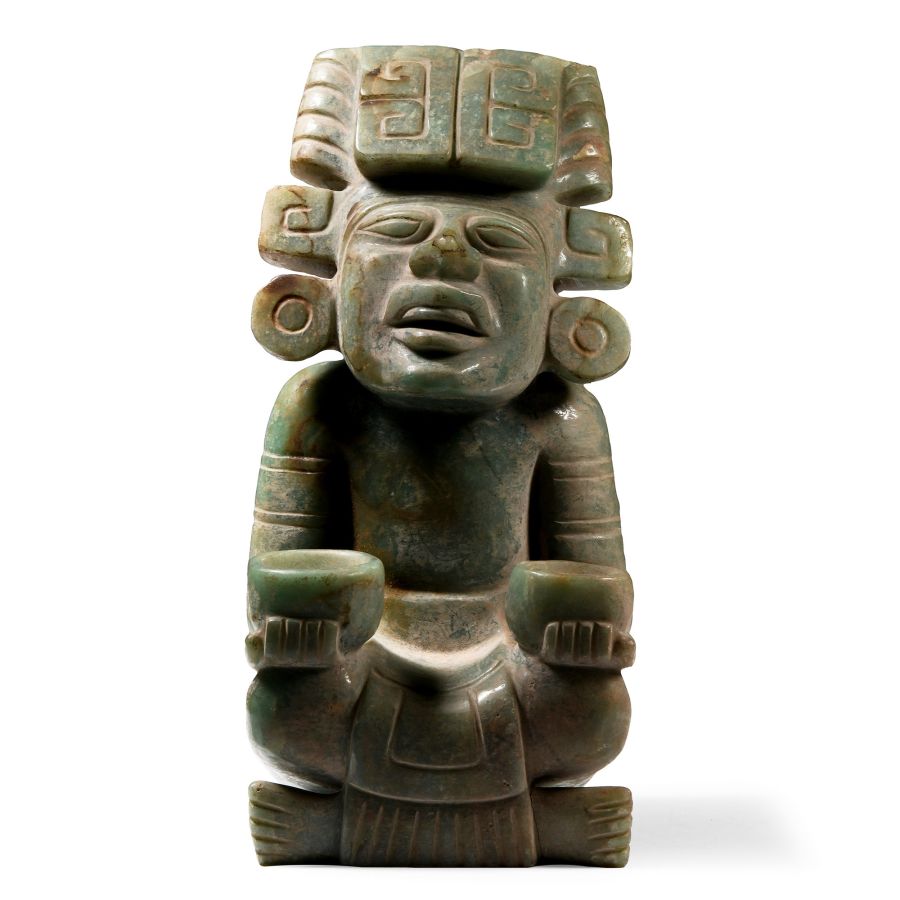
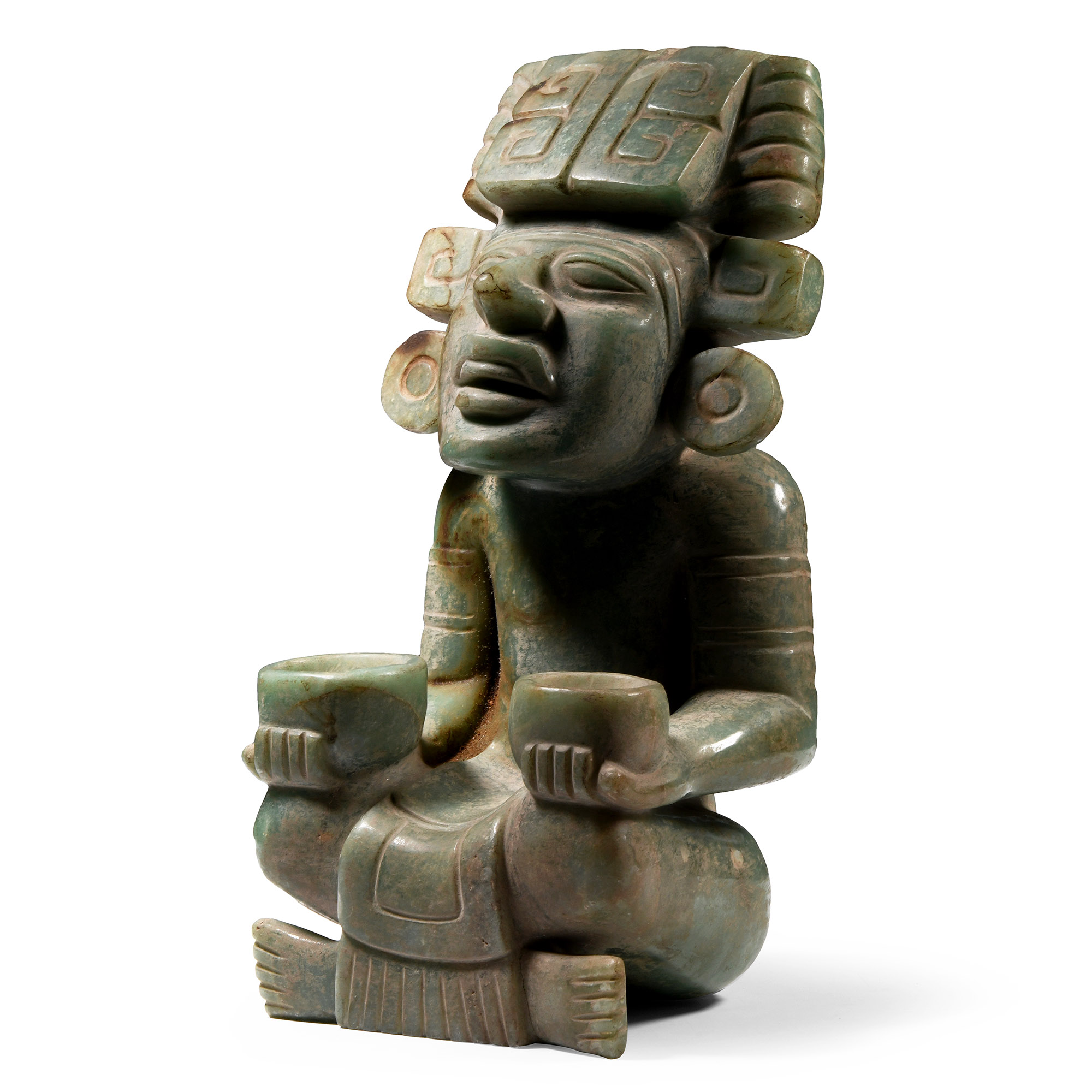
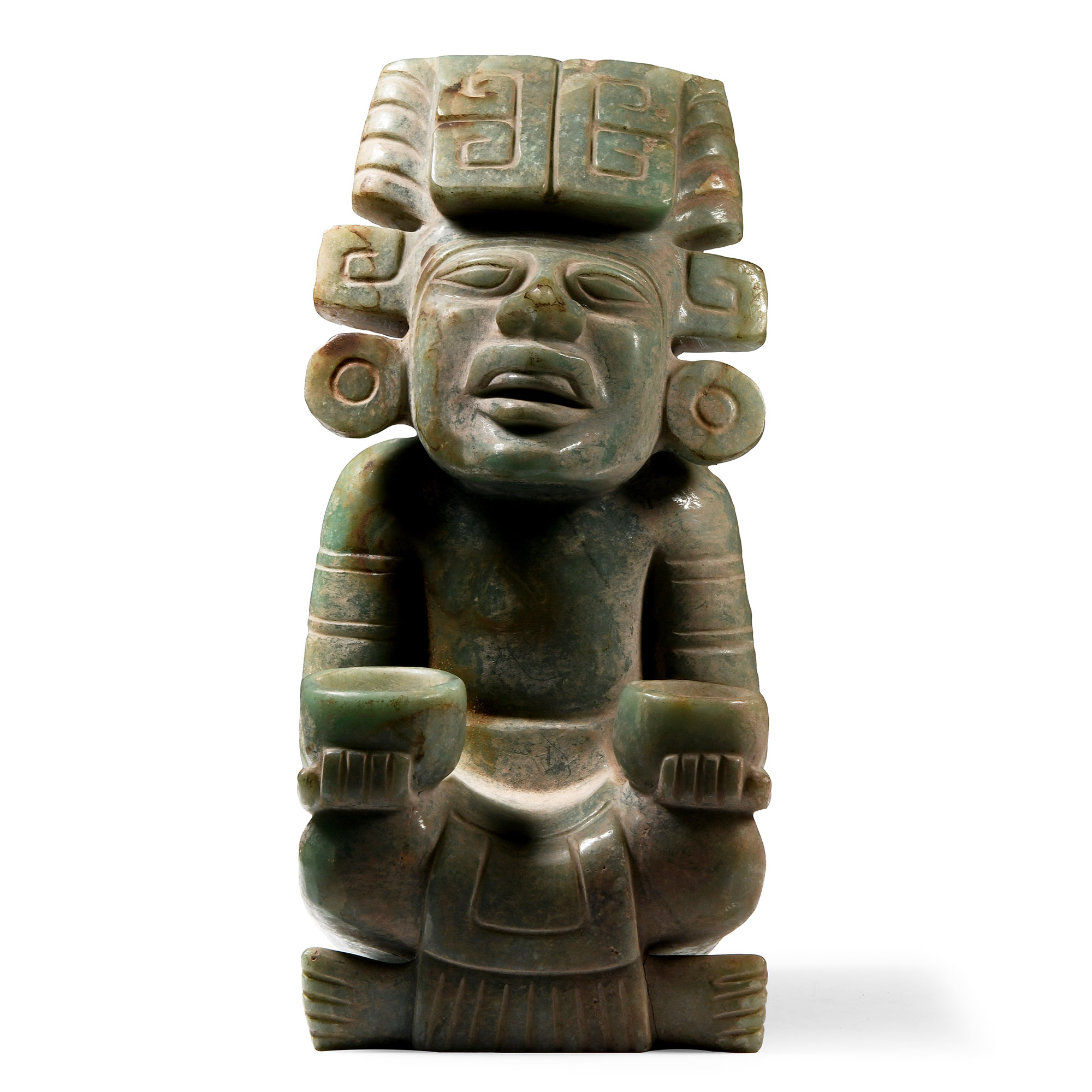
Mesoamerican Aztec Jadeite Seated Figure with Offering Bowls
10TH-EARLY 16TH CENTURY A.D.
11 134 in. (5.85 kg, 30 cm).
Seated male figure with legs crossed, arms bent, hands placed in an advanced position each offering a cup; bracelets on the upper arms; ceremonial headdress, round lobed earrings, the body covered only by a fringed loincloth, or ehuatl.
ProvenanceFrom an Italian collector living in Torino, Canada.
Part of her family's collection, 1965.
By descent from her grandmother, 1993.
Private collection, England.
Accompanied by a copy of the Italian cultural export permit.
Accompanied by a signed academic report by Emilio J.
Bejarano Erosa (Director of the Instituto Nacional de Antropología E Historia, Mexico, 1968-1982).
Accompanied by scholarly note TL5340 by Dr Ronald Bonewitz.
This lot has been checked against the Interpol Database of stolen works of art and is accompanied by AIAD certificate number no.10287-168435.
See Instituto Geologico de Mėxico, Catalogo Geográfico de las especies minerales de Mėxico, Boletin 41, Mėxico, 1923; Mirambell, L.E., Tecnicas Lapidarias Prehispanica, Mėxico, 1968; Pohl, J., Aztec, Mixtec and Zapotec Armies, London, 1991; Mirambell, L.E., Materiales Arqueologicos y material prima’, in Serie Arqueologia INAH, Mėxico, 2005; Langenscheidt, A., ‘Los Abrasivos en Mesoamėrica’, Arqueologia Mexicana vol. XIV, No 80 Julio-Agosto, Mėxico, 2006, pp.55-60.
FootnotesThe Aztecs' capital city, Tenochtitlan, established in the 14th century, was located on the present-day site of Mexico City.
CONDITIONTimeLine Auctions follows a vetting process to ensure the authenticity and legality of all items, reinforcing our commitment to integrity and responsible trading. Each antiquity, antique, and coin lot undergoes thorough examination by a vetting committee of at least ten external specialists, professional trade association members, scientists, and archaeologists: Our Vetting Process
AUCTIONS:
TimeLine is a leading auction house specialising in antiquities, ancient art, collectables, natural history, coins, medals, and books. Our auctions offer museums, collectors, historians, and enthusiasts the opportunity to acquire unique and historically significant pieces.
LOT 2425
Mesoamerican Aztec Jadeite Seated Figure with Offering Bowls
Sold for (Inc. bp): £10,400
-
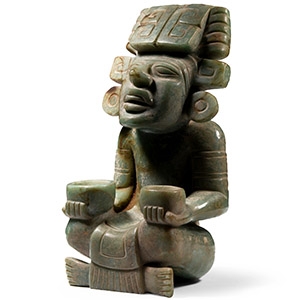
Mesoamerican Aztec Jadeite Seated Figure with Offering Bowls
10th-early 16th century A.D.Sold for (Inc. bp): £10,400
Seated male figure with legs crossed, arms bent, hands placed in an advanced position each offering a cup; bracelets on the upper arms; ceremonial headdress, round lobed earrings, the body covered only by a fringed loincloth, or ehuatl. 5.85 kg, 30 cm
From an Italian collector living in Torino, Canada. Part of her family's collection, 1965. By descent from her grandmother, 1993. Private collection, England. Accompanied by a copy of the Italian cultural export permit. Accompanied by a signed academic report by Emilio J. Bejarano Erosa (Director of the Instituto Nacional de Antropología E Historia, Mexico, 1968-1982). Accompanied by scholarly note TL5340 by Dr Ronald Bonewitz. This lot has been checked against the Interpol Database of stolen works of art and is accompanied by AIAD certificate number no.10287-168435.
The Aztecs' capital city, Tenochtitlan, established in the 14th century, was located on the present-day site of Mexico City. -
.jpg)
Pre-Columbian Nazca Terracotta Vessel with Mythical Creature
100-700 A.D.Sold for (Inc. bp): £845
Biconical vessel with conical underside and domed upper, two vertical spouts to the centre with flat-section bar between, painted frieze of creatures to the shoulder including severed heads. 713 grams, 18.5 cm
From a collection acquired on the UK art market from various auction houses and collections mostly before 2000. From an important Cambridgeshire estate; thence by descent.
The depiction of severed heads being held by mythical creatures as trophies reflects a society where warfare was commonplace and celebrated through art. -
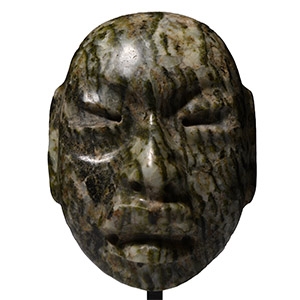
Prehispanic Olmec Jade Mask
900-400 B.C. or laterSold for (Inc. bp): £2,340
A striated green stone head or mask carved in the half-round with semi-naturalistic facial features, in the Olmec style; mounted on a custom-made display stand. 557 grams total, 17.6 cm including stand
with Throckmorton Fine Arts, 1990s. Private collection, England.
This fine maskette displays the classical features of Olmec Art. The eyes are feline and mouth slightly open, representing the snarl of the Jaguar, a revered animal to the ancient Olmec. This face likely depicts the ideal Olmec ruler rather than portrait of an individual and would have been made for important ceremony or individual of high rank.
