
Loading, please wait...
_900x900.jpg "Medieval 'Walsingham' Pewter Pilgrim's Holy Water Ampulla")
_200x200.jpg "Medieval 'Walsingham' Pewter Pilgrim's Holy Water Ampulla")
.jpg "Medieval 'Walsingham' Pewter Pilgrim's Holy Water Ampulla")
LOT 1650
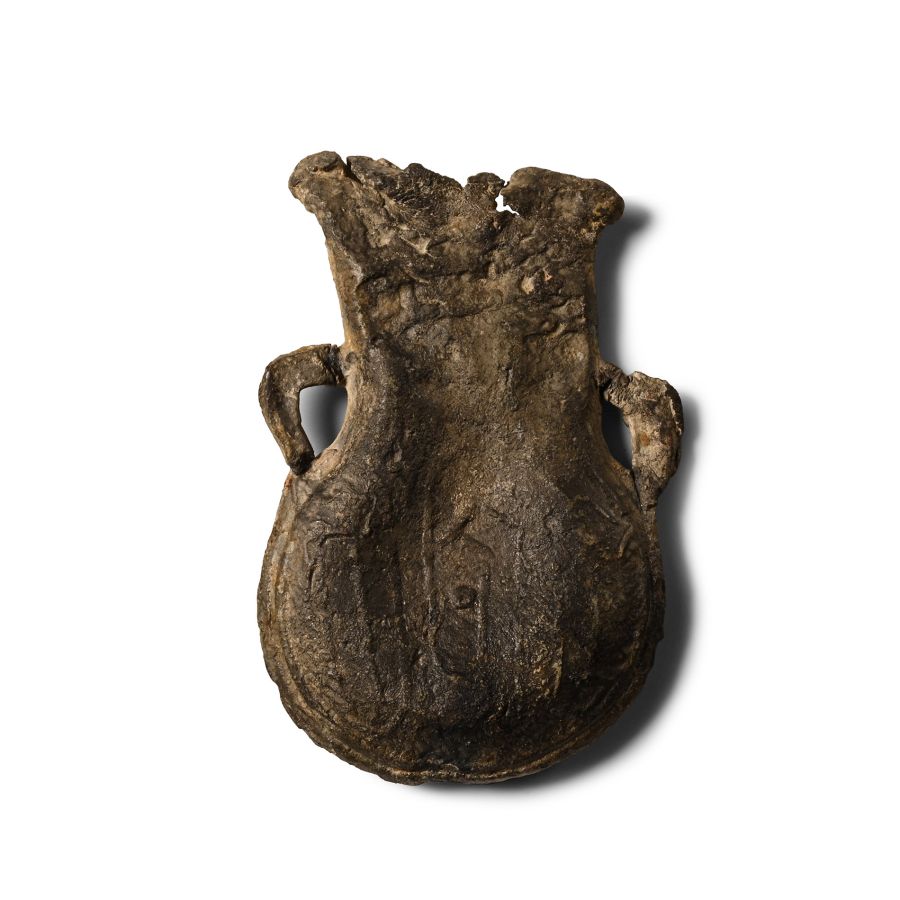
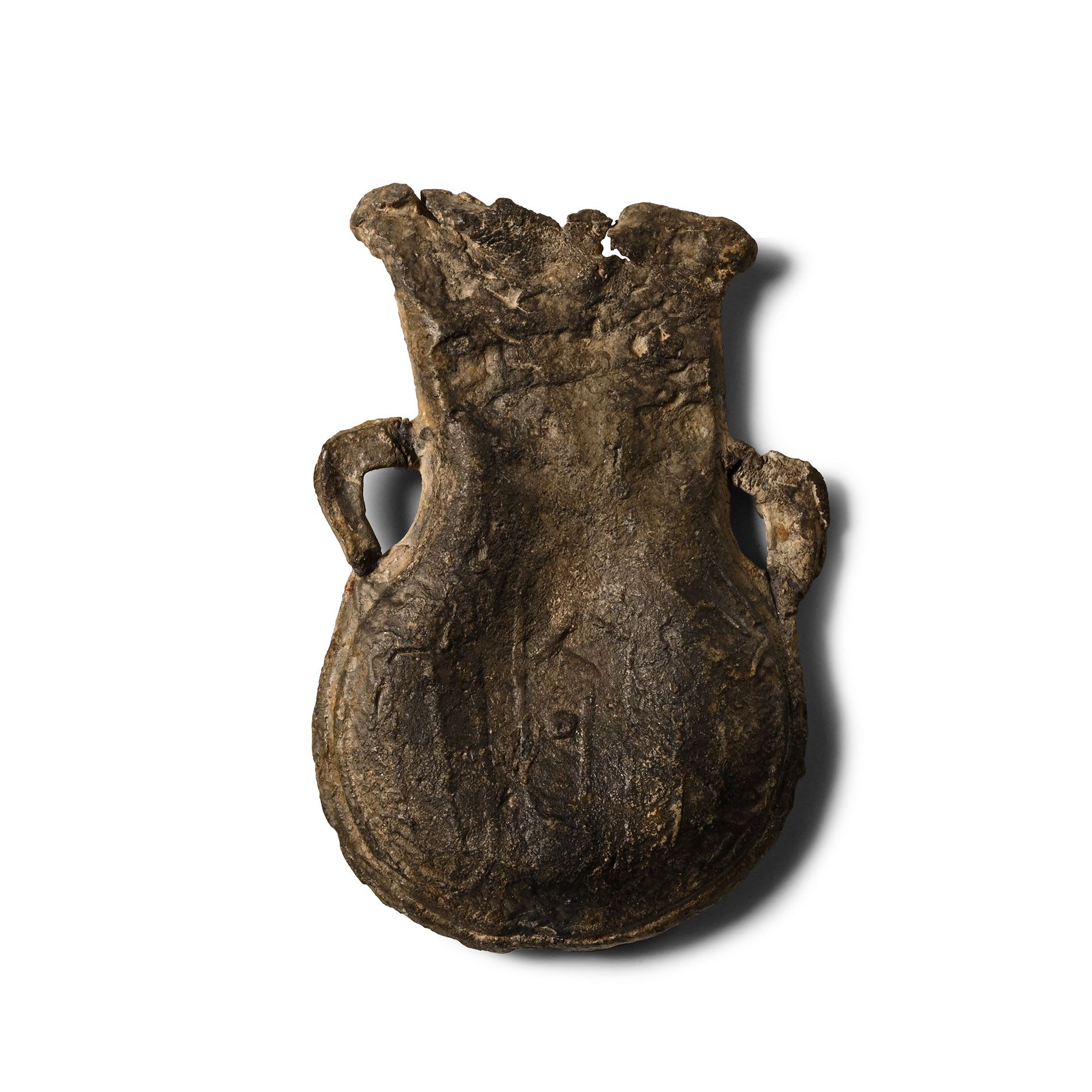
Medieval 'Walsingham' Pewter Pilgrim's Holy Water Ampulla
14TH-15TH CENTURY A.D.
1 7/8 in. (38.1 grams, 48 mm).
With flared mouth and two lateral handles, bulb with IHS' on a hatched fiel to obverse, 'W' within a ring to reverse. [No Reserve]
ProvenanceFound Essex, UK.
Property of an Essex collector.
Cf. Mitchiner, M., Medieval Pilgrim & Secular Badges, London, 1986, item 399, for similar.
CONDITIONTimeLine Auctions follows a vetting process to ensure the authenticity and legality of all items, reinforcing our commitment to integrity and responsible trading. Each antiquity, antique, and coin lot undergoes thorough examination by a vetting committee of at least ten external specialists, professional trade association members, scientists, and archaeologists: Our Vetting Process
AUCTIONS:
TimeLine is a leading auction house specialising in antiquities, ancient art, collectables, natural history, coins, medals, and books. Our auctions offer museums, collectors, historians, and enthusiasts the opportunity to acquire unique and historically significant pieces.
LOT 1650
Medieval 'Walsingham' Pewter Pilgrim's Holy Water Ampulla
Sold for (Inc. bp): £130
-
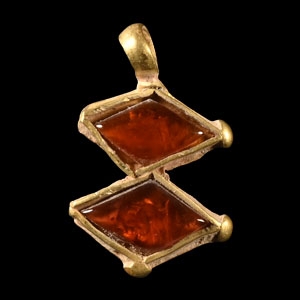
Medieval Gold and Garnet Pendant
14th-16th century A.D.Sold for (Inc. bp): £130
Formed as biconvex scaphoid gems set in a gold frame of two lozenges. 0.49 grams, 12 mm
Ex property of a late Japanese collector, 1970s. -
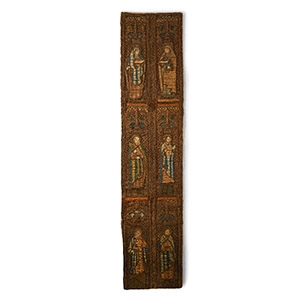
Medieval Embroidered Orphrey with Six Saints
Southern Netherlands, 15th century A.D.Sold for (Inc. bp): £1,560
Rectangular textile panel with six figural scenes within laid work borders; each figure a nimbate saint with couched robes, satin stitch facial features, threaded sequins and other detailing; modern fabric backing. 502 grams, 104 cm
with SVV Prunier, 20 May 2018, no.86. Ex central London gallery.
This substantial embroidered panel comes from an ecclesiastic Dalmatic composed up of various sections, each section comprising an applied figure embroidered in yellow-brown colours with the addition of light blue in some figures. From top to bottom two female saints, probably the Virgin Mary and her Holy Mother Anna; in the second central panels are represented Saint Peter, keys in hand, and probably his brother Andrew. Saint Augustine and Saint Thomas Aquinas are possibly the subjects of the last two vertical panels. The embroidery technique used is including fine worked nué, in which metallic threads are laid down and worked over in silk, with split stitch. -
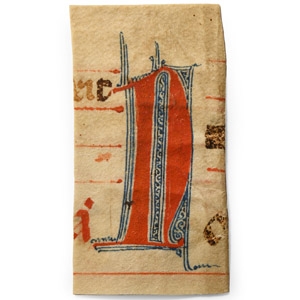
Medieval Initial 'N' Tempera on Parchment from a Choir Book
Italy, 15th century A.D.Sold for (Inc. bp): £65
Vellum manuscript (psalter) section with versal 'N' in red with blue inked foliage and scrolls surrounding. 0.8 grams, 82 x 45 mm
Private collection, USA, formed in the 1980s.
