
Loading, please wait...
LOT 1695
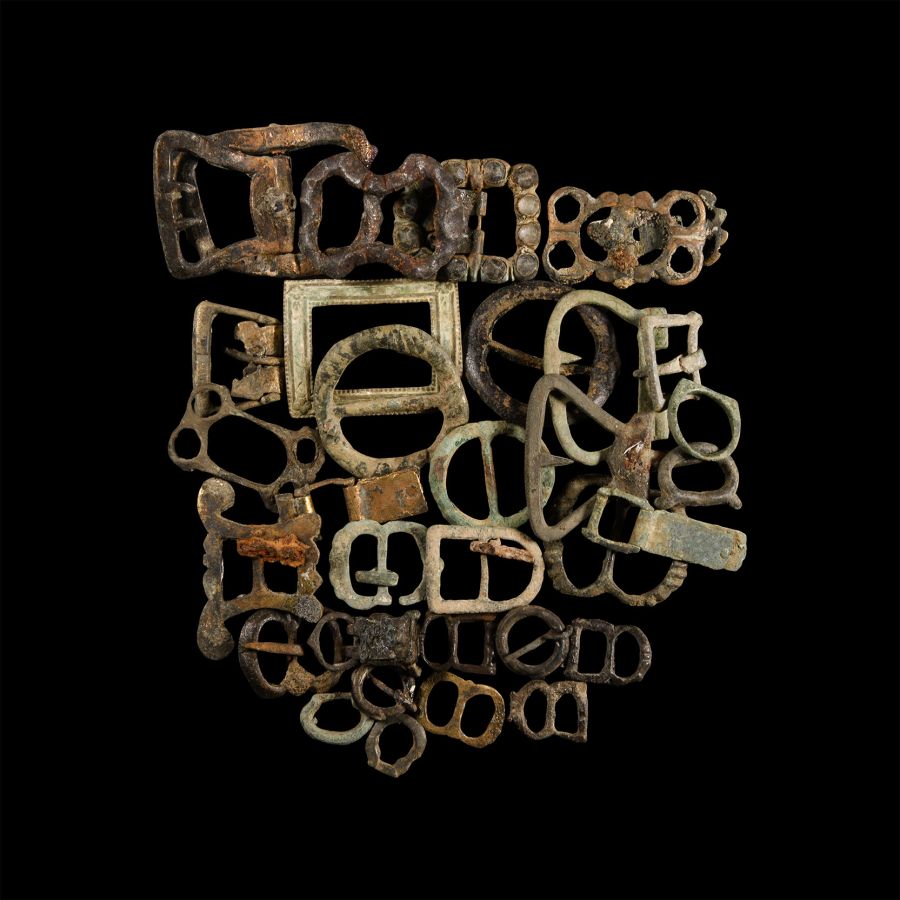
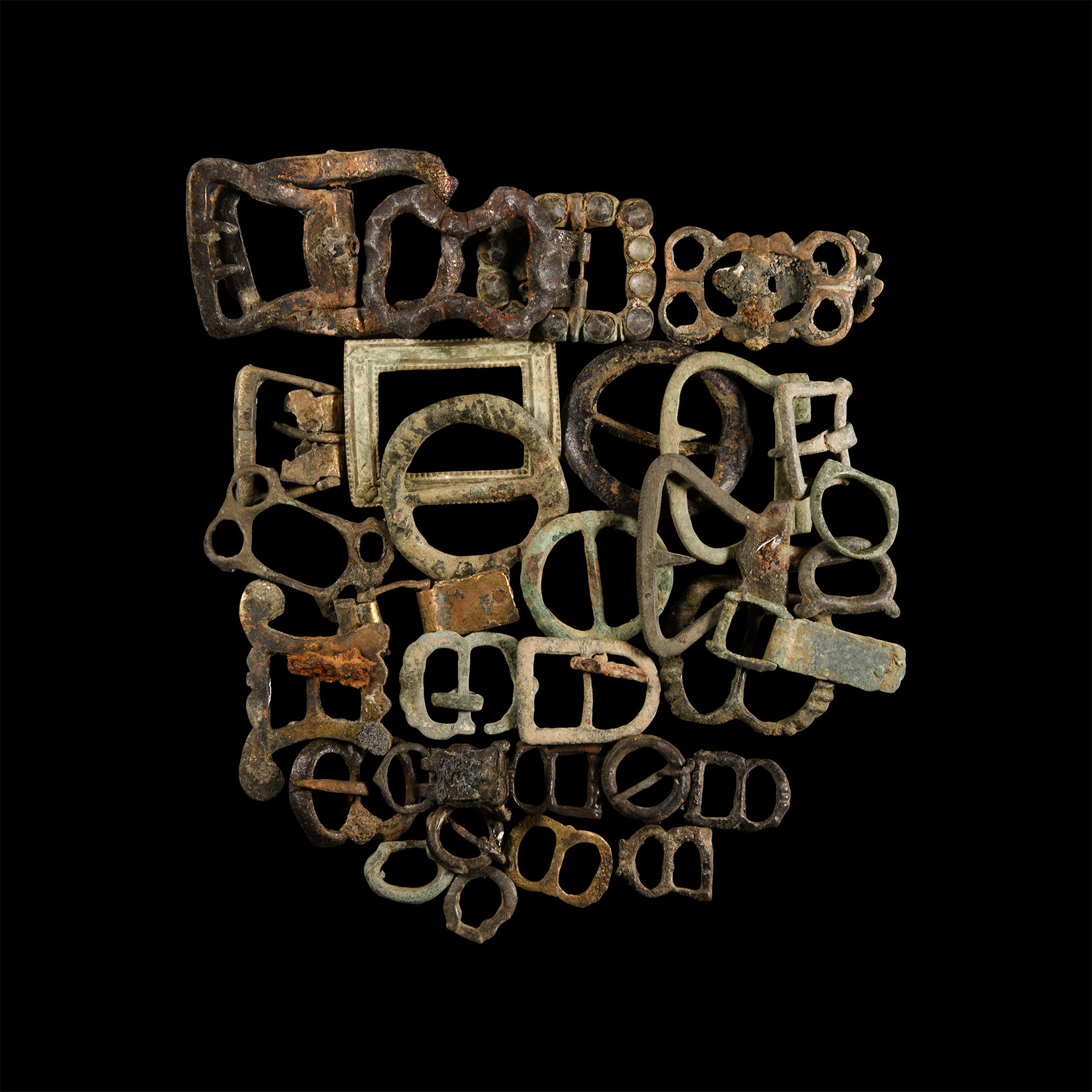
Medieval to Post Medieval 'Thames' Bronze Buckle Group
15TH-18TH CENTURY A.D.
1/2 - 2 in. (127 grams total, 13-50 mm).
Mainly comprising buckle frames of various dates, types and sizes, including decorative examples. [31, No Reserve]
ProvenanceFound Thames foreshore spoil, 1980s.
CONDITIONTimeLine Auctions follows a vetting process to ensure the authenticity and legality of all items, reinforcing our commitment to integrity and responsible trading. Each antiquity, antique, and coin lot undergoes thorough examination by a vetting committee of at least ten external specialists, professional trade association members, scientists, and archaeologists: Our Vetting Process
AUCTIONS:
TimeLine is a leading auction house specialising in antiquities, ancient art, collectables, natural history, coins, medals, and books. Our auctions offer museums, collectors, historians, and enthusiasts the opportunity to acquire unique and historically significant pieces.
-

Medieval Gilt Bronze Animal Collection
11th-15th century A.D.Estimate: £600 - 800 (+bp*)
Opening Bid: £333
Comprising: a Romanesque beast mount with gaping mouth and bulging eyes; a finial formed as a lion-like dog standing left on a plinth base with socket to underside; an openwork element straddled by a pantheress figure. 38 grams total, 30-51 mm
‘The Ancient Menagerie Collection’ formerly the property of a Cambridgeshire lady, collected since the 1990s and acquired from auctions and dealers throughout Europe and the USA, now ex London collection. -

Medieval Iron Horse Shoe Group
14th-16th century A.D.Sold for (Inc. bp): £182
Including examples for horses, donkeys, ponies and possibly oxen. 7.65 kg total, 8.5-15 cm
Acquired 1990s-early 2000s. East Anglian private collection. -

Medieval Iron Knife with Bronze Pommel
Circa 1375-1400 A.D.Estimate: £200 - 300 (+bp*)
Opening Bid: £80
Comprising a single cutting edge; scale tang with shaped pommel. 65 grams, 22 cm
Acquired 1960s-1990s. Late Alison Barker collection, a retired London barrister.
Amongst the considerable variations in Medieval knife blade shapes, the two most obvious are the blades with angled backs (like here) and those with stepped backs.
