
Loading, please wait...
LOT 1738
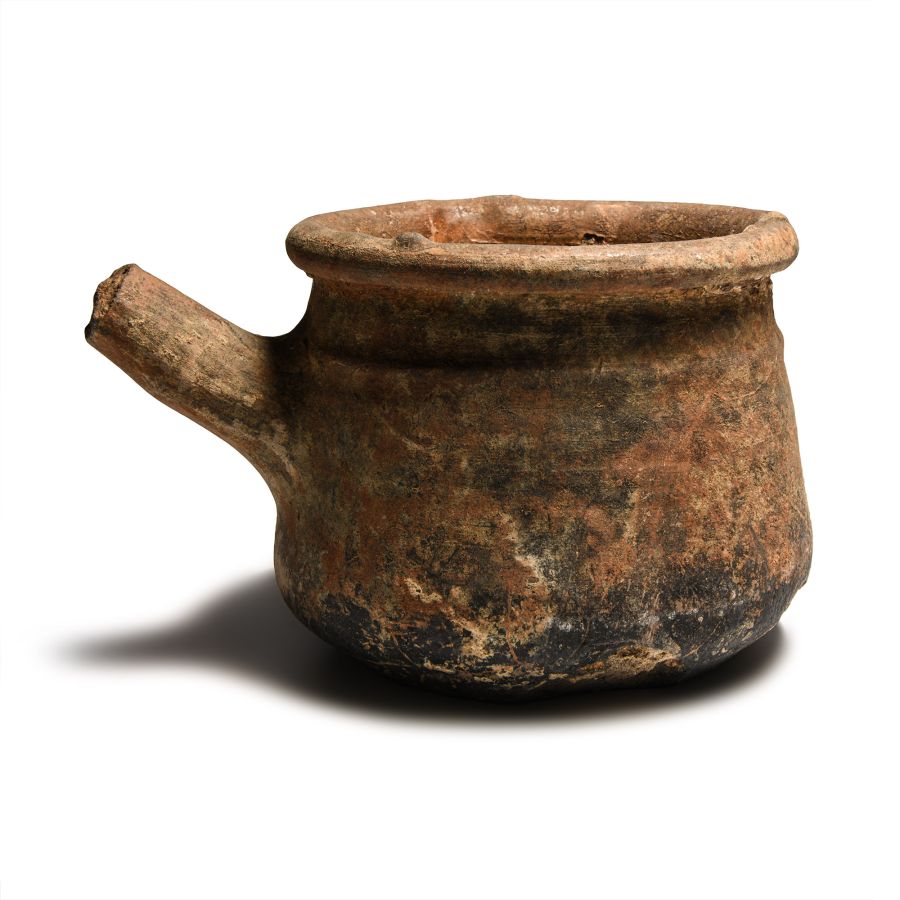
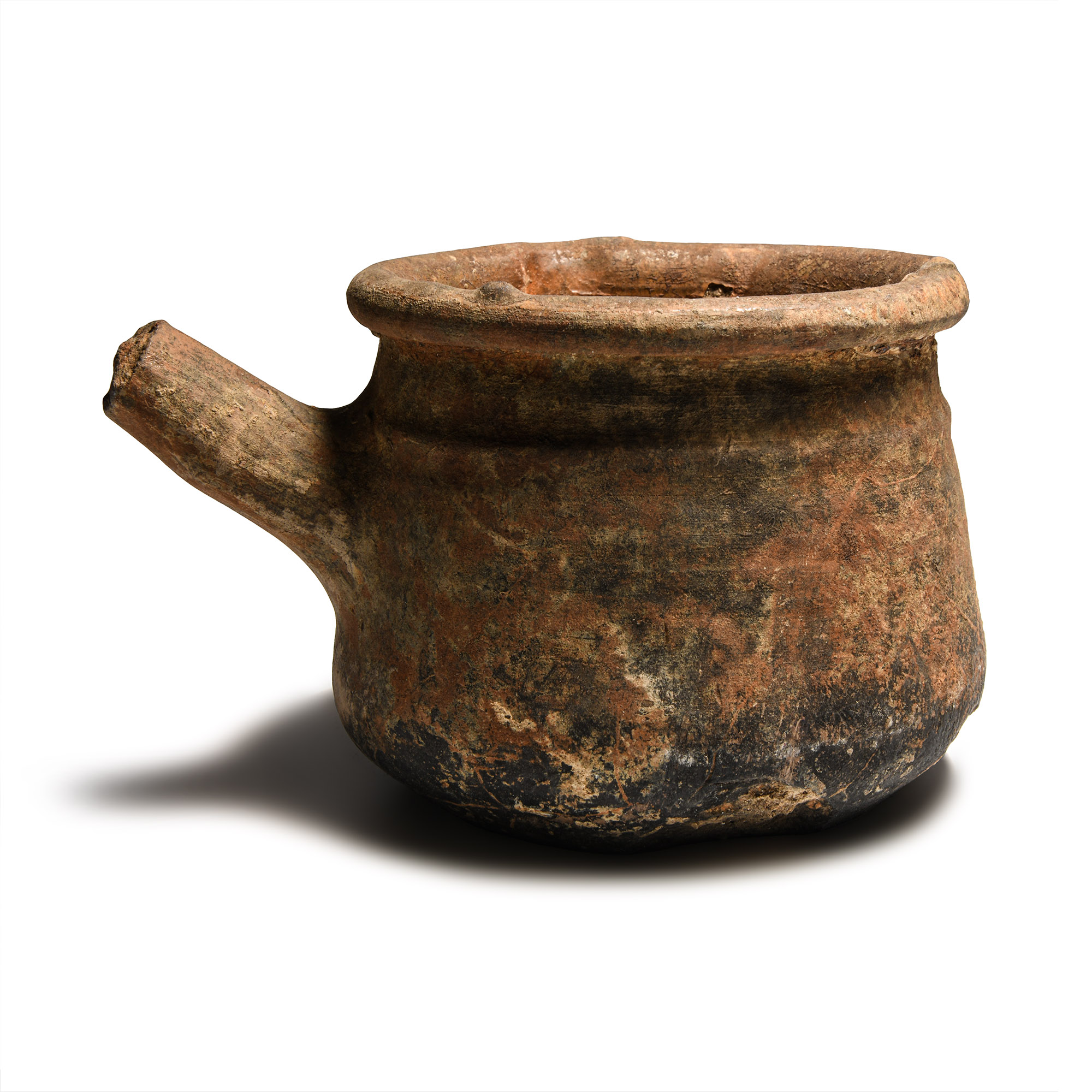
Medieval 'Thames' Terracotta Pipkin
14TH CENTURY A.D.
6 3/4 in. (580 grams, 17 cm).
With drum-shaped body, rolled rim with shallow pouring lip and round-section handle, hole to base; a rare find. [No Reserve]
ProvenanceFound Thames Foreshore, Billingsgate, London, UK, 1974-1985.
CONDITIONTimeLine Auctions follows a vetting process to ensure the authenticity and legality of all items, reinforcing our commitment to integrity and responsible trading. Each antiquity, antique, and coin lot undergoes thorough examination by a vetting committee of at least ten external specialists, professional trade association members, scientists, and archaeologists: Our Vetting Process
AUCTIONS:
TimeLine is a leading auction house specialising in antiquities, ancient art, collectables, natural history, coins, medals, and books. Our auctions offer museums, collectors, historians, and enthusiasts the opportunity to acquire unique and historically significant pieces.
-
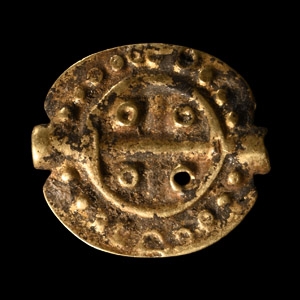
Medieval Gold Linear Decorated Circular Bead
14th-16th century A.D.Sold for (Inc. bp): £117
Hollow-formed tabular bead with pellets to both faces. 0.53 grams, 13 mm
From a late Japanese specialist collector, 1970-2000s. -
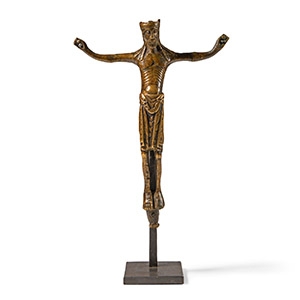
Medieval Bronze Corpus Christi
12th-14th century A.D.Sold for (Inc. bp): £13,650
With flat-topped crown, hair hanging in hanks to the shoulders, long D-shaped face with domed eyes, slender figure with ribs emphasised, knee-length loincloth falling in rippling folds; mounted on a custom-made stand. 500 grams total, 23 cm high including stand
Former collection of the late (d.1955) Bishop of Tournus. This lot has been checked against the Interpol Database of stolen works of art and is accompanied by search certificate no.12040-211844. -
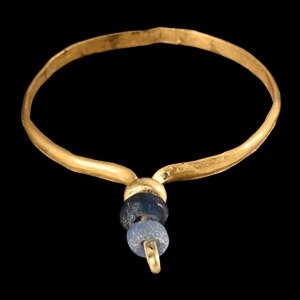
Medieval Gold Beaded Ring
14th-16th century A.D.Estimate: £150 - 200 (+bp*)
Opening Bid: £75
Slender hoop with two small annular glass beads for the bezel. 1.04 grams, 28.17 mm overall, 18.82 mm internal diameter (approximate size British O 1/2, USA 7 1/4, Europe 15.61, Japan 15)
From a late Japanese specialist collector, 1970-2000s.
