
Loading, please wait...
LOT 1741
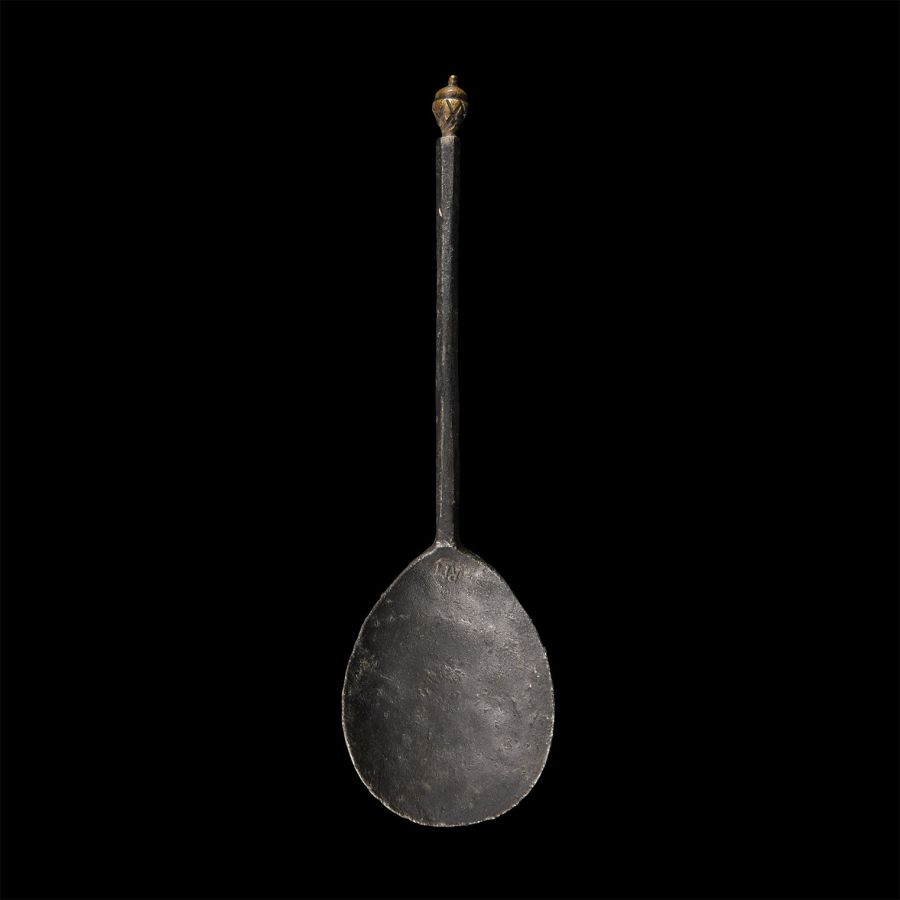
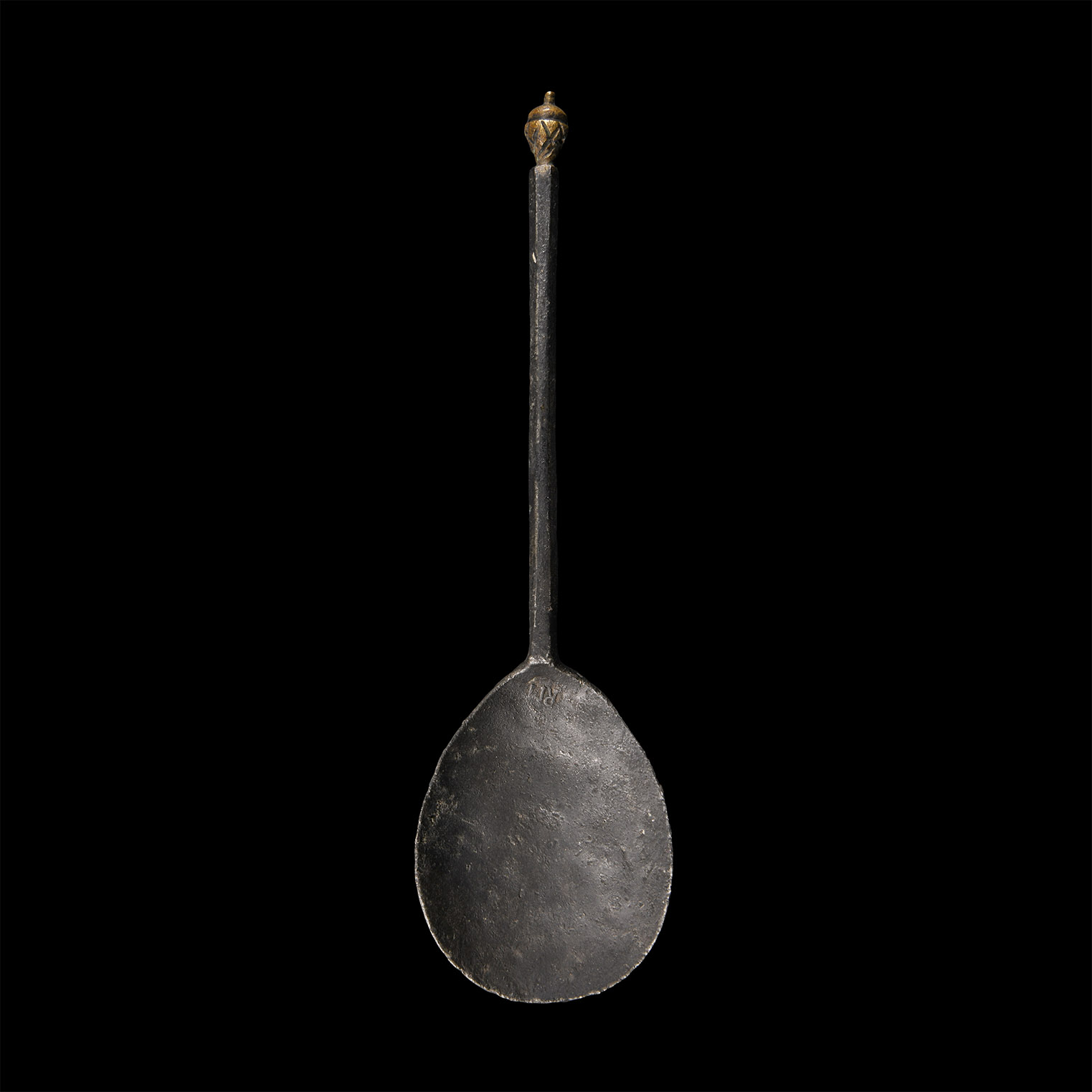
Medieval 'Thames' Pewter Spoon with Brass Knop
CIRCA 15TH CENTURY A.D.
6 5/8 in. (32 grams, 16.8 cm).
Composed of a shallow piriform bowl and slender facetted stem, the knop in the shape of a fruit; RM maker's mark to the top of the bowl. [No Reserve]
ProvenanceFound Billingsgate spoil from the Thames foreshore, London, UK.
CONDITIONTimeLine Auctions follows a vetting process to ensure the authenticity and legality of all items, reinforcing our commitment to integrity and responsible trading. Each antiquity, antique, and coin lot undergoes thorough examination by a vetting committee of at least ten external specialists, professional trade association members, scientists, and archaeologists: Our Vetting Process
AUCTIONS:
TimeLine is a leading auction house specialising in antiquities, ancient art, collectables, natural history, coins, medals, and books. Our auctions offer museums, collectors, historians, and enthusiasts the opportunity to acquire unique and historically significant pieces.
-
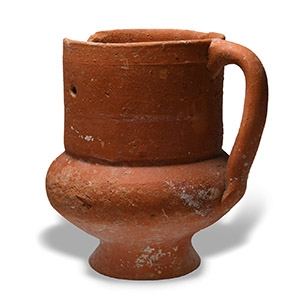
Medieval Ceramic Juglet
14th-15th century A.D.Sold for (Inc. bp): £33
Comprising a broad neck, splayed foot and applied handle; chipped. 297 grams, 12 cm high
Acquired 1990s-early 2000s. East Anglian private collection. -
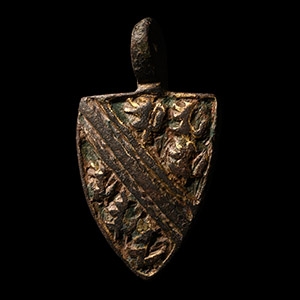
Medieval Gilt Bronze 'de Bohun Family' Knight's Heraldic Horse Harness Pendant
14th-15th century A.D.Sold for (Inc. bp): £358
Comprising a gilt heater shield with enamelled arms 'a bend coticed between six lions rampant' (de Bohun family). 8 grams, 39 mm
Found UK. Acquired on the UK art market after 2000. Ex Stratford collection, Suffolk, UK. -
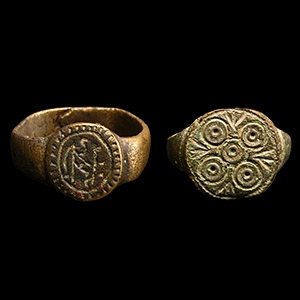
Medieval Bronze Ring Group
15th-16th century A.D.Sold for (Inc. bp): £46
Comprising one example with ring-and-dot motifs in a cruciform arrangement; one with possible monogram within a pecked border. 10.3 grams total, 20-23 mm
From the collection of a North American gentleman, formed in the 1990s.
