
Loading, please wait...
LOT 1546
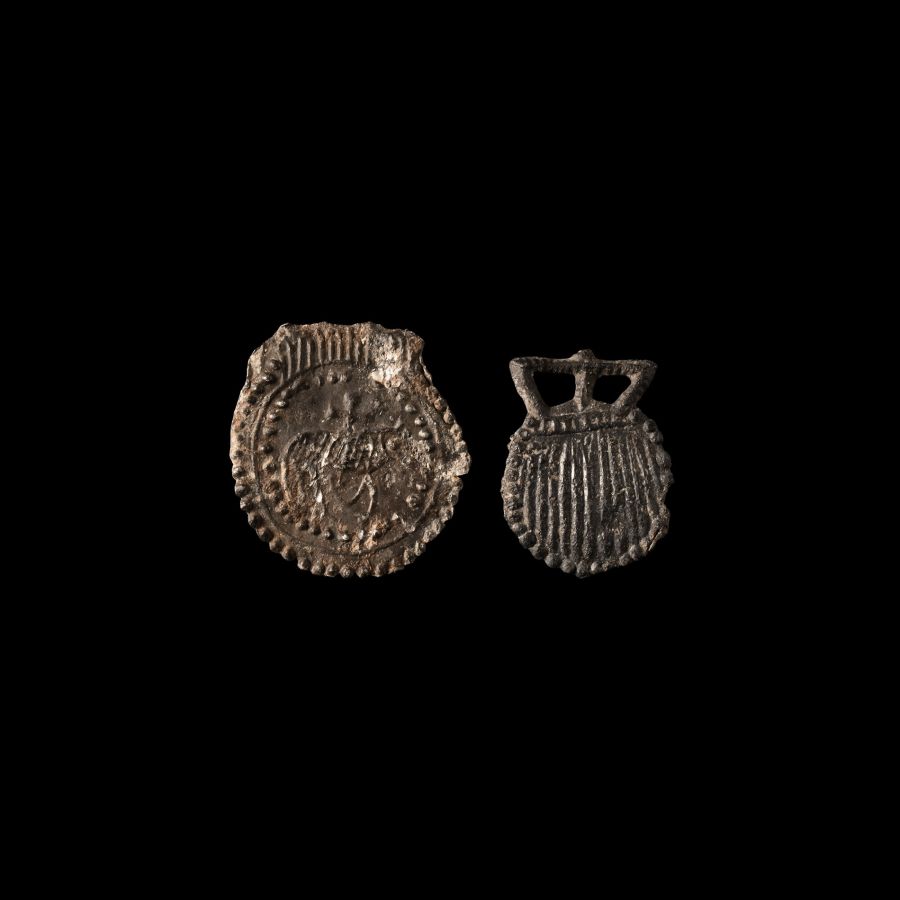
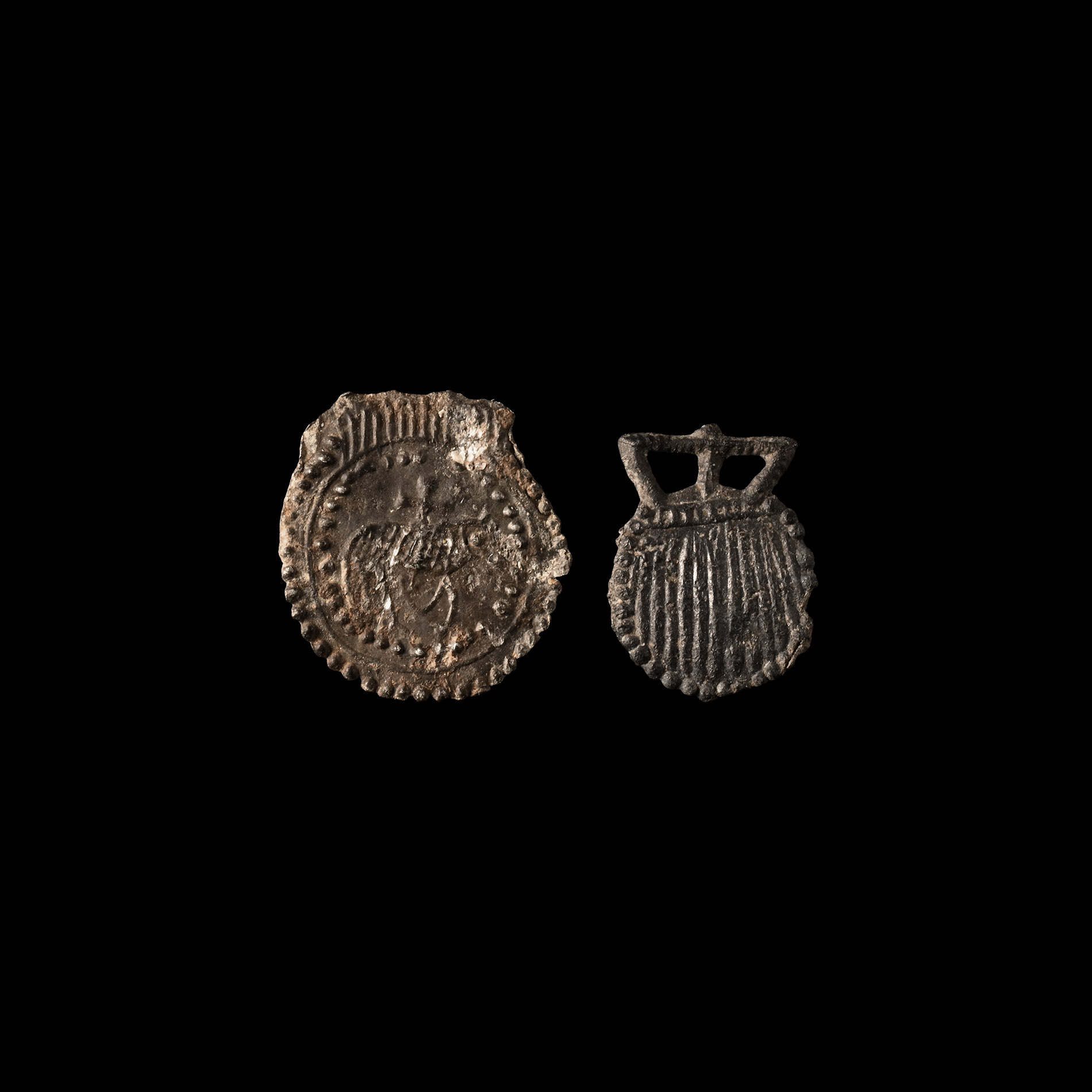
Medieval 'Thames' Pewter 'Spangle' Group
CIRCA 13TH CENTURY A.D.
5/8 - 3/4 in. (1.4 grams total, 15-18 mm).
Comprising: a beaded circle with possible shell design and openwork trapezoidal lug; a discoid spangle with beaded borders and central cross with possible figures. [2, No Reserve]
ProvenanceFound Thames foreshore spoil, 1980s.
CONDITIONTimeLine Auctions follows a vetting process to ensure the authenticity and legality of all items, reinforcing our commitment to integrity and responsible trading. Each antiquity, antique, and coin lot undergoes thorough examination by a vetting committee of at least ten external specialists, professional trade association members, scientists, and archaeologists: Our Vetting Process
AUCTIONS:
TimeLine is a leading auction house specialising in antiquities, ancient art, collectables, natural history, coins, medals, and books. Our auctions offer museums, collectors, historians, and enthusiasts the opportunity to acquire unique and historically significant pieces.
-
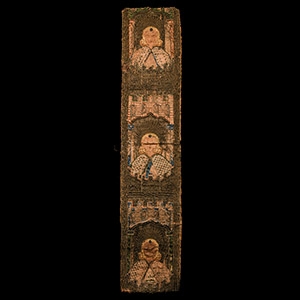
Medieval Orphrey Panel with Angels
Germany, Rhine Valley, circa 1500 A.D.Sold for (Inc. bp): £780
The panel displaying three crenelated turrets arranged vertically, a yellow-haired angel with a diadem in the hair facing out from each, beneath an ogival arch; remains of green, blue, yellow and metallic coloured threads; silk on woven fabric backing. 540 grams, 1.20 m long
with Bonhams, 9 december 2009, lot 41. Ex central London gallery. -
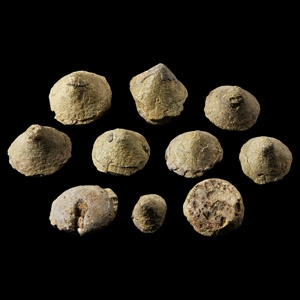
Medieval 'Thames' Lead Gaming Piece Group
13th-16th century A.D.Sold for (Inc. bp): £26
Mainly comprising pieces formed with conical bodies of various sizes, including two sub-circular counters. 209 grams total, 12-21 mm
Found Thames foreshore spoil, 1980s. -
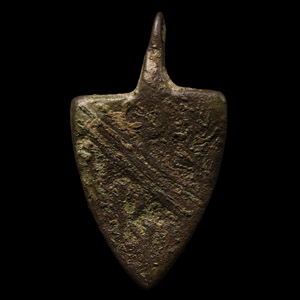
Medieval Bronze 'De Bohen, Earls of Hereford' Knight's Heraldic Horse Harness Pendant
12th-14th century A.D.Sold for (Inc. bp): £85
The heater-shield with integral suspension loop to top edge and displaying heraldic device of a bend argent between six lioncels; no remains of gilding or coloured enamel. 7.48 grams, 40 mm
Found East Riding of Yorkshire, UK. Accompanied by a copy of the British Museum's Portable Antiquities Scheme (PAS) report number YORYM-750583.
The device is similar to those of the De Bohen family, Earls of Hereford.
