
Loading, please wait...
LOT 1794
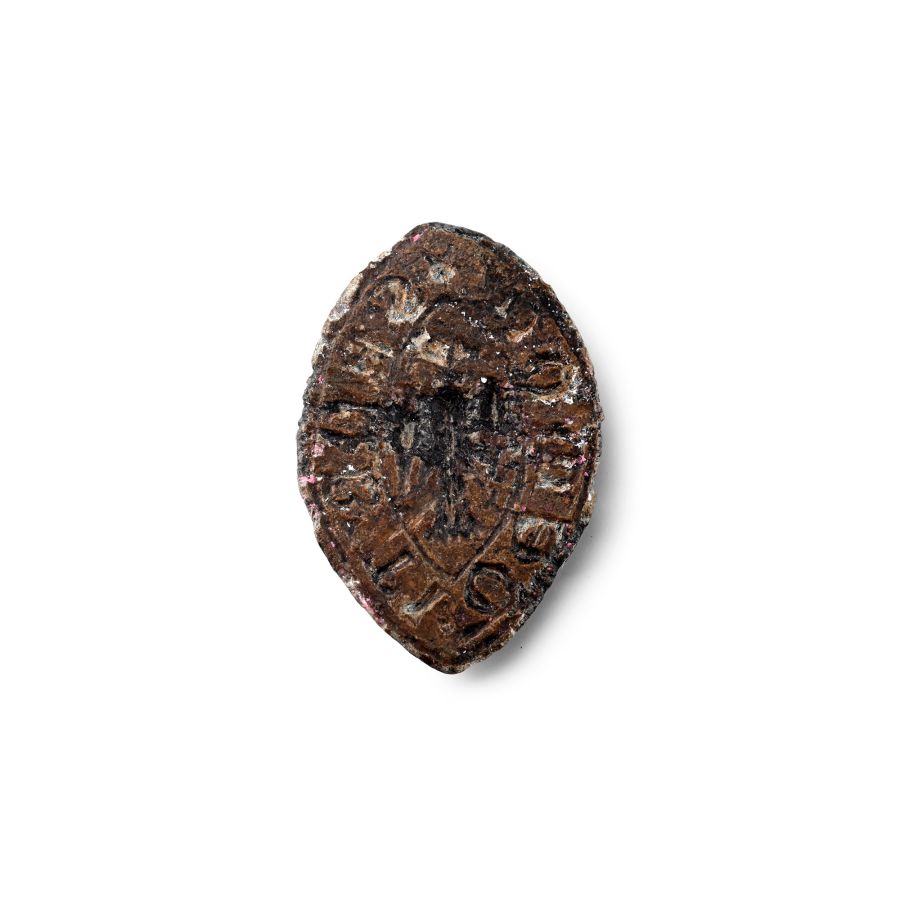
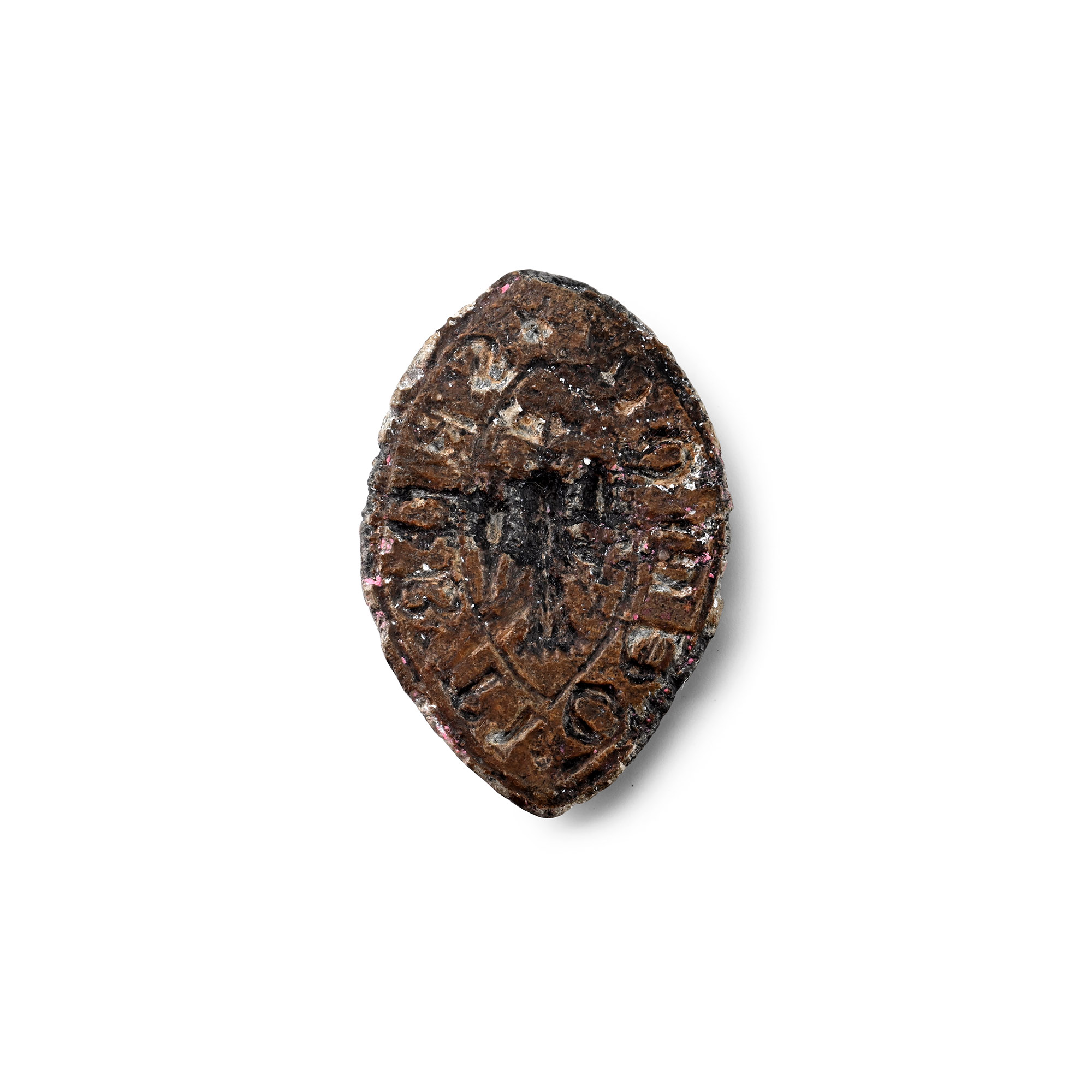
Medieval 'Thames' Lead Vesica-Shaped Seal Matrix for Robert
CIRCA 13TH CENTURY A.D.
1 1/8 in. (9.82 grams, 30.5 mm).
Scaphoid in plan with chamfered rim to rear and lug (unpierced); central eagle motif and legend to the border '* S ROBTI . DE MOR' (seal of Robert of Mor[..]). [No Reserve]
ProvenanceFound Thames, UK.
From the late Peter Hooper pewter and lead collection, who was a guest lecturer at West Dean College and was a longtime member of the Pewter Society who contributed to the Pewter Society Magazine.
TimeLine Auctions follows a vetting process to ensure the authenticity and legality of all items, reinforcing our commitment to integrity and responsible trading. Each antiquity, antique, and coin lot undergoes thorough examination by a vetting committee of at least ten external specialists, professional trade association members, scientists, and archaeologists: Our Vetting Process
AUCTIONS:
TimeLine is a leading auction house specialising in antiquities, ancient art, collectables, natural history, coins, medals, and books. Our auctions offer museums, collectors, historians, and enthusiasts the opportunity to acquire unique and historically significant pieces.
LOT 1794
Medieval 'Thames' Lead Vesica-Shaped Seal Matrix for Robert
Sold for (Inc. bp): £39
-
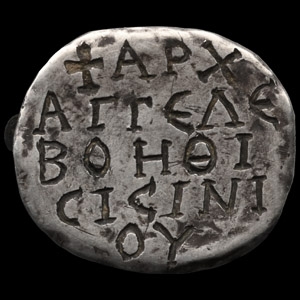
Medieval Bronze and Silver Ring with Greek Inscription
Circa 15th-16th century A.D.Sold for (Inc. bp): £140
Comprising a D-section bronze hoop and large silver bezel with Greek inscription in five lines reading '+ APX / AITEΛE / BOHΘI / CICINI / OY'. 8.80 grams, 24.12 mm overall, 19.44 mm internal diameter (approximate size British T, USA 9 1/2, Europe 21.26, Japan 20)
Ex German art market, 2000s. Acquired from an EU collector living in London. From the collection of a Surrey, UK, gentleman. -
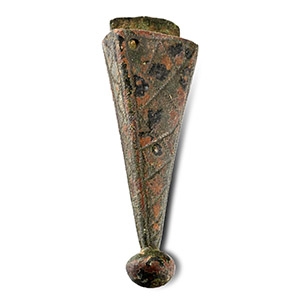
Medieval Bronze Dagger Chape
Circa 13th-14th century A.D.Sold for (Inc. bp): £39
Triangular in section, tapering to a carinated bulb at the apex; mouth pierced below the rim and one rivet in situ, reverse with raised tab at the mouth; obverse with tremolier-style lozenges, undulating tremolier-style band to the narrow lower face. 14.9 grams, 54 mm
Found Lincolnshire, UK. -
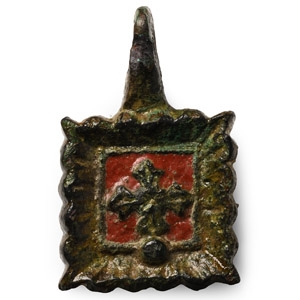
Medieval Knight's Bronze Heraldic Horse Harness Pendant
14th-15th century A.D.Sold for (Inc. bp): £169
Square with integral pierced lug above; dentilled rim with petal detailing, central square field with red enamel finish and reserved cross moline motif. 13.6 grams, 38 mm
Ex Graham Slater collection, Cambridge, 1980s-1990s.
