
Loading, please wait...
LOT 1122
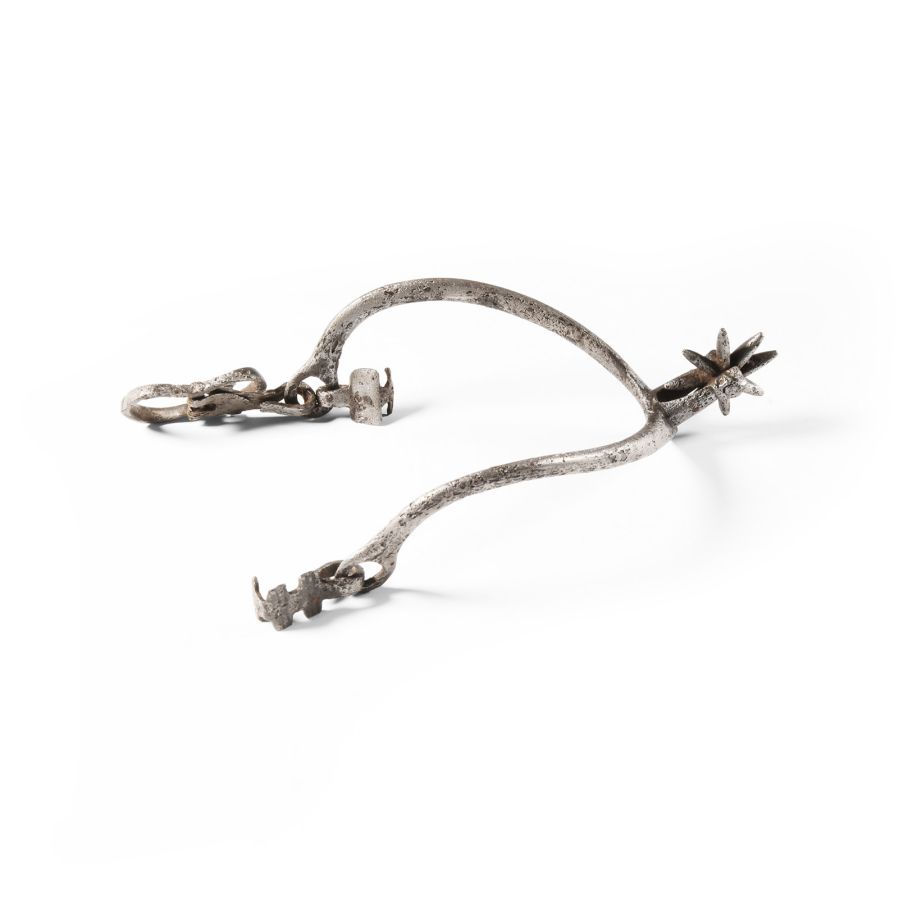
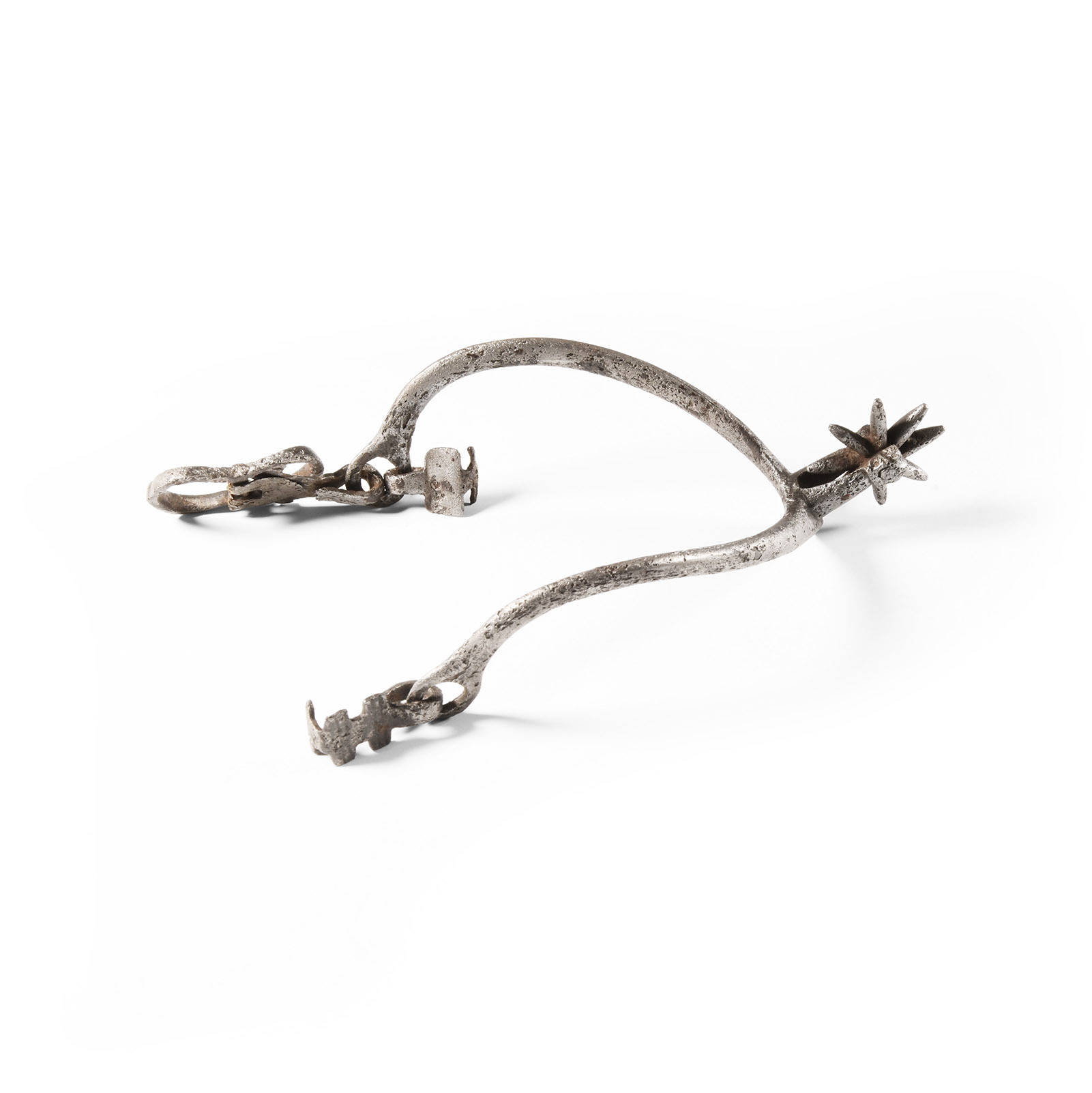
Medieval 'Thames' Iron Rowel Spur
15TH CENTURY A.D.
5 3/4 in. (104 grams, 14.5 cm).
Composed of an arched heelband, hanging studs and buckle, together with a multi-armed rowel.
ProvenanceFound in the Thames foreshore at Queenshithe.
Acquired from Rusty Old Arms, 2014.
The Kusmirek Collection, UK.
Accompanied by an ROA invoice and listing.
TimeLine Auctions follows a vetting process to ensure the authenticity and legality of all items, reinforcing our commitment to integrity and responsible trading. Each antiquity, antique, and coin lot undergoes thorough examination by a vetting committee of at least ten external specialists, professional trade association members, scientists, and archaeologists: Our Vetting Process
AUCTIONS:
TimeLine is a leading auction house specialising in antiquities, ancient art, collectables, natural history, coins, medals, and books. Our auctions offer museums, collectors, historians, and enthusiasts the opportunity to acquire unique and historically significant pieces.
-
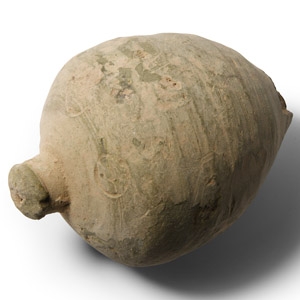
Byzantine 'Greek Fire' Ceramic Fire Bomb or Hand Grenade
9th-11th century A.D.Sold for (Inc. bp): £98
Pear-shaped ceramic vessel with domed filler-hole; intended to be filled with explosive liquid and wick, used as a hand grenade. 640 grams, 13.5 cm
Ex London, UK, collection, 1990s. Accompanied by an academic paper by military specialist Dr Raffaele D'Amato, dated 15 July 2019 and titled 'Eastern Roman Empire - Greek Fire Bomb or Hand Grenade (μεσαίον kακάβιον) 9th-11th century AD'.
Apart from the use of siphons or manual flame-throwers called cheirosiphona, special corps of Roman soldiers employed terracotta grenades, in the form of small jars, abundantly evidenced in archaeological excavations. Such were the γανωτα, vessels (sometimes also of bronze) used for Greek fire. They were called μεσαία kακαβιά or κυτροκακάβια where the former had a bulbous shape and the latter a more cylindrical form. -
.jpg)
British 1796 Pattern Light Cavalry Officer's Sword
19th century A.D.Sold for (Inc. bp): £1,040
Composed of a curved blade with broad fuller, facetted steel stirrup hilt and grip retaining its original wire-bound leather; accompanied by the sword's steel scabbard. 1.7 kg, 1.01 m
Acquired from Military Swords Ltd, UK, 2015. The Kusmirek Collection, UK. Accompanied by a copy of the purchase invoice and item details. -
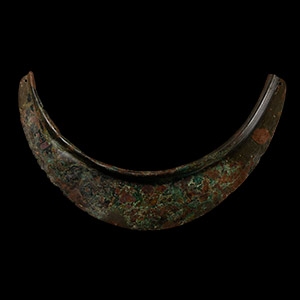
Greek Browband from Bronze Pseudo-Attic Helmet
3rd-2nd century B.C.Sold for (Inc. bp): £117
Semi-circular in shape, flat, the upper part raised, the lower one fitted with two fastening holes for the attachment to the upper bowl of the helmet; restored. 42 grams, 20.6 cm
Restored.
Private collection before 1937. Private collection, acquired February 1937, thence by descent. T.S. collection, UK, 1963.
The browband comes from a pseudo-Attic helmet of Thracian type (example from Brjastovec) or of a pseudo-Attic type with a high cap and fitted with a browband. These helmets, after prototypes already visible in the 5th century B.C., are typical of the Hellenistic era. The browband, if not fixed, was attached under the helmet's bowl, on the sides, by two rivets.
