
Loading, please wait...
LOT 1707
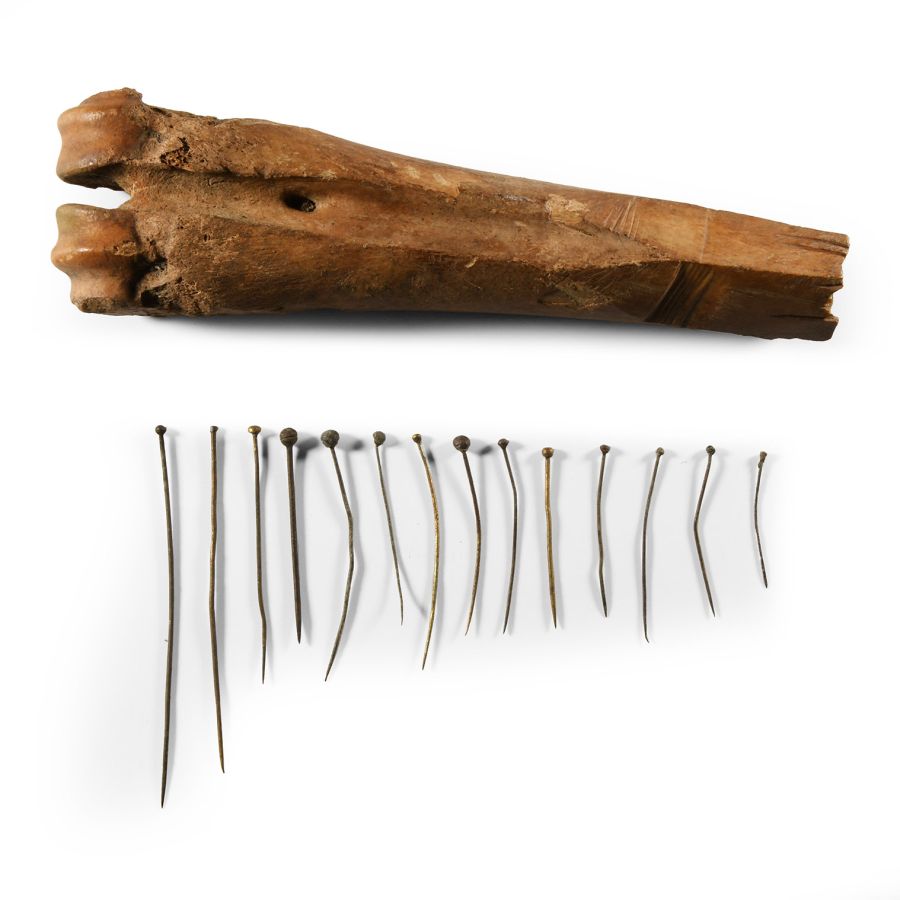
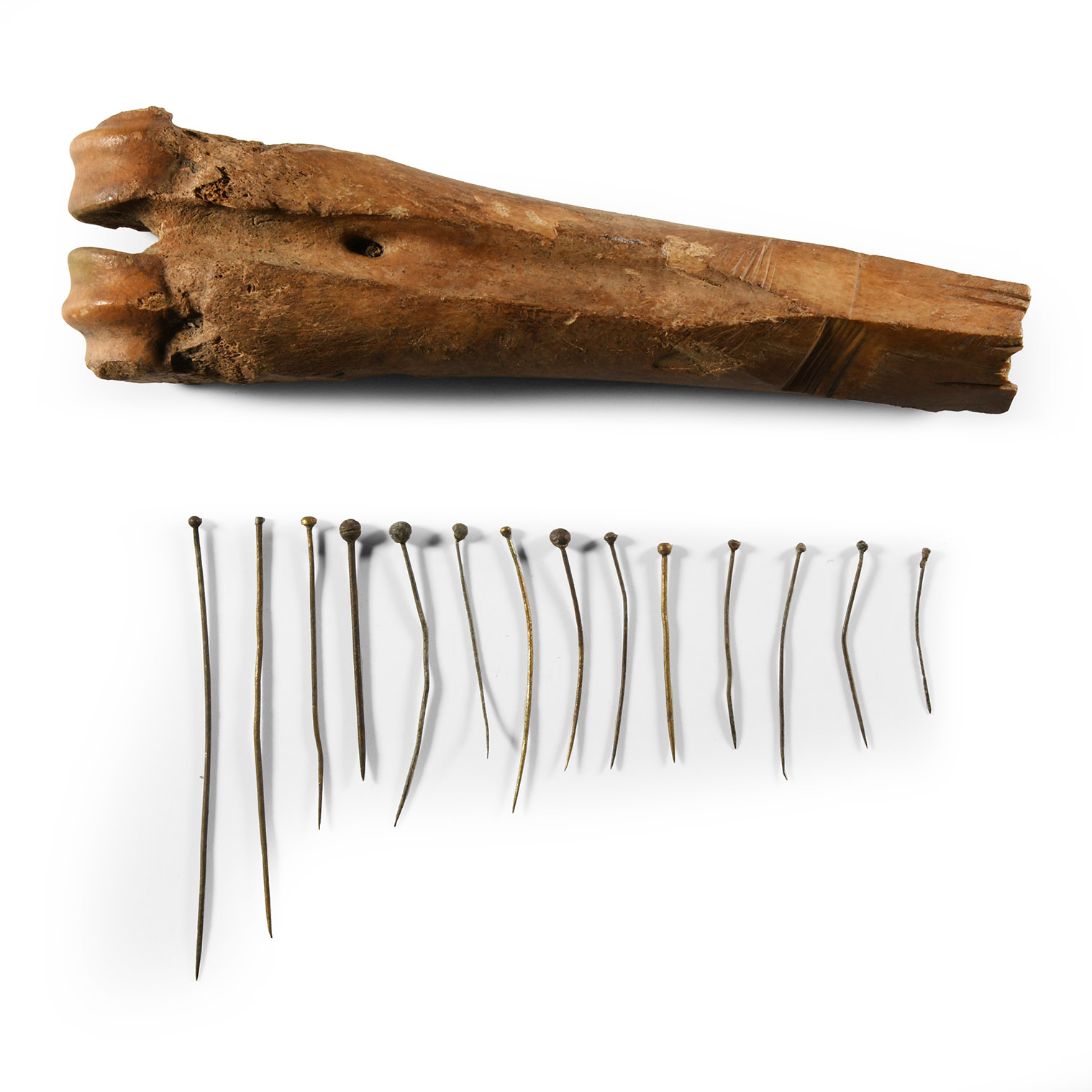
Medieval 'Thames' Bone Pin Holder Instrument with Pins
15TH-16TH CENTURY A.D.
1 1/4 - 7 1/8 in. (193 grams total, 3.2- 18 cm).
Epiphesis of a bovine long bone with the end worked into a square-section block with vertical slots to accept pins; group of fourteen ball-headed garment pins, manly brass. [15, No Reserve]
ProvenanceFound Billingsgate spoil from the Thames foreshore, London, UK, circa 1984.
Property of an Essex collector.
Cf. Egan, G. & Pritchard, F., Dress Accessories 1150-1450, London, 2002, item 204, for type.
CONDITIONTimeLine Auctions follows a vetting process to ensure the authenticity and legality of all items, reinforcing our commitment to integrity and responsible trading. Each antiquity, antique, and coin lot undergoes thorough examination by a vetting committee of at least ten external specialists, professional trade association members, scientists, and archaeologists: Our Vetting Process
AUCTIONS:
TimeLine is a leading auction house specialising in antiquities, ancient art, collectables, natural history, coins, medals, and books. Our auctions offer museums, collectors, historians, and enthusiasts the opportunity to acquire unique and historically significant pieces.
-
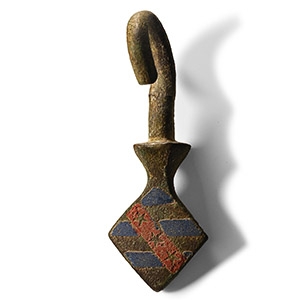
Medieval Knight's Enamelled Bronze 'Richard de Valoines' Heraldic Horse Harness Pendant
14th-15th century A.D.Sold for (Inc. bp): £520
With substantial hook, pyramidal collar and enamelled lozenge panels: obverse with a red bend bearing three reserved stars on a blue-striped field; reverse with reserved bend on blue field with six reserved stars, an extremely rare type. 38 grams, 78 mm
Found Grimsby, UK. From an East Anglian private collection.
The arms to the obverse are similar to those of Richard de Valoines (barry of six azure and or, a bend gules). -
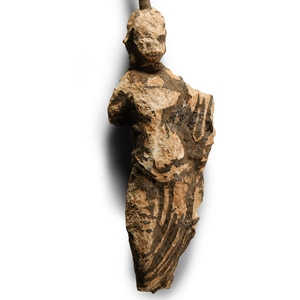
Medieval Lead Figure of a Noble Woman
14th century A.D.Sold for (Inc. bp): £13
Modelled in the round standing female figure wearing an elegantly draped ankle-length robe, left arm extended; mounting spike to head; possibly image of a saint 103 grams, 12 cm
Found near Wetwang, East Yorkshire, UK. Acquired circa 2005. Ian Wilkinson collection, Nottinghamshire, UK.
Despite the classical-influenced drapery, the figure has a belt around her waist and wears a fitted kirtle (dress), a style of clothing from the 14th century. Similar statuettes, maybe votive images of saints, have been found across England. -
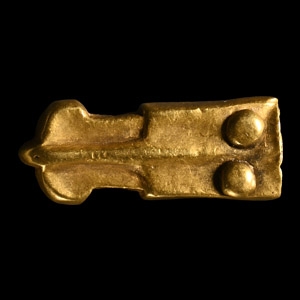
Medieval Gold Belt Buckle Strap End
Circa 1500 A.D.Estimate: £180 - 240 (+bp*)
Opening Bid: £100
Hollow-formed with a tongue-shaped finial, two attachment studs in situ to the other end. 2.50 grams, 22 mm
From a late Japanese specialist collector, 1970-2000s.
