
Loading, please wait...
LOT 1659
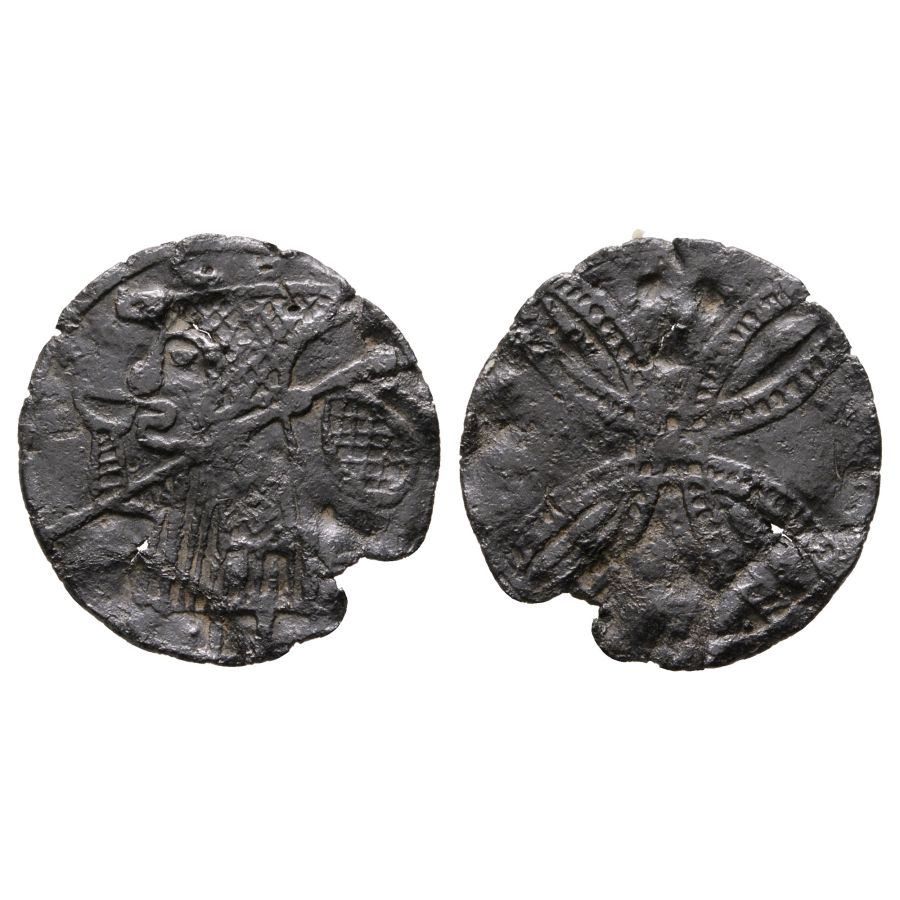
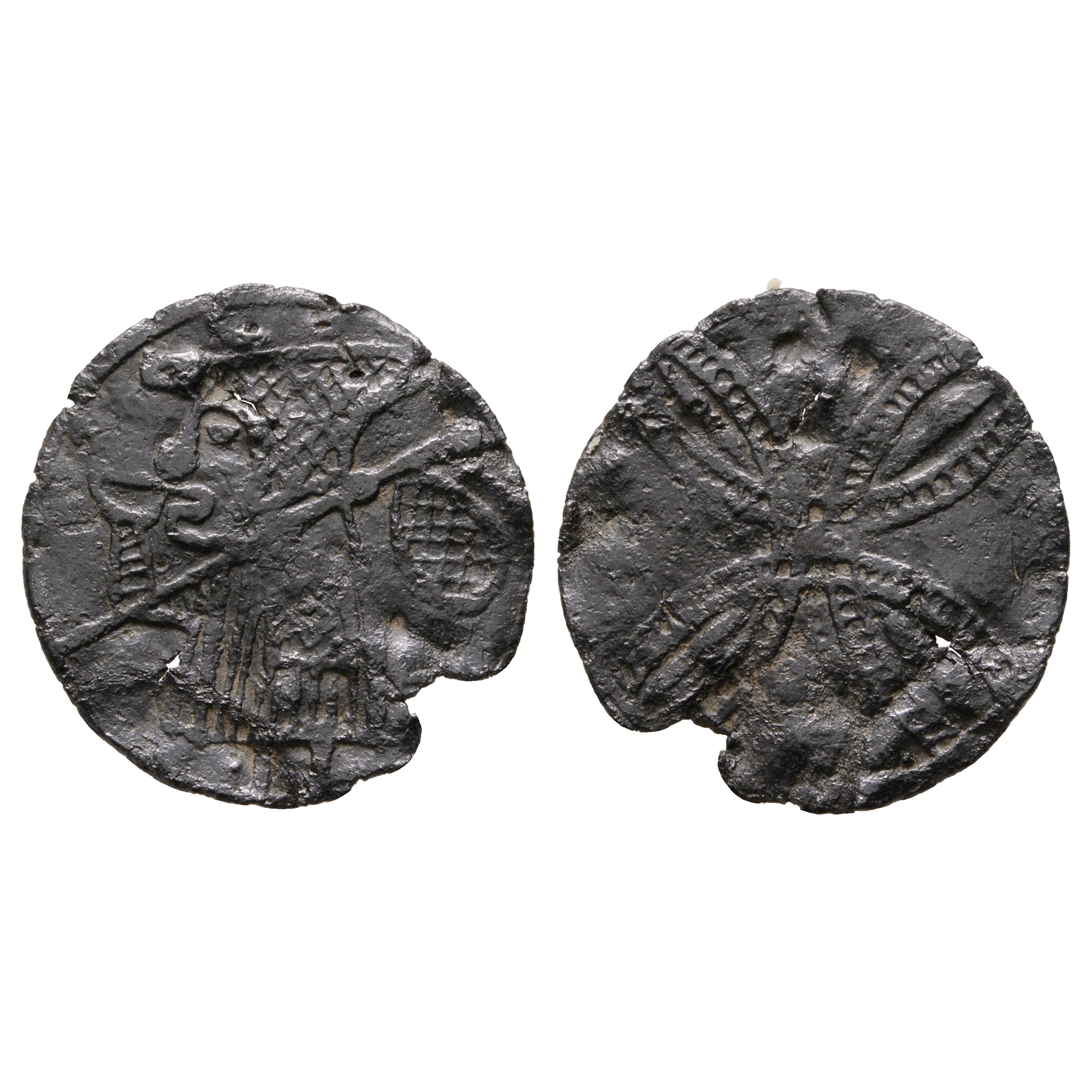
Medieval 'Thames' Bifacial Pewter Wine Tavern Token
CIRCA 14TH-15TH CENTURY A.D.
5/8 in. (0.56 grams, 17 mm).
Obverse with wayfarer in profile wearing hooded cloak and carrying a staff and bundle, reverse with quatrefoil. [No Reserve]
ProvenanceFound Billingsgate spoil from the Thames foreshore, London, UK, circa 1984.
Property of an Essex collector.
TimeLine Auctions follows a vetting process to ensure the authenticity and legality of all items, reinforcing our commitment to integrity and responsible trading. Each antiquity, antique, and coin lot undergoes thorough examination by a vetting committee of at least ten external specialists, professional trade association members, scientists, and archaeologists: Our Vetting Process
AUCTIONS:
TimeLine is a leading auction house specialising in antiquities, ancient art, collectables, natural history, coins, medals, and books. Our auctions offer museums, collectors, historians, and enthusiasts the opportunity to acquire unique and historically significant pieces.
-

Medieval 'Thames' Bifacial Pewter Wine Tavern Token
Circa 14th-15th century A.D.Sold for (Inc. bp): £312
Obverse with bishop wearing mitre and holding crook, reverse with octofoil, alternating plain and hatched petals. 0.83 grams, 16 mm
Found Billingsgate spoil from the Thames foreshore, London, UK, circa 1984. Property of an Essex collector. -

Medieval Gilt Bronze Buckle with Plate
13th-15th century A.D.Sold for (Inc. bp): £98
Comprising a lipped frame with incised geometric detailing, triangular tongue, rectangular plate with hatched banding to outer edge, three dome-headed rivets securing the folded rear plate. 8.5 grams, 28 mm
Found Wiltshire, UK, before 1974. -

Medieval Bronze Limoges Saint
13th century A.D.Sold for (Inc. bp): £169
Comprising a tongue-shaped curved-section body pierced in two places for attachment and forked lower end, with rounded shoulders and bowed head with soft features and short hair. 20 grams, 86 mm
From a collection acquired on the UK art market from various auction houses and collections mostly before 2000. From an important Cambridgeshire estate; thence by descent.
From the 12th to 14th century, there was a large industry producing metal objects decorated in enamel using the champlevé technique, of which most of the survivals and probably most of the original production, are religious objects such as reliquaries, crosses and statues of saints.
