
Loading, please wait...
LOT 0377
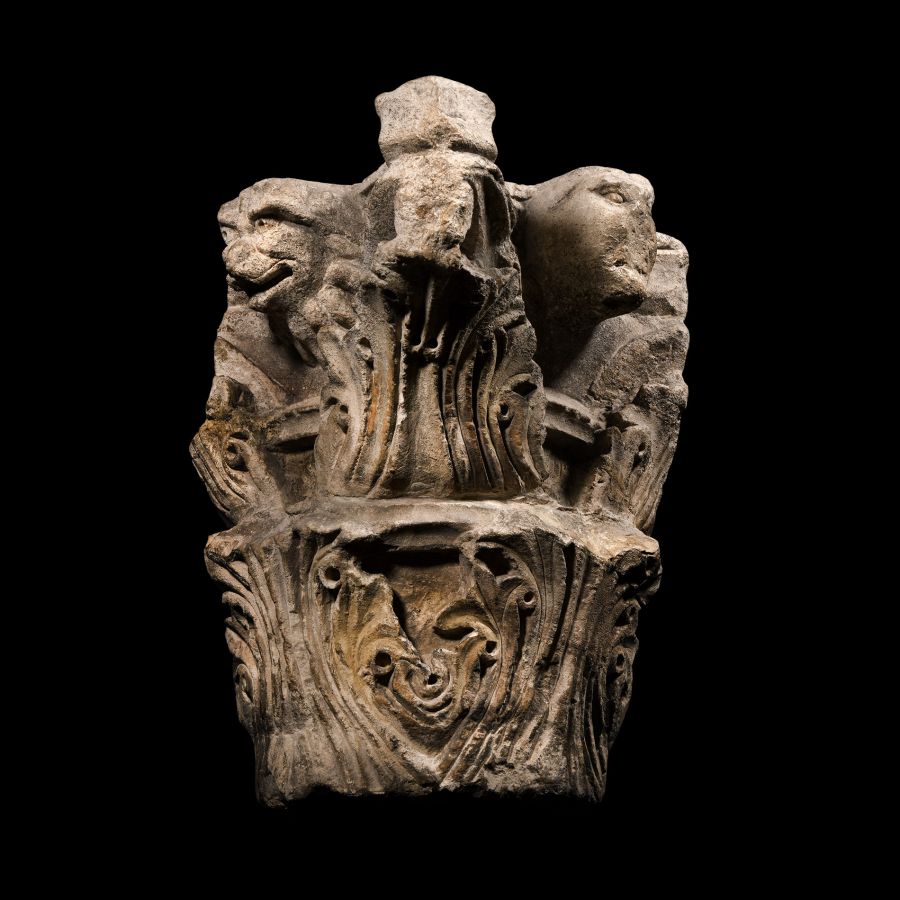
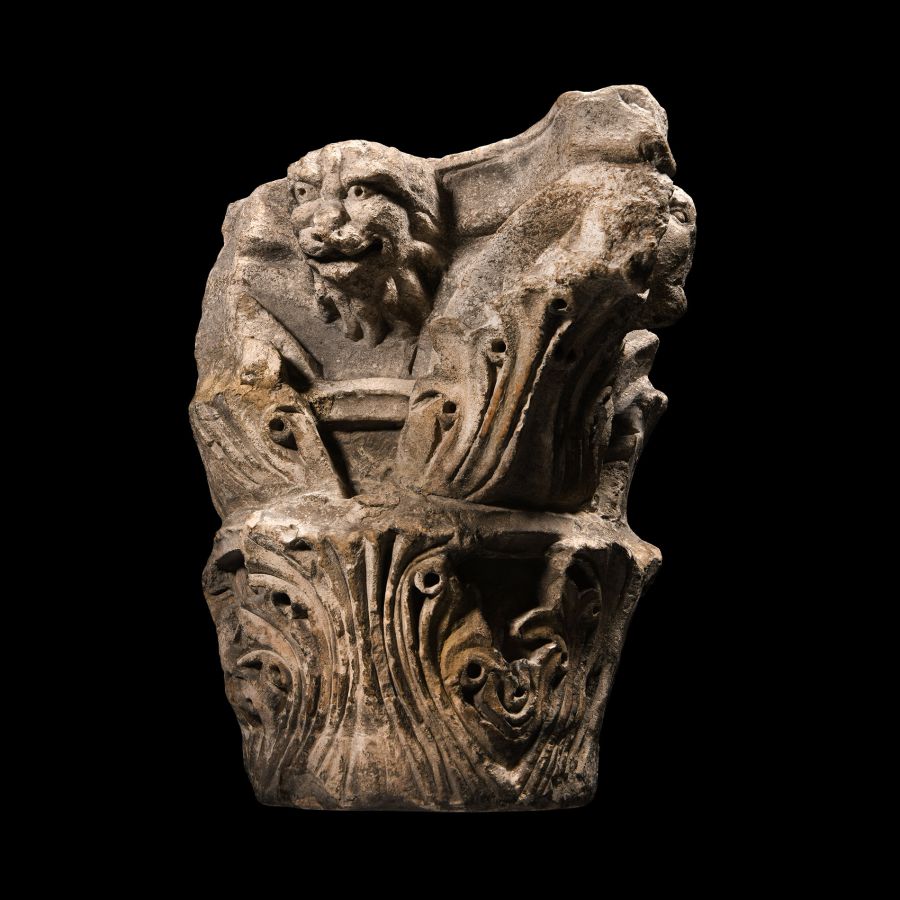
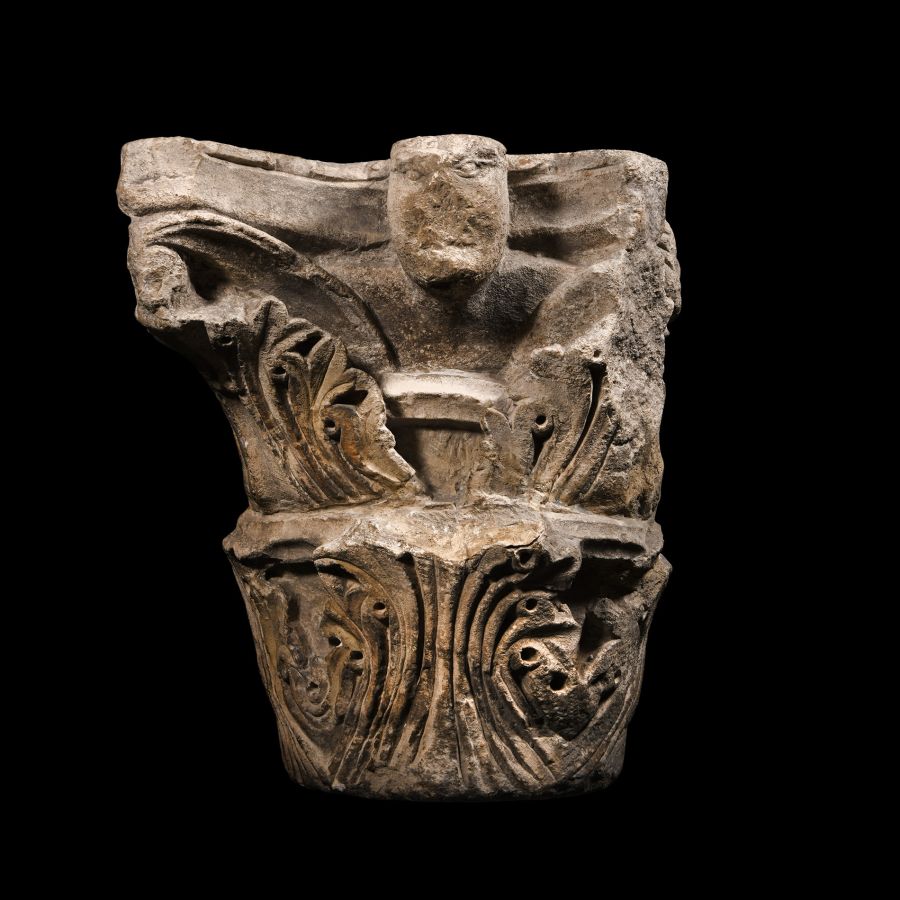
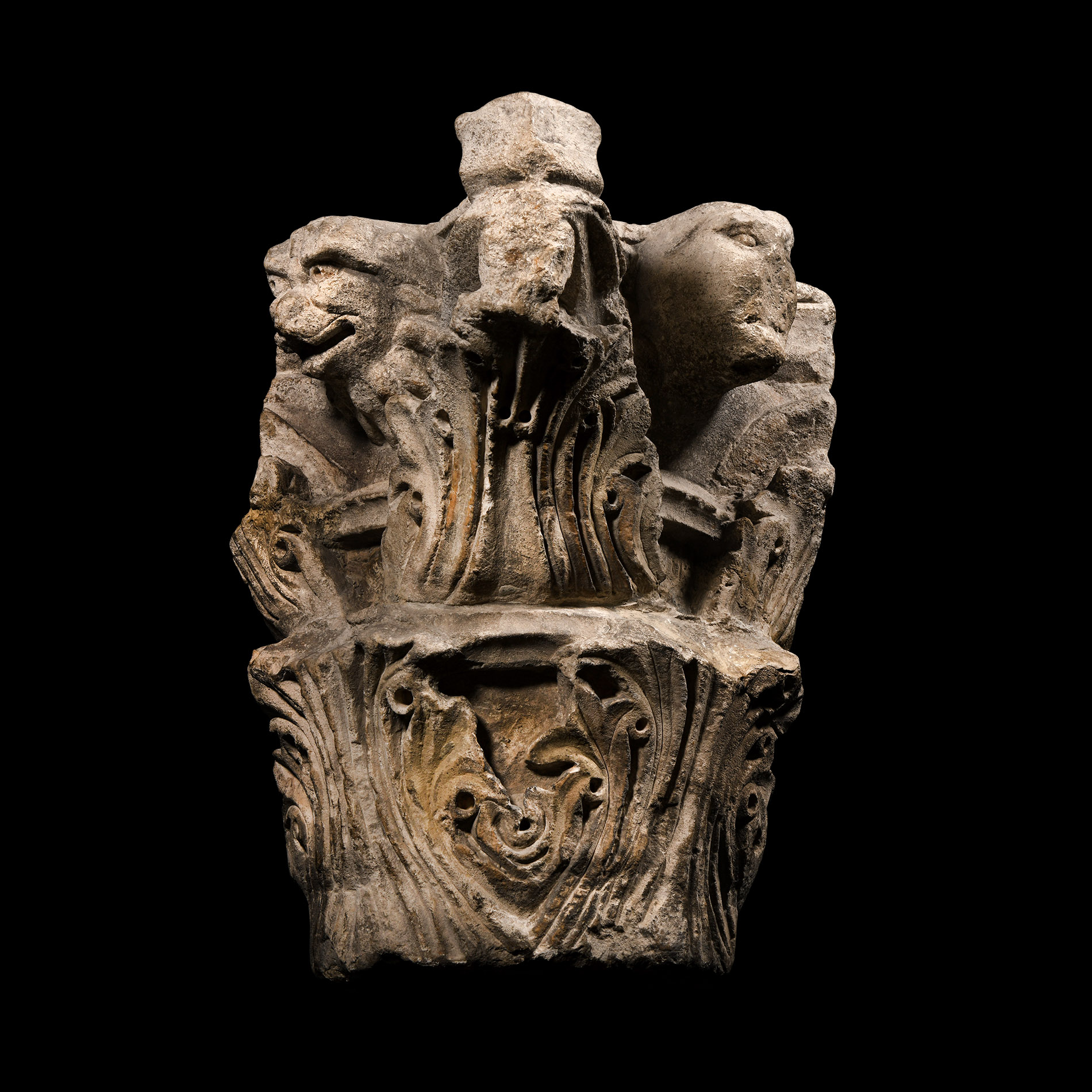
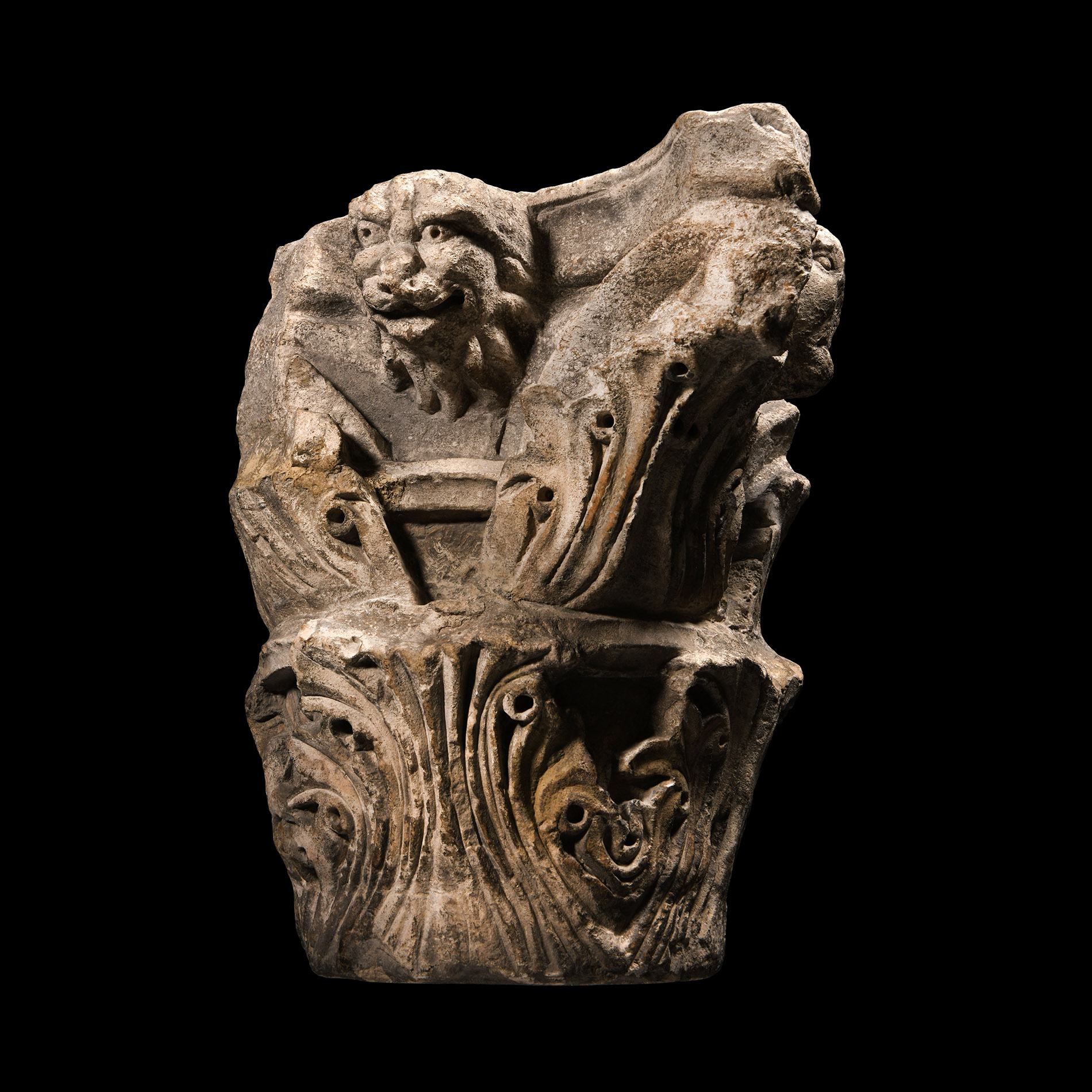
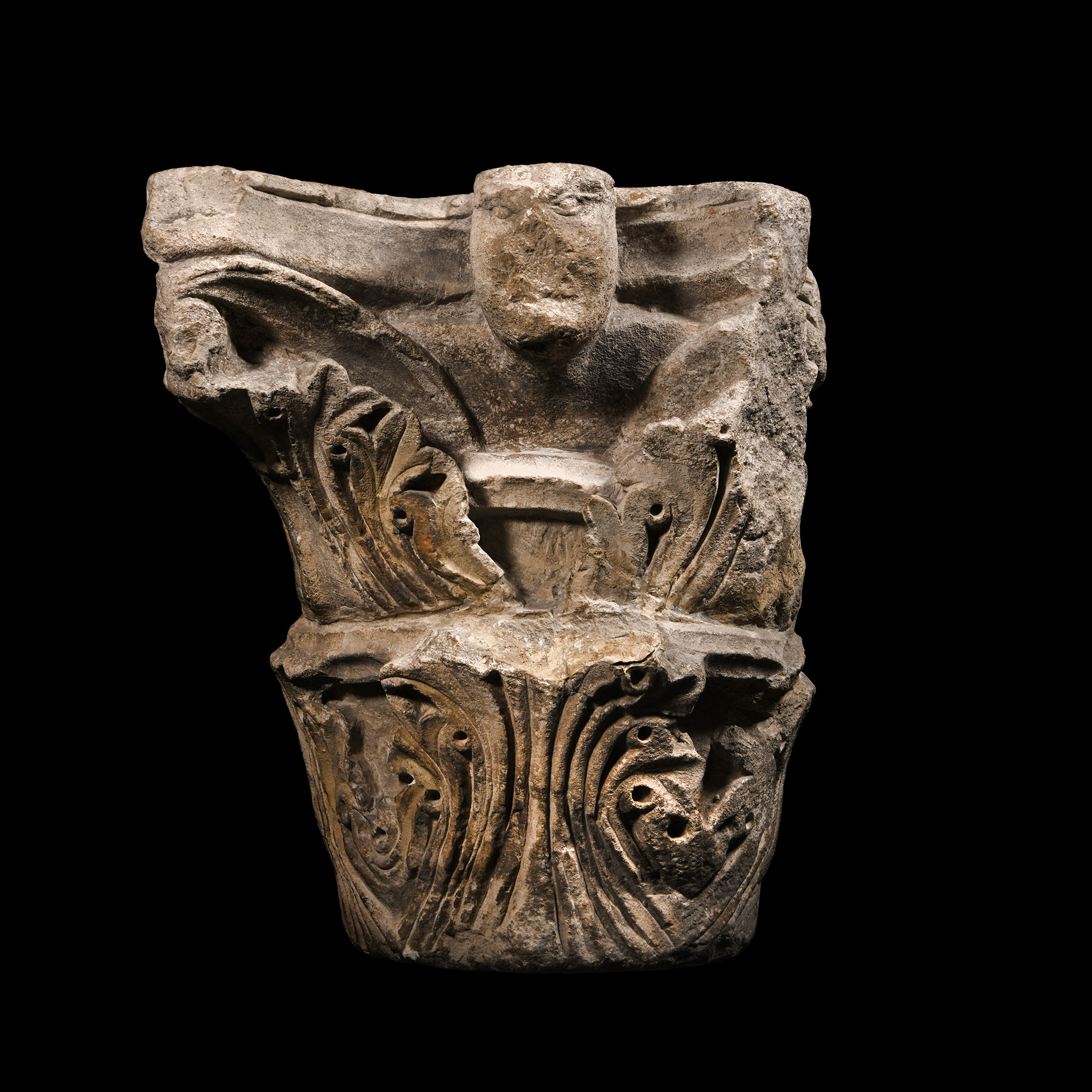
Medieval Stone Column Capital with Lion and Human Face
SPAIN OR SOUTHERN FRANCE, LATE 12TH CENTURY A.D.
13 1/4 in. (30 kg, 33.5 cm).
Carved in the half-round with a frieze composed of interlaced foliage with two rows of acanthus leaves and foliage scrolls, framing a lion's head on one side and a human head on the other, remains of lion's mane to the third; drilled holes to the raised surfaces and sockets for the insertion of decorative stones. [No Reserve]
ProvenanceAcquired from Antoine Boccador-Lieveaux, 2005.
Ex central London gallery.
Accompanied by an academic report by Dr Raffaele D’Amato.
This lot has been checked against the Interpol Database of stolen works of art and is accompanied by search certificate no.11739-202053.
Cf. D’Emilio, J., ’The Royal Convent of Las Huelgas: Dynastic Politics, Religious Reform and Artistic Change in Medieval Castile’ in Studies in Cistercian Art and Architecture 6, Kalamazoo, 2005, pp.191-282, figs.11,13,15 (window Capital of Saint Andres de Arroyo, apse and South Chapel), 34 (Noyon cathedral), 36 (Laon cathedral); Igarashi-Takeshita, M., ‘Les lions dans la sculpture romane en Poitou’ in Cahiers de civilisation médiévale, 23e année (n°89), Janvier-mars 1980, pp.37-54.
FootnotesThe iconography of this capital is probably associated with the biblical story of Daniel in the lion's den. Capitals like this were part of an extensive decorative program which characterised Spanish and the French churches especially in the late 12th century A.D., with the advent of the Cistercian style. Foliate capitals ornamented the churches of Las Claustrillas, Aguilar, Gama, and other Christian sites of Southern France and Northern Spain. Capitals decorated with similar acanthus foliage can be found in churches in Burgundy, for instance at Avallon, Vezelay, and Donzy-le-Pré. However, figurative elements of the old Romanesque art also persisted.
CONDITIONTimeLine Auctions follows a vetting process to ensure the authenticity and legality of all items, reinforcing our commitment to integrity and responsible trading. Each antiquity, antique, and coin lot undergoes thorough examination by a vetting committee of at least ten external specialists, professional trade association members, scientists, and archaeologists: Our Vetting Process
AUCTIONS:
TimeLine is a leading auction house specialising in antiquities, ancient art, collectables, natural history, coins, medals, and books. Our auctions offer museums, collectors, historians, and enthusiasts the opportunity to acquire unique and historically significant pieces.
LOT 0377
Medieval Stone Column Capital with Lion and Human Face
Sold for (Inc. bp): £1,950
-
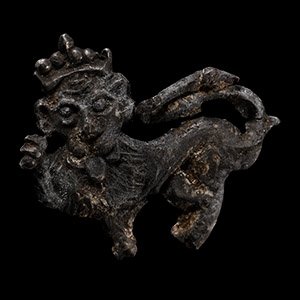
Medieval 'Thames' Pewter Lion Retainer's Badge
15th century A.D.Sold for (Inc. bp): £98
Comprising a lion passant guardant wearing a crown, tongue protruding; remains of pin to reverse. 1.85 grams, 23 mm
Found Thames foreshore spoil, 1980s and recorded with Museum of London.
This form of badge was used by the Lancastrians in the Wars of the Roses. -
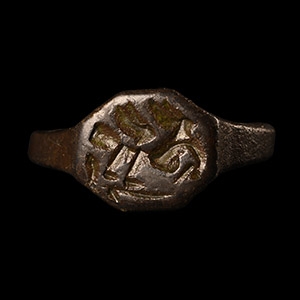
Medieval Bronze Ring with Stylised Bird
14th-16th century A.D.Sold for (Inc. bp): £26
Ellipsoid bezel with incuse motif of a bird with wings spread. 3.78 grams, 24.14 mm overall, 19.20 mm internal diameter (approximate size British S, USA 9, Europe 20, Japan 19)
Private collection formed since the 1940s. UK art market. Property of an Essex gentleman. -
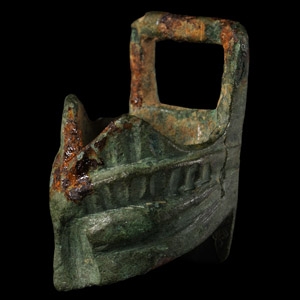
Anglo-Norman Zoomorphic Fitting
11th century A.D.Sold for (Inc. bp): £13
Wedge-shaped in plan with rectangular fitting hole and the upper portion of a stylised feline head with gaping mouth, cylindrical in section. 6 grams, 2.5 cm
Found Pembroke area, Pembrokeshire, 1980s-2000s. Property of the finder.
