
Loading, please wait...
LOT 0374
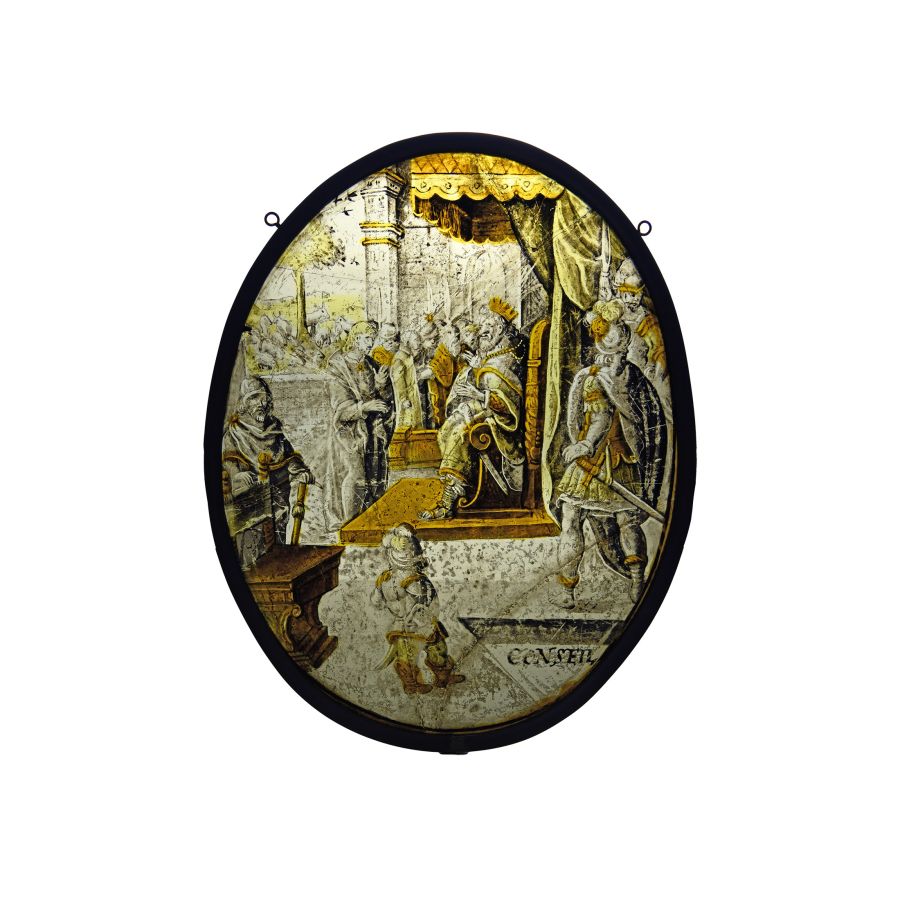
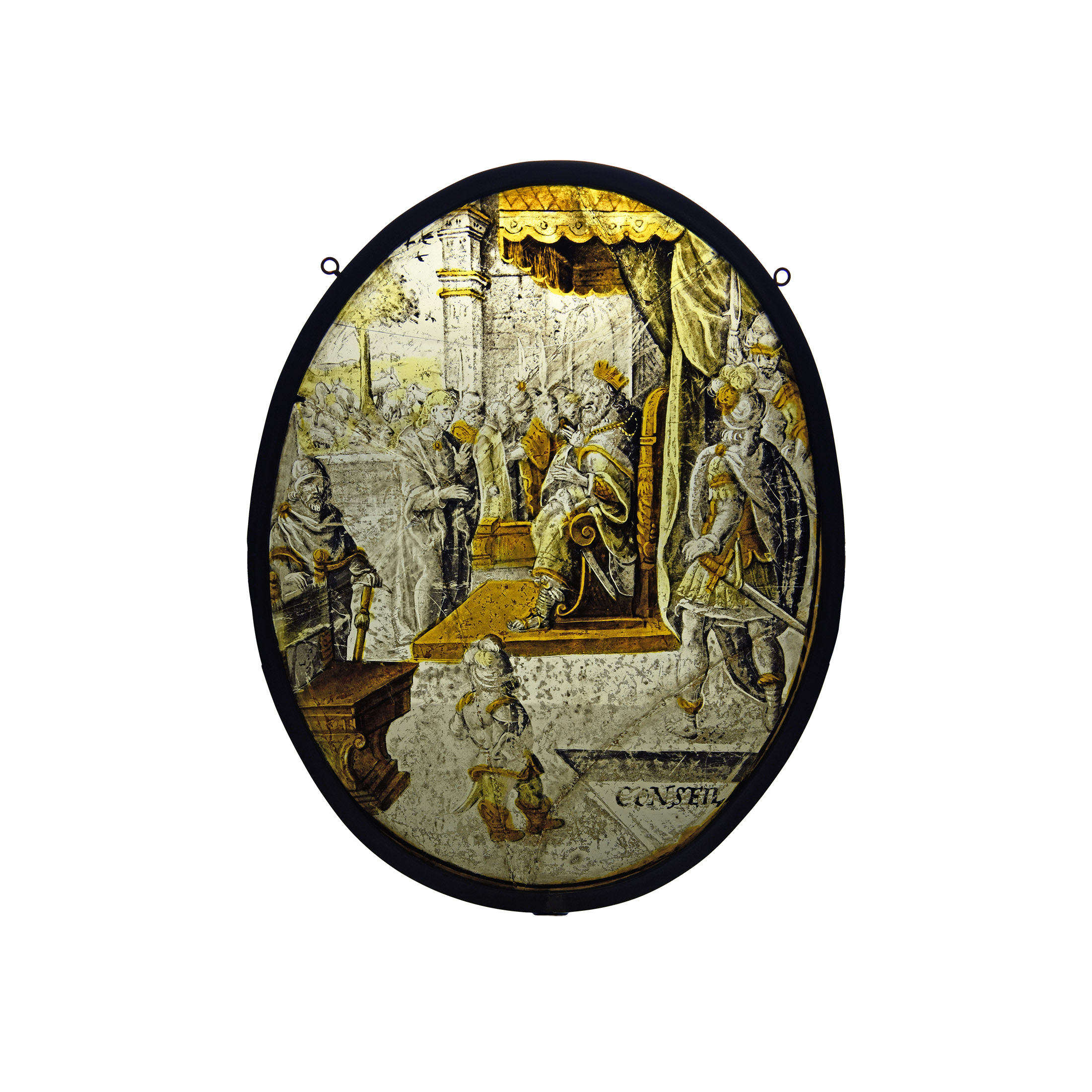
Medieval Stained Glass Roundel with Joseph in Front of the Pharaoh
NORTHERN FRANCE OR SOUTHERN LOW COUNTRIES, CIRCA 1540 A.D.
11 in. (328 grams, 27.8 cm).
Displaying polychrome detailing, the French word 'CONSEIL' (advice, counsel) shown to bottom right; panel within a lead came border with two modern loops for suspension; some cracking. [No Reserve]
ProvenancePrivate collection, Paris.
This lot has been checked against the Interpol Database of stolen works of art and is accompanied by search certificate no.202093.
See Marks, R., Stained Glass in England During the Middle Ages, London, 2014, for discussion.
CONDITIONTimeLine Auctions follows a vetting process to ensure the authenticity and legality of all items, reinforcing our commitment to integrity and responsible trading. Each antiquity, antique, and coin lot undergoes thorough examination by a vetting committee of at least ten external specialists, professional trade association members, scientists, and archaeologists: Our Vetting Process
AUCTIONS:
TimeLine is a leading auction house specialising in antiquities, ancient art, collectables, natural history, coins, medals, and books. Our auctions offer museums, collectors, historians, and enthusiasts the opportunity to acquire unique and historically significant pieces.
LOT 0374
Medieval Stained Glass Roundel with Joseph in Front of the Pharaoh
Sold for (Inc. bp): £715
-

Medieval Alabaster Weeping Mary Magdalene
Sicily, circa 1500 A.D.Estimate: £3,000 - 4,000 (‡+bp*)
Opening Bid: £1,389
From a Lamentation scene, modelled in the round with naturalistic facial features and flowing hair; Mary depicted kneeling and wearing a long tunica talaris with short sleeves; her head downcast with sorrowful expression, lips slightly parted. 4.95 kg, 33 cm
Ex Palau Antiguitats, Barcelona, 2022. Ex central London gallery. Accompanied by an academic report by Dr Raffaele D’Amato. This lot has been checked against the Interpol Database of stolen works of art and is accompanied by search certificate no.11748-202078.
Mary was considered the former sinner par excellence who, having abandoned the path of sinful vice, returned to original purity through the light of Christ, and accompanied Jesus until the last moments, shared the pain of his death with his mother and was witness of the Resurrection. Because of this, her appearance was often that of a simple girl, with long hair that echoed the biblical account. It was believed that through devotion and prayer to images of Mary Magdalene, the viewer might, like her, regain purity and find the same redemption that she was given by Christ. -
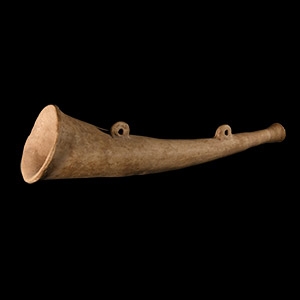
Medieval Terracotta Pilgrim's Horn
Circa 15th century A.D.Estimate: £350 - 450 (+bp*)
Opening Bid: £140
Formed with a slightly curved profile and with suspension loops; buff-coloured. 298 grams, 26.5 cm
Acquired 1990s-early 2000s. East Anglian private collection. -
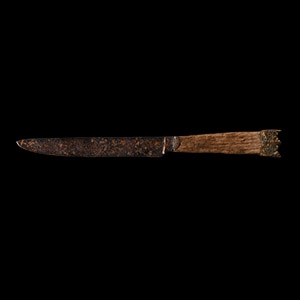
Medieval Iron Knife with Bronze Pommel
Late 14th century A.D.Estimate: £200 - 300 (+bp*)
Opening Bid: £80
Comprising a single cutting edge; scale tang with pommel formed as a bifacial crown with incised detailing; Netherlands. 31 grams, 18.3 cm
Acquired 1960s-1990s. Late Alison Barker collection, a retired London barrister.
Knife handles can be classified according to their method of attachment into whittle and scale-tang handles. Whittle-tang handles were the most common type used in the early medieval period. Whittle tang handles (like here) were more common later and fixed by pushing the pointed end of the knife tang into the handle.
