
Loading, please wait...
LOT 1670
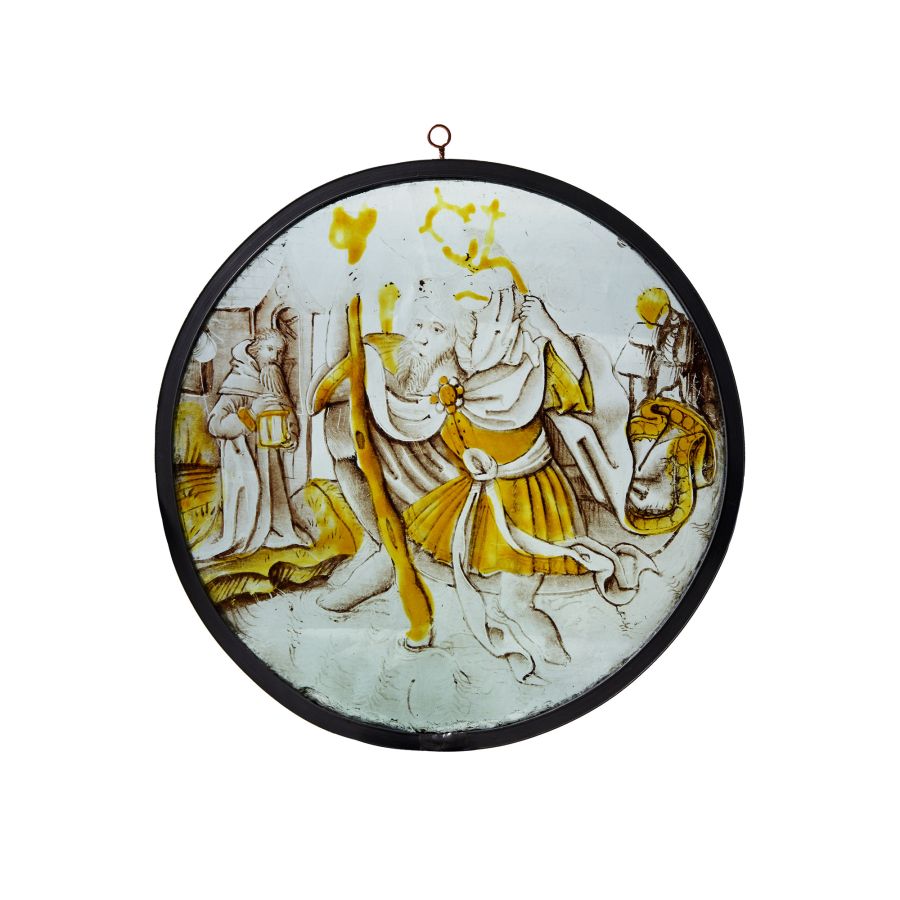
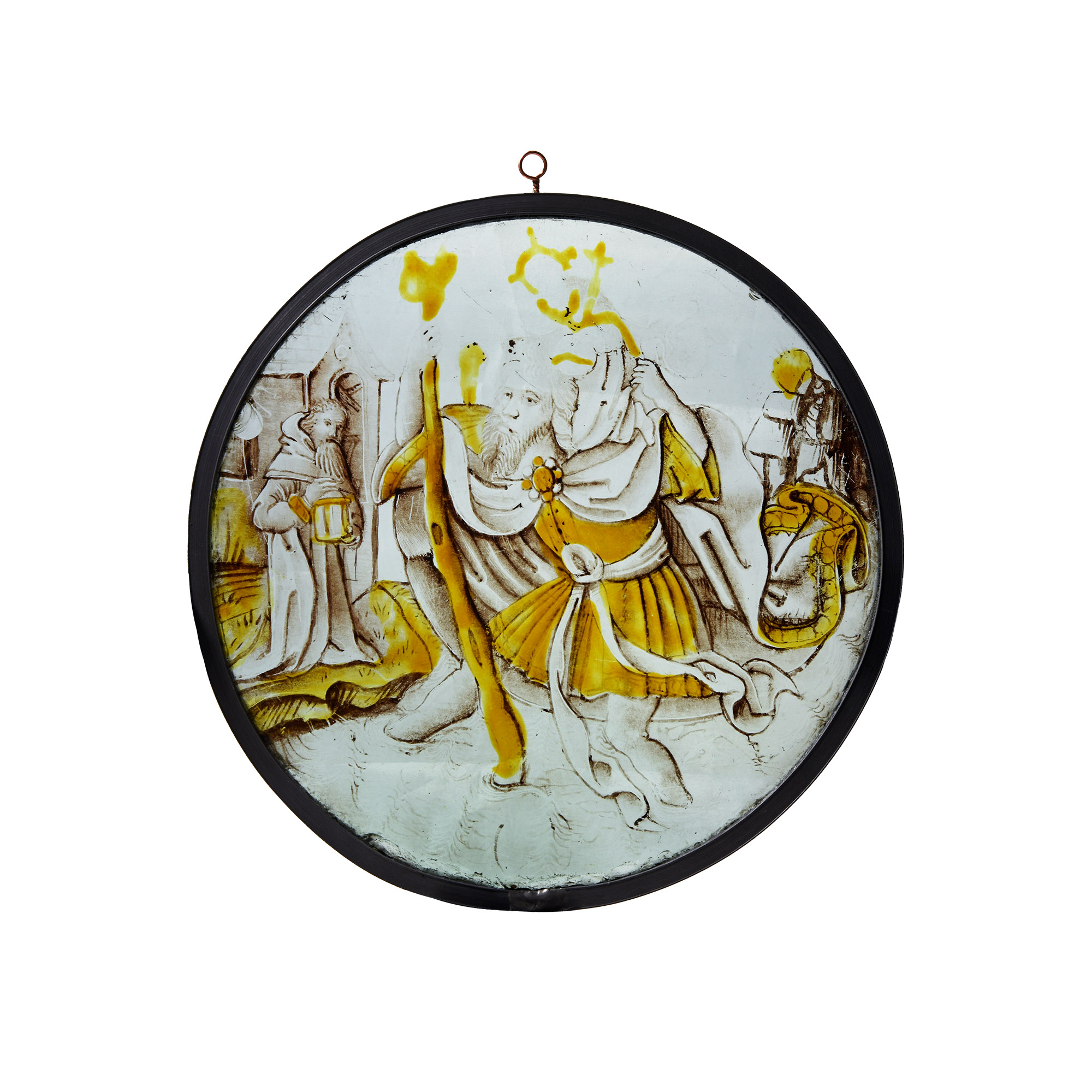
Medieval Stained Glass Roundel of Saint Christopher
BRUSSELS, BELGIUM, 1510 A.D.
8 3/4 in. (362 grams, 22.3 cm).
Displaying polychrome detailing and held within a lead came border with modern loop for suspension. [No Reserve]
ProvenanceCollection of Henry LHotellier (1908-1993), and by descent until 2021.
Ex central London gallery.
TimeLine Auctions follows a vetting process to ensure the authenticity and legality of all items, reinforcing our commitment to integrity and responsible trading. Each antiquity, antique, and coin lot undergoes thorough examination by a vetting committee of at least ten external specialists, professional trade association members, scientists, and archaeologists: Our Vetting Process
AUCTIONS:
TimeLine is a leading auction house specialising in antiquities, ancient art, collectables, natural history, coins, medals, and books. Our auctions offer museums, collectors, historians, and enthusiasts the opportunity to acquire unique and historically significant pieces.
-
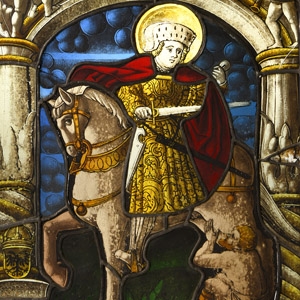
Medieval Stained Glass Panel With Saint Martin on Horseback
Basel, Switzerland, circa 1520 A.D.Sold for (Inc. bp): £2,080
Shown beneath an arcade, offering his cloak on the end of his sword to the beggar at his feet; polychrome detailing; repaired with lead cames and held in a wooden frame. 1.8 kg, 49.5 cm, (54.5 cm including box)
Ex old Swiss private collection. Ex central London gallery. -
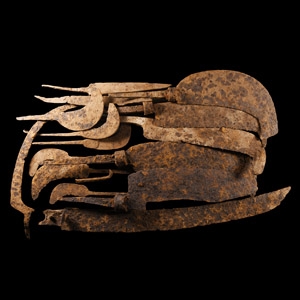
Medieval Iron Artefact Group
14th-16th century A.D.Sold for (Inc. bp): £33
Mainly comprising cleavers, sickles and knives. 3.5 kg total, 7-50 cm
Acquired 1990s-early 2000s. East Anglian private collection. -
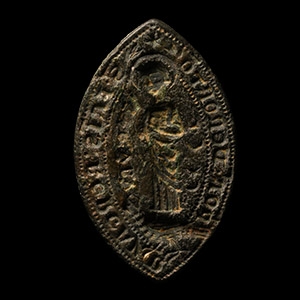
Large Medieval Bronze Ecclesiastical Seal Matrix
14th century A.D.Sold for (Inc. bp): £260
Depicting a female saint at the centre, standing right on a bird, uncertain inscription in right field, enigmatic surrounding legend: 'S : FRIS : ROPOAYM POR : DE NORTOR/E'; suspension loop and rib to reverse; accompanied by a museum-quality impression. 16.8 grams, 41 mm
Found by eye in Widford Parish in the 1970s, next to the old Salt Way to the Royal Parish of Bampton, Oxfordshire, UK. Accompanied by a print out about Widford and the church of St. Oswald, Oxon.
