
Loading, please wait...
LOT 0360
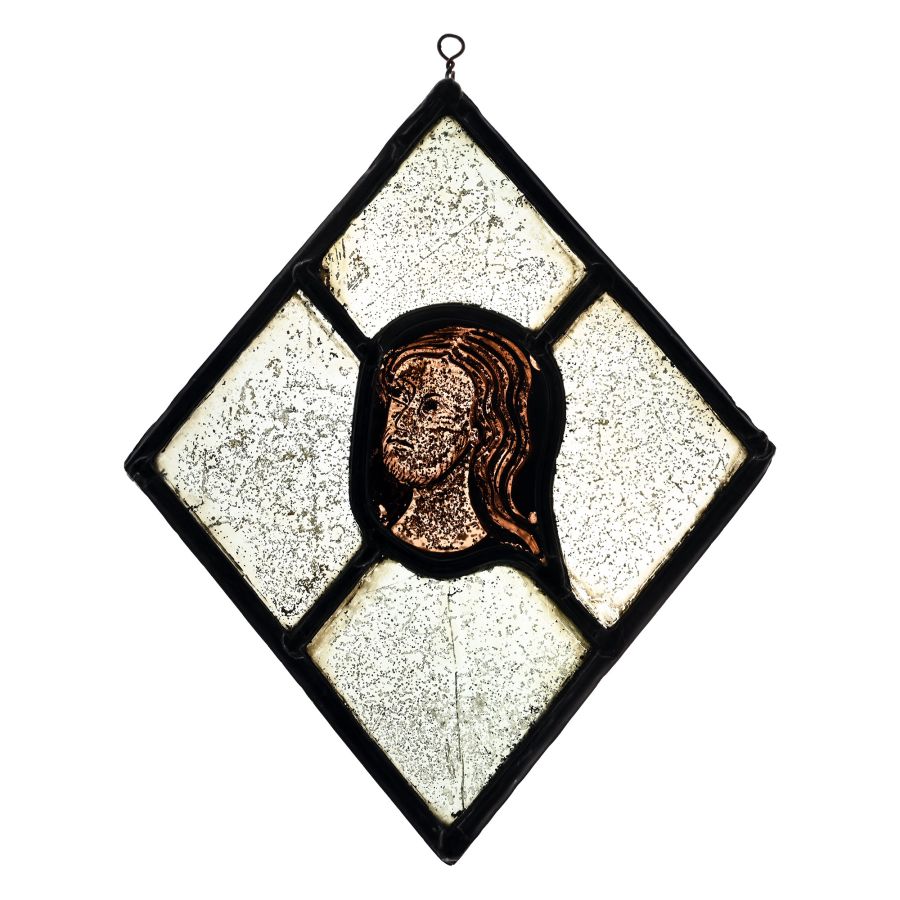
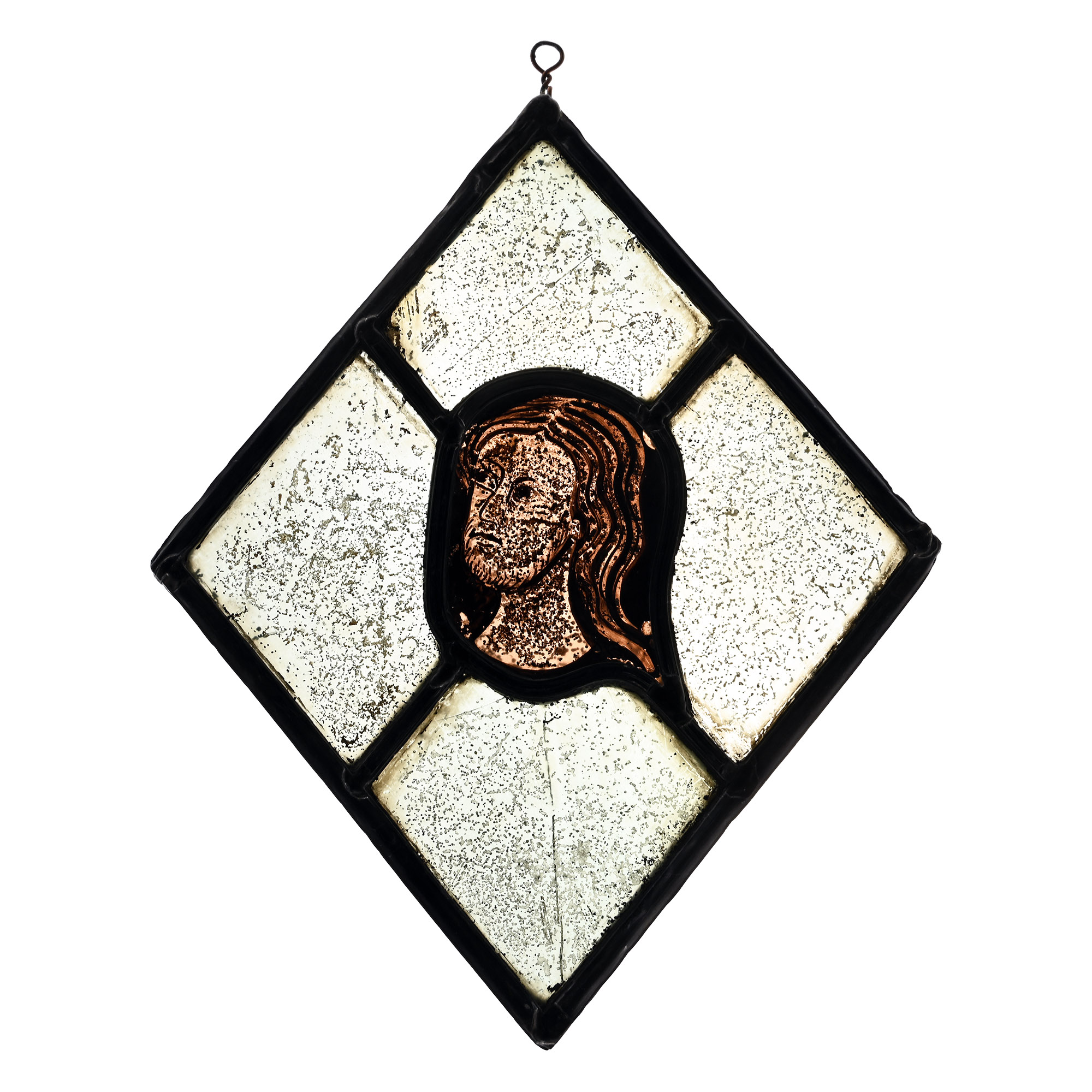
Medieval Stained Glass Panel of a Man
13TH CENTURY A.D.
12 in. (370 grams, 30.5 cm high).
Lozenge panel with four rectangular elements and central irregular panel with painted bearded male bust. [No Reserve]
ProvenanceThe Monastery Stained Glass, 2003.
CONDITIONTimeLine Auctions follows a vetting process to ensure the authenticity and legality of all items, reinforcing our commitment to integrity and responsible trading. Each antiquity, antique, and coin lot undergoes thorough examination by a vetting committee of at least ten external specialists, professional trade association members, scientists, and archaeologists: Our Vetting Process
AUCTIONS:
TimeLine is a leading auction house specialising in antiquities, ancient art, collectables, natural history, coins, medals, and books. Our auctions offer museums, collectors, historians, and enthusiasts the opportunity to acquire unique and historically significant pieces.
-
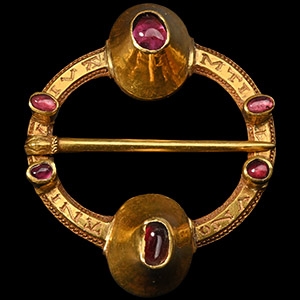
Medieval Gold Ring Brooch with Garnets and 'Let us Live as One Soul’ Posy Inscription
13th-14th century A.D.Sold for (Inc. bp): £7,020
An annular brooch with pelletted edges, six garnet cabochons adorning the brooch, each in a tall closed setting; inscribed on the front 'VIVAMTINVNOANI', the reverse inscribed with 'AMORIVNTVANVNTVI' divided between two palmettes. 8.76 grams, 38 mm
Private English collection, formed between the late 1970s and early 1990s. Private collection, UK. This lot has been checked against the Interpol Database of stolen works of art and is accompanied by search certificate number no.12989-245987.
Both inscriptions can be interpreted differently according to the order of their reading; the front can be read ‘IN JUNO ANI VIVAM TI’, which roughly translates as ‘May I live for you in the fastening’, alternatively ‘VIVAM[vs] IN VNO ANI[mo]’ which roughly translates as ‘Let us live as one soul’. The back reads: 'AMORIVNTVANVNTVI' ‘AMOR[is] IVN[c]T[i] ANVNTIV[s]’ which roughly translates as ‘a message of joint love’. The inscriptions on the brooch serve as metaphors, linking its function of fastening materials to the binding of lovers in medieval romance. Gift-giving was central to courtly love, and the brooch symbolised both affection and protection, reminding the wearer of the giver’s love while also warding off unwanted advances. -
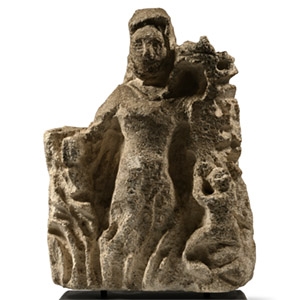
Medieval 'Our Lady of the Flames' Limestone Figural Scene
15th century A.D. or laterEstimate: £400 - 600 (+bp*)
Opening Bid: £180
Carved in the half-round frieze fragment or devotional sculpture of the Madonna del Fuoco, facing female in wimple and long robe with her right arm bent forward, left arm extended above a child gripping the folds of her robe; billowing flames surrounding the pair; mounted on a custom-made stand. 10.55 kg total, 37.7 cm including stand
Acquired Lukas Pearsie, Suffolk, 2012. Property of a Kent collector. From the N.J. collection, Leicester, UK. -
.jpg)
Medieval Pilgrim's Lead Holy Water Ampulla
Circa 14th century A.D.Sold for (Inc. bp): £26
With rectangular body, elliptical-section mouth, lateral loops; low-relief hatched panel, three heater shields with cross to each face. 46 grams, 48 mm
From a late private Buckinghamshire, UK, collector, his collection established from the 1990s.
