
Loading, please wait...
LOT 0361
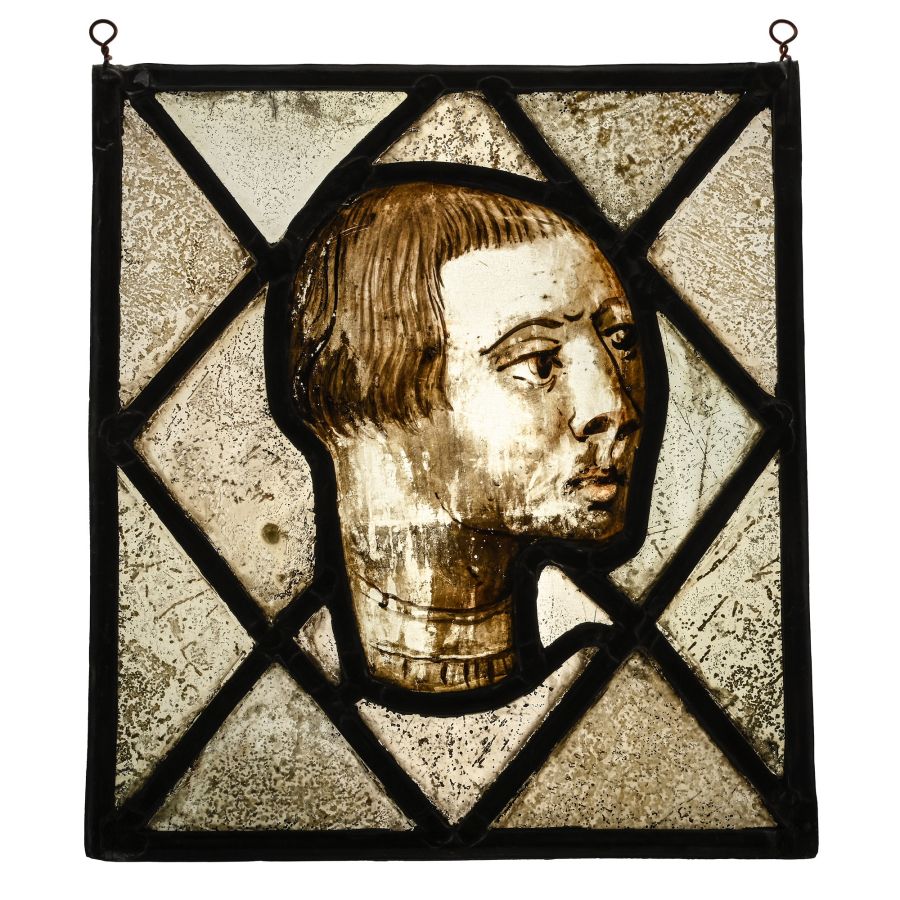
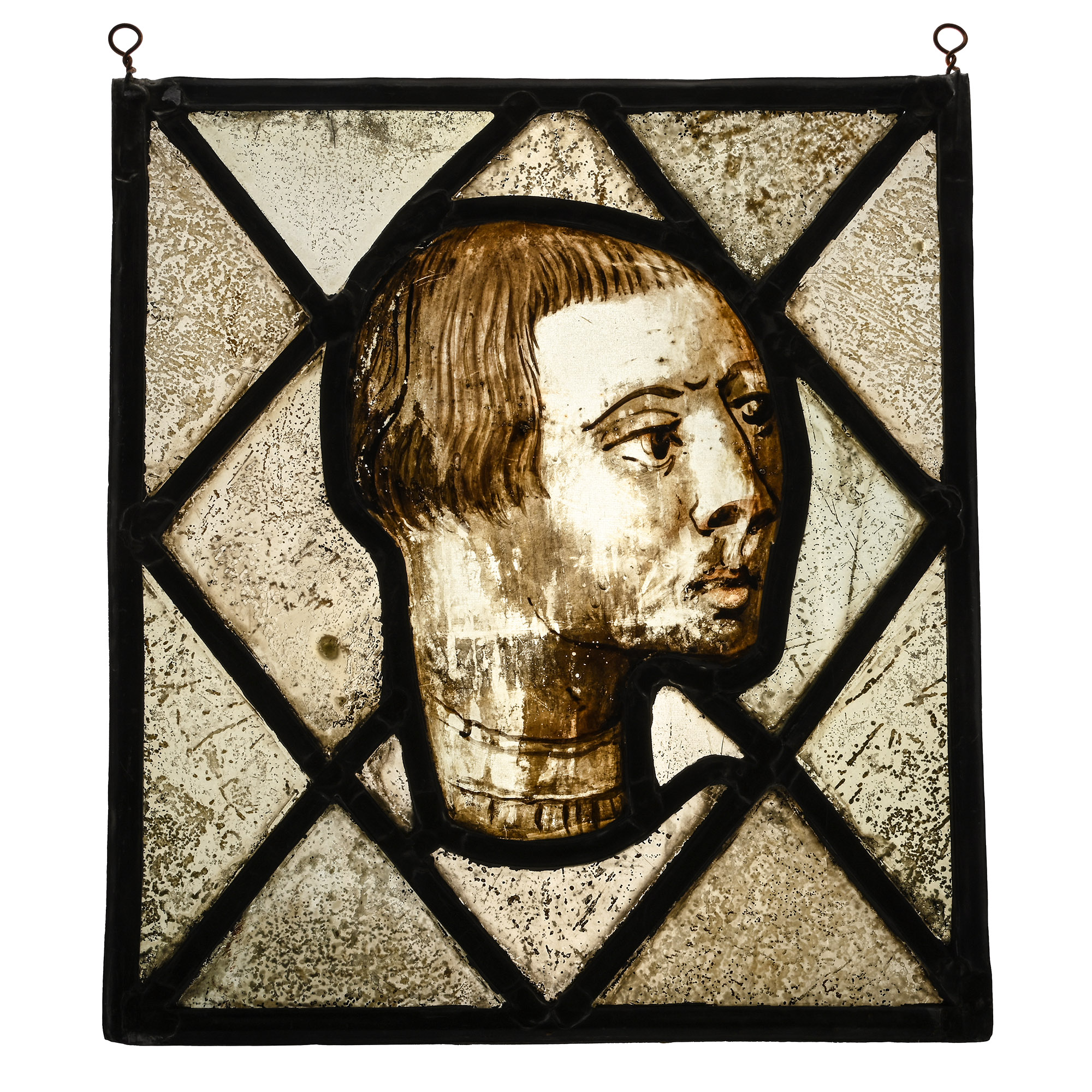
Medieval Stained Glass Head of a Man
NETHERLANDS, BRABANT, 1500-1520 A.D.
12 x 10 5/8 in. (838 grams, 30.3 x 27 cm).
Square composite panel with brown-hued vitreous enamel and pink pigment, irregular profile bust set into the diamond quarries. [No Reserve]
ProvenanceAncient Arms and Armour, Stained Glass, Coffrets and Furniture.
Property from a New York Collection, American Art Association, New York, 23 November 1923, no.110 (as Flemish XV-XVI).
The Monastery Stained Glass, 2004.
Accompanied by a previous cataloguing document.
The loose, fluid brushwork and fine touches of pink sanguine pigment on this male head place him firmly in the first decades of the sixteenth century, a dating supported further by the visible hemline of the fashionable pleated shirt covering his neck. These are all characteristic features of Southern Netherlandish stained glass from this period, and parallels offered by programs such as the early sixteenth-century windows in Antwerp Cathedral, the c. 1500 glazing scheme at Sint Gummarus church in Lier just outside Antwerp, as well as at sites such as Notre Dame du Sablon in Brussels, suggest an artist working in Brabant in the early years of the century.
CONDITIONTimeLine Auctions follows a vetting process to ensure the authenticity and legality of all items, reinforcing our commitment to integrity and responsible trading. Each antiquity, antique, and coin lot undergoes thorough examination by a vetting committee of at least ten external specialists, professional trade association members, scientists, and archaeologists: Our Vetting Process
AUCTIONS:
TimeLine is a leading auction house specialising in antiquities, ancient art, collectables, natural history, coins, medals, and books. Our auctions offer museums, collectors, historians, and enthusiasts the opportunity to acquire unique and historically significant pieces.
-
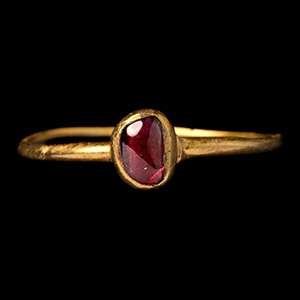
'The Harrietsham' Medieval Gold and Gem Set Ring
Southern England, 1300-1400 A.D.Sold for (Inc. bp): £1,105
Comprising a narrow shank and cup bezel with inset garnet cabochon; straightened. 1.37 grams, 22.77 mm overall, 17.26 mm internal diameter (approximate size British N, USA 6 1/2, Europe 13.72, Japan 13)
Found whilst searching with a metal detector near Harrietsham, Maidstone, Kent, UK, on 5th April 2024; declared as Treasure and susiquently disclaimed with Treasure Reference no.2024 T639. Accompanied by a copy of the British Museum's Portable Antiquities Scheme (PAS) report no.SUSS-EDF83D. Accompanied by a copy of the Department for Digital, Culture, Media & Sport's Treasure receipt dated 4th June 2024. Accompanied by a receipt, and disclaim letter, both from Mid Kent and Medway Coroner's Service.
The Portable Antiquities Scheme states: 'This is a find of note and has been designated: Include in MedArch.' -
.jpg)
Silver Reliquary Cross Pendant
15th-16th century A.D.Sold for (Inc. bp): £91
Composed of two pieces secured together by a rivet, incised cross motif to both faces. 5.15 grams, 30 mm
Ex German art market, 2000s. Acquired from an EU collector living in London. From the collection of a Surrey, UK, gentleman. -
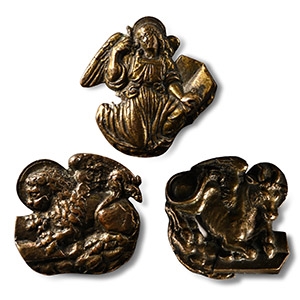
Medieval Gilt Plaques of the Evangelist
Italy, 16th century A.D.Sold for (Inc. bp): £390
Comprising three plaques depicting the symbols of the Evangelists Matthew (angel), Luke (ox) and Mark (lion). 92.3 grams total, 45-46 mm
Private collection, UK.
