
Loading, please wait...
LOT 1369
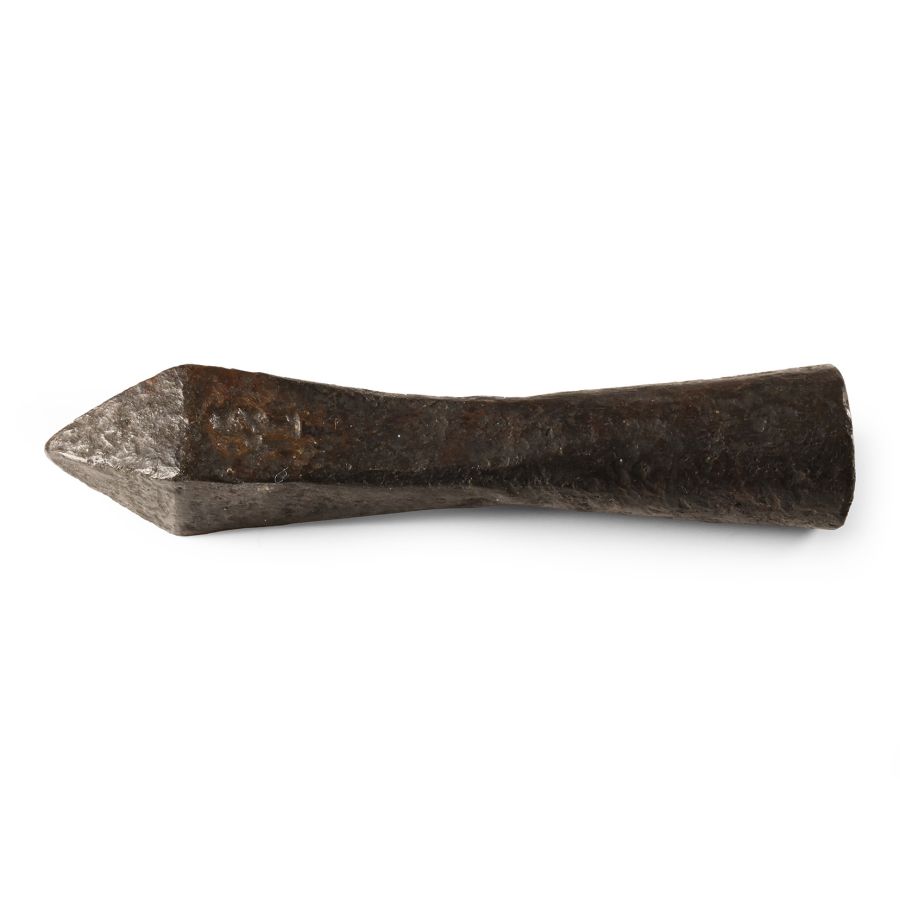
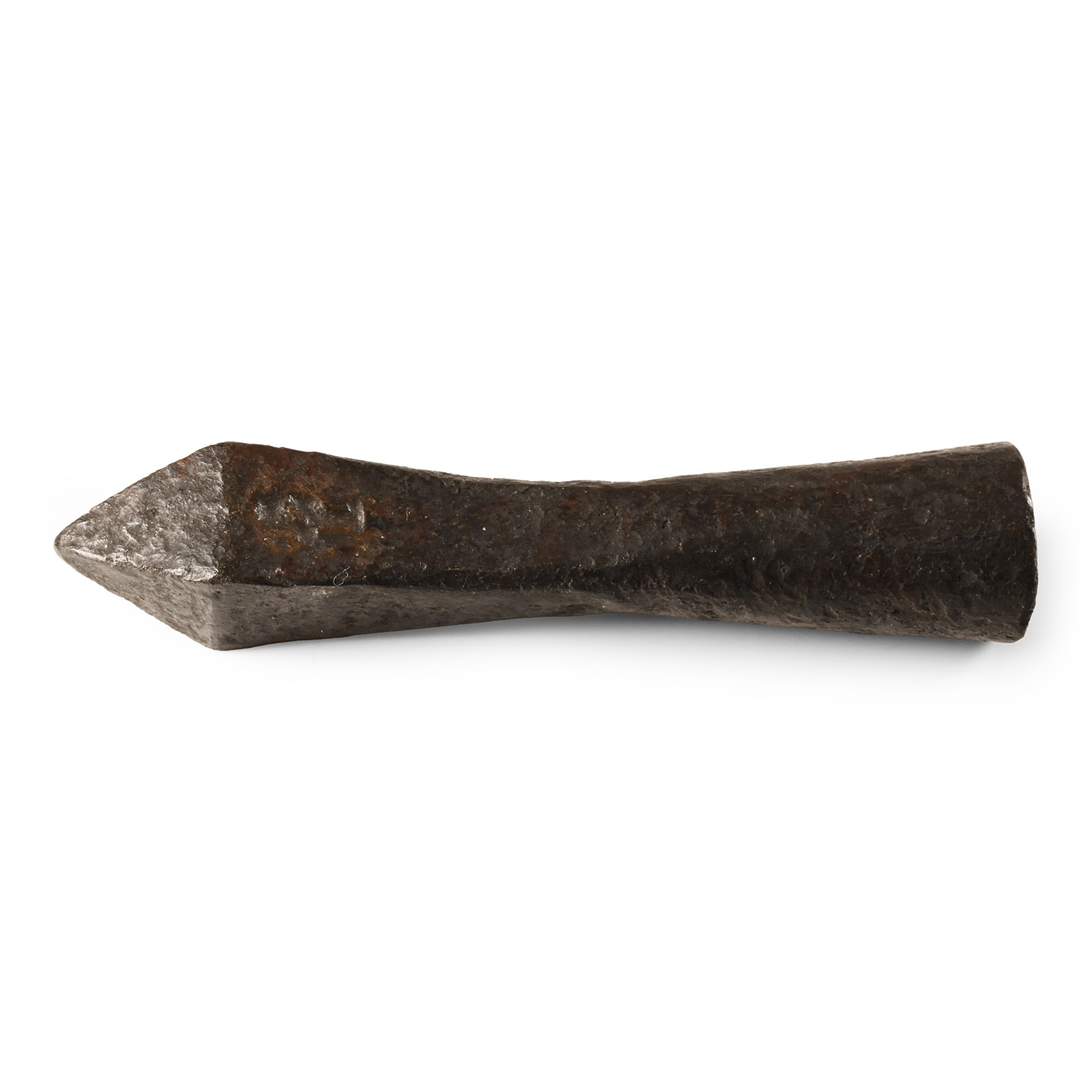
Medieval Socketted Iron Crossbow Bolt Head with Amphora Maker's Mark
15TH-16TH CENTURY A.D.
2 7/8 in. (35.4 grams, 72 mm).
With pyramidal point, square-section shaft, tubular socket and amphora-shaped maker's mark. [No Reserve]
ProvenanceTucker collection, Buckinghamshire, UK; formed in the 1980s.
Property of a Kent lady collector.
TimeLine Auctions follows a vetting process to ensure the authenticity and legality of all items, reinforcing our commitment to integrity and responsible trading. Each antiquity, antique, and coin lot undergoes thorough examination by a vetting committee of at least ten external specialists, professional trade association members, scientists, and archaeologists: Our Vetting Process
AUCTIONS:
TimeLine is a leading auction house specialising in antiquities, ancient art, collectables, natural history, coins, medals, and books. Our auctions offer museums, collectors, historians, and enthusiasts the opportunity to acquire unique and historically significant pieces.
LOT 1369
Medieval Socketted Iron Crossbow Bolt Head with Amphora Maker's Mark
Sold for (Inc. bp): £390
-
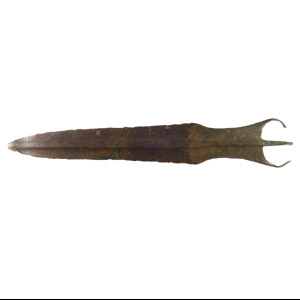
North-West Persian Bronze Short Sword with Integral Grip and Horns
Circa 1st millennium B.C.Sold for (Inc. bp): £338
With curved 'horns' projecting on either side at the top of waisted grip, blade with flat mid-rib. 242 grams, 41.5 cm
Acquired 1980-2015. Ex Abelita family collection.
The Luristani people produced a quantity of fine metalwork, which according to Dr Khorasani, could be due to a settled period which arose as a result of the defeat of the Elamites by the Babylonians, leaving the Luristani people in relative peace for a period of time after 1200 B.C. According to Khorasani, 'A culture of innovation and experimentation flourished, and the repertoire of the Luristan smiths expanded in the period between 1150-1050 BC.' -
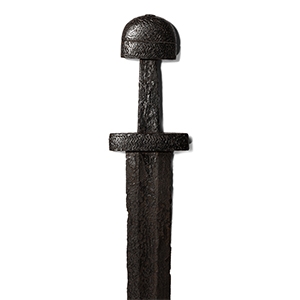
Viking Peterson Type X Sword with Inlaid Hilt
Circa 10th-11th century A.D.Sold for (Inc. bp): £3,900
With pattern-welded double-edged blade, showing well-defined shallow fullers and wide cutting edges, the fullers occupying not less than one third of the entire width and running to a point about 19 cm from the tip; massive, simply decorated hilt; the pommel, as well as the cross-guard, with visible zig-zag patterns; the pommel of solid tea-cosy type, divided into two sections by a well marked groove, the bottom being the larger, the curved top portion of the pommel further divided into three lobes; traces of inlay visible on the pommel and on the cross-guard. 1.25 kg, 94 cm
Acquired on the European art market in the 1990s. From the property of a Suffolk collector.
The blade shows in its central section, and on both cutting edges, the blodiձa style pattern-welding through the central portion of the blade (Oakeshott, 1960, fig.70). The fine pattern-welded blade patterns of Viking swords are the blodiձa (Blood-Eddy) and 'ann' (rows of mown hay) known from Norse poetry. -
.jpg)
Anglo-Zulu War Battle of Khambula Artefact Collection
Khambula, 29 March 1879 A.D.Sold for (Inc. bp): £104
Comprising: a Martini-Henry brass cartridge case with firing mark to the base; three lead heads of bullets fired from the Martini-Henry rifle; mounted in a display frame; supplied with brass nameplate 'Anglo-Zulu War / Khambula / March 29th 1879'. 332 grams total, 30-37 mm (13 x 13.5 cm including case)
Ian Wilkinson collection, Nottinghamshire, UK, formed since 1985. Accompanied by a handwritten provenance note.
