
Loading, please wait...
LOT 1696
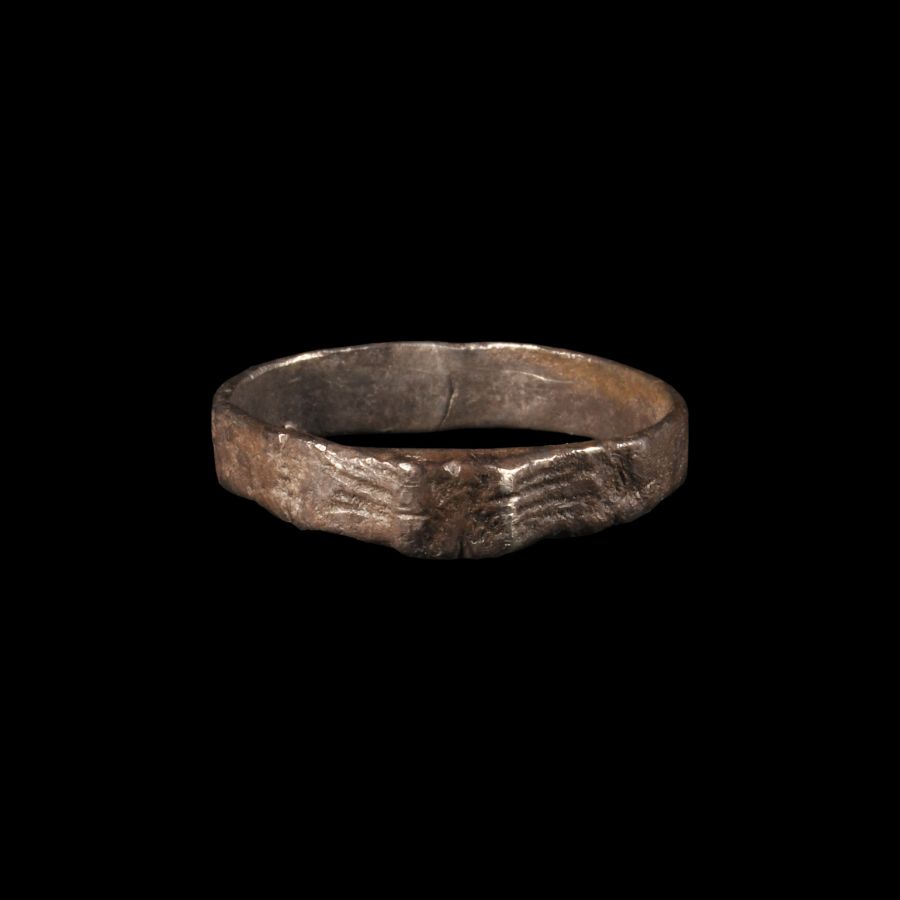
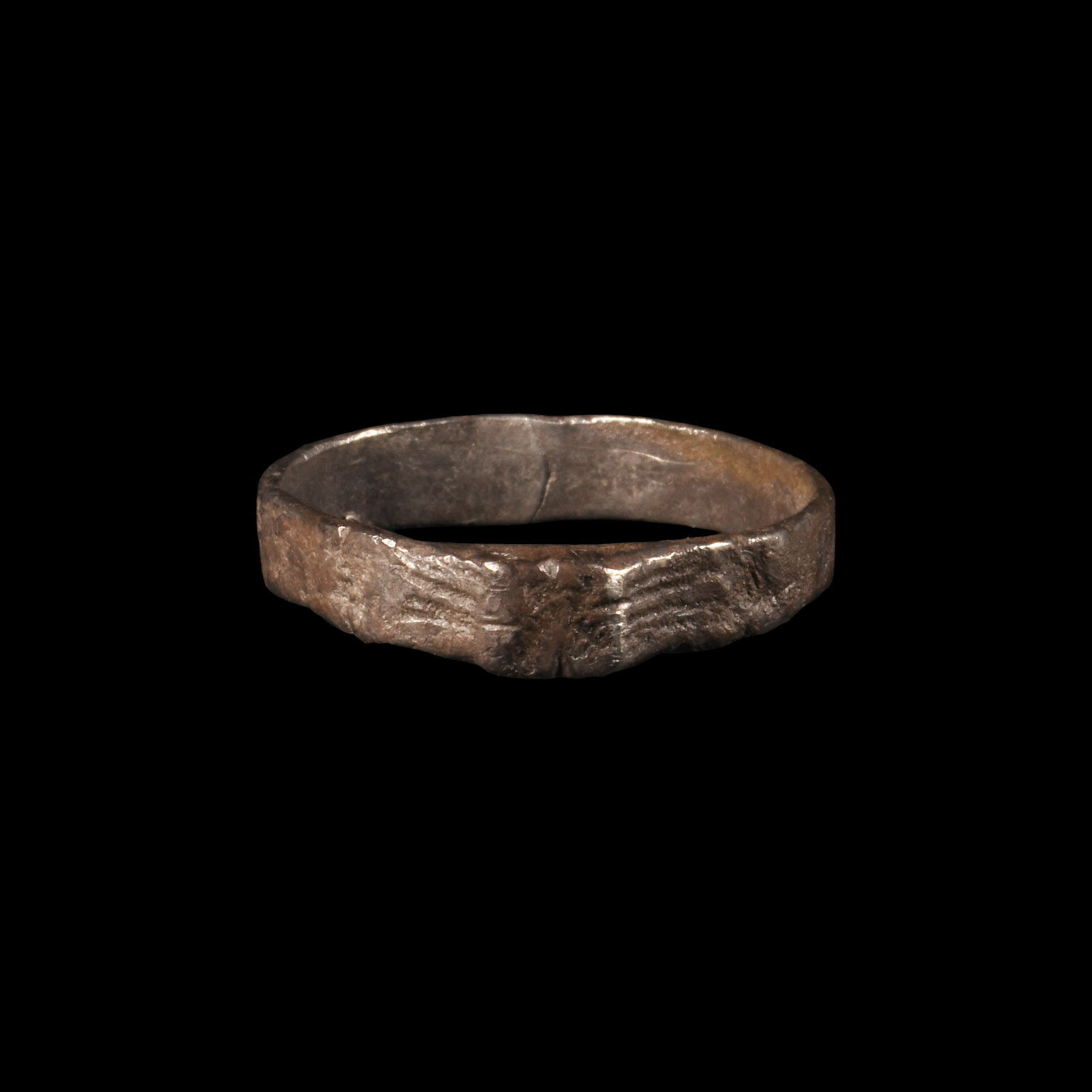
Medieval Silver Stirrup Ring
12TH-13TH CENTURY A.D.
1 in. (3.42 grams, 24.44 mm overall, 20.14 mm internal diameter (approximate size British T 1/2, USA 10, Europe 19.84, Japan 20)).
Roughly stirrup-shaped with a flat-section hoop, raised square-shaped bezel displaying a quatrefoil motif with incised zigzagging radiating from a central point into each quarter, together with incised linear ornament to the shoulders; misshapen hoop. [No Reserve]
ProvenanceFound Keyingham, East Riding of Yorkshire, UK.
Accompanied by a copy of the British Museum's Portable Antiquities Scheme (PAS) report number YORYM-03DF22.
Accompanied by a copy of the report on potential Treasure for H M Coroner for Yorkshire under reference no.2014 T899.
TimeLine Auctions follows a vetting process to ensure the authenticity and legality of all items, reinforcing our commitment to integrity and responsible trading. Each antiquity, antique, and coin lot undergoes thorough examination by a vetting committee of at least ten external specialists, professional trade association members, scientists, and archaeologists: Our Vetting Process
AUCTIONS:
TimeLine is a leading auction house specialising in antiquities, ancient art, collectables, natural history, coins, medals, and books. Our auctions offer museums, collectors, historians, and enthusiasts the opportunity to acquire unique and historically significant pieces.
-
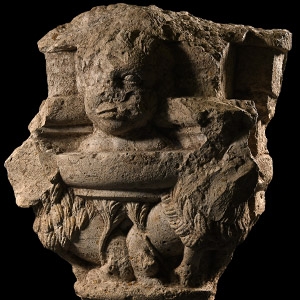
Medieval Stone Capital with Prophet Daniel and Lions
Spain or Southern France, 12th century A.D.Sold for (Inc. bp): £845
From an architectural column with a square upper face developing to a rounded base; a decorative frieze carved in the half-round depicting two seated lions, each with its tail looped around its lower body, supporting a pedestal on which a facing bust of a young boy is resting. 25.7 kg, 36 cm
Good condition
with Piasa, 7 June 2013, lot 17. Ex central London gallery. Accompanied by an academic report by Dr Raffaele D’Amato. This lot has been checked against the Interpol Database of stolen works of art and is accompanied by search certificate no.11738-202062.
The form of the capital and the shape of the beasts are similar to those sculptures that survive in churches on the pilgrimage route to Santiago da Compostela – namely in Southern France and Northern Spain, but the bodies of the lions have many correspondences with the capital sculptures of Poitou. The lions were considered to be guardians against evil and the image of the young boy is probably a representation of the prophet Daniel. There is a similar capital in the Church of d'Airvault (Deux-Sèvres) also ornamented with lions and a human head. -
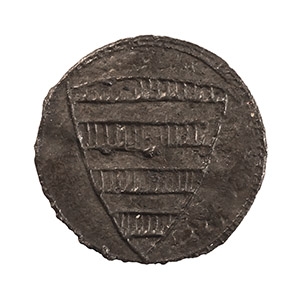
Medieval Thames Pewter Bifacial Wine Tavern Token
Circa 14th-15th century A.D.Sold for (Inc. bp): £46
One face displaying a shield in relief bearing horizontal lines; an antlered deer pursued by an arrow. 715 grams, 1.7 cm
Found Billingsgate spoil from the Thames foreshore, London, UK.
Tokens of this type were used in taverns and similar establishments. -
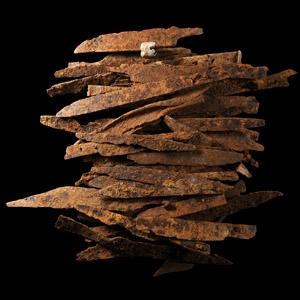
Medieval Iron Knife Blade Group
14th-17th century A.D.Sold for (Inc. bp): £7
Comprising blades of various dates and profiles, including some with fragmentary handles. 1.4 kg total, 10-21.5 cm
Acquired 1990s-early 2000s. East Anglian private collection.
