Loading, please wait...

Medieval Silver Stag Mount Medieval Silver Stag Mount Medieval Silver Stag Mount
Use mousewheel to zoom in and out, click to enlarge
Details

LOT 1853

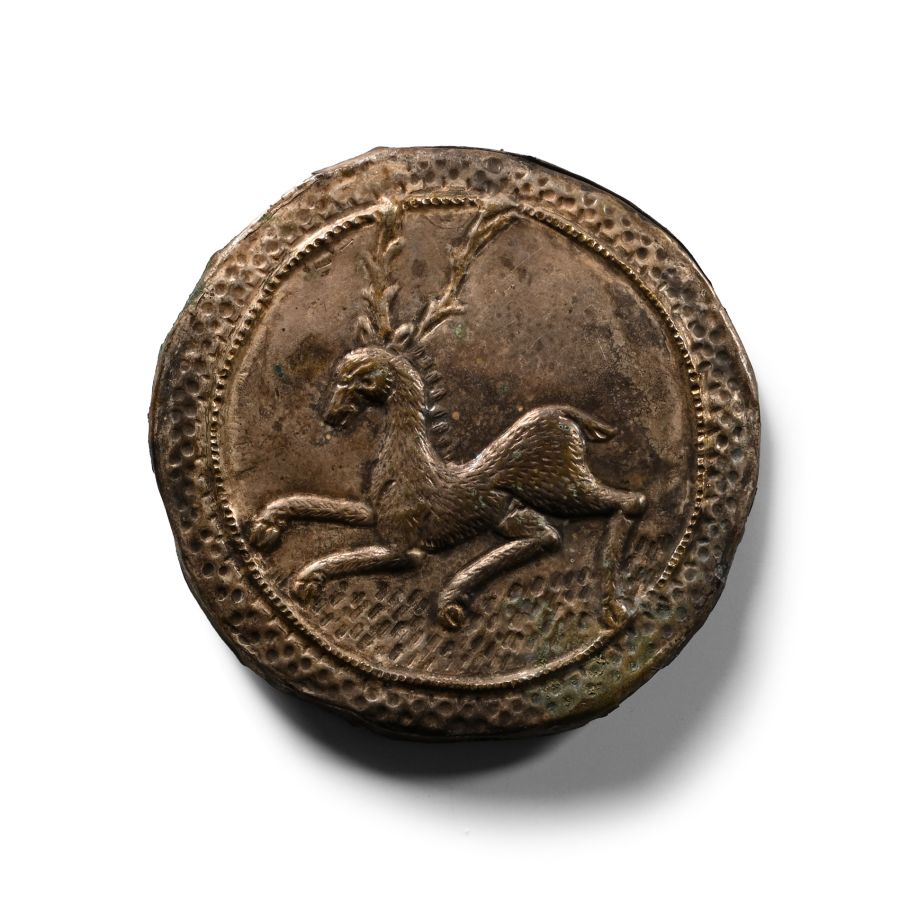
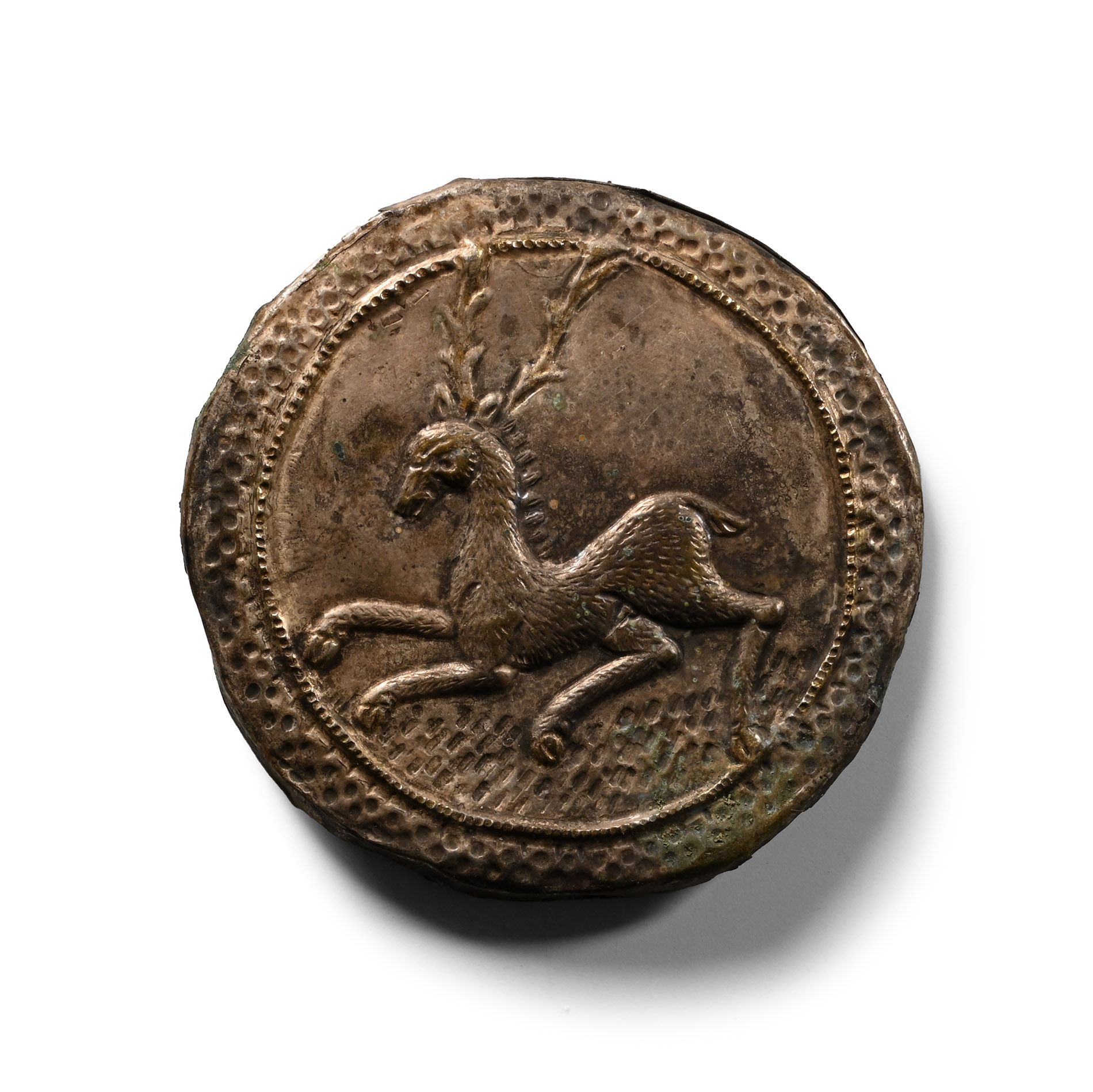
Medieval Silver Stag Mount

15TH-16TH CENTURY A.D.

2 3/8 in. (6.88 grams, 61 mm).

Discoid appliqué with curved rim, chased border, repoussé image of a stag running in a landscape.

Provenance

Ex German art market, 2000s.
Acquired from an EU collector living in London.
From the collection of Surrey, UK, gentleman.

CONDITION
VETTING:

TimeLine Auctions follows a vetting process to ensure the authenticity and legality of all items, reinforcing our commitment to integrity and responsible trading. Each antiquity, antique, and coin lot undergoes thorough examination by a vetting committee of at least ten external specialists, professional trade association members, scientists, and archaeologists: Our Vetting Process


AUCTIONS:

TimeLine is a leading auction house specialising in antiquities, ancient art, collectables, natural history, coins, medals, and books. Our auctions offer museums, collectors, historians, and enthusiasts the opportunity to acquire unique and historically significant pieces.

LOT 1853

Medieval Silver Stag Mount

Sold for (Inc. bp): £260

Print page

RELATED LOTS
  • The Harling Medieval Bronze Handled Posnet Cauldron
    'The Harling' Medieval Bronze Handled Posnet Cauldron
    14th century A.D.

    Sold for (Inc. bp): £8,450

    Shaped as a small cauldron with a long curved handle decorated with five incuse circles extending from the rim to the swan-head finial and with loop handle beneath; spherical body, slightly oblate at the base with an everted rim and casting seams, three splayed stub legs with ribbed profile; offered with objects recovered from the same archaeological context: a struck flint flake; two bone fragments; a fragment of pottery. 3.1 kg total, 3.8-32 cm


    Located whilst searching with a metal detector and archaeologically excavated by Norfolk Archaeology Unit, near Harling, Norfolk, UK, on Wednesday 8th November 2023. Accompanied by a copy of the British Museum's Portable Antiquities Scheme (PAS) report no.NMS-C1D619 which includes a photograph of the cauldron in situ before excavation. This lot has been checked against the Interpol Database of stolen works of art and is accompanied by search certificate no.12165-219623.

    Bronze cauldrons played a role in ritual practices in the Middle Ages and beyond. It appears that many of the bronze cauldrons have been deliberately deposited, although the reasons for this were not always clear. There are strong indications that this often took place at the beginning of a large-scale project. This may have been the construction of a castle or a rampart, of a city wall, the building of a dyke, a dangerous crossing of the sea, the cultivation of a piece of farmland or the reclamation of a peat bog. For all types of projects, salvation and blessing could be requested in the form of a deliberate deposit of a bronze cauldron. This custom is directly comparable with the Medieval ritual of placing coins under the foundation stone of a building.

    Lot Details

  • Medieval Published Bronze Seal Matrix with IHS
    Medieval 'Published' Bronze Seal Matrix with IHS
    13th-14th century A.D.

    Sold for (Inc. bp): £39

    Chessman type with dense 'IHS' monogram. 7.9 grams, 25 mm


    From the collection of the famous author, writer and speaker, Gordon Bailey, Essex, UK; formed since 1968.

    Lot Details

  • Framed Medieval Lead Seal Matrix of Thomas Son of Walter
    Framed Medieval Lead Seal Matrix of Thomas Son of Walter
    13th-14th century A.D.

    Sold for (Inc. bp): £46

    Discoid in shape with central eight-petalled flower within a roundel, surrounding 'S’ THOME FIL WALTE = SEAL OF THOMAS SON OF WALTER' legend. 95 grams, 12.5 x 12.5 cm


    From the collection of the famous author, writer and speaker, Gordon Bailey, Essex, UK; formed since 1968.

    During the medieval period the use of seals on documents, letters and packages became widespread. Lead was cheap to use and easy to engrave, and from the late 12th until the end of 13th century seals of this type, with very conventional central designs, were important possessions amongst the lower classes.

    Lot Details

Stay up-to-date with the latest from TimeLine Auctions by joining our mailing list