Loading, please wait...

Use mousewheel to zoom in and out, click to enlarge

Details

LOT 1871

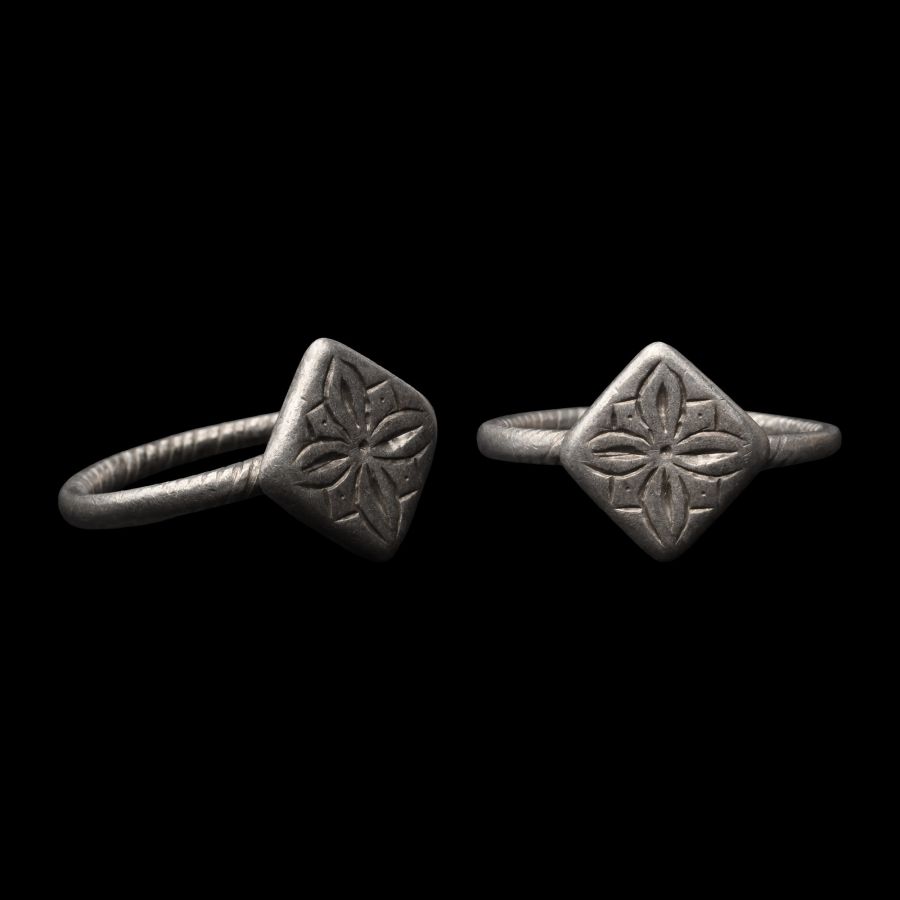
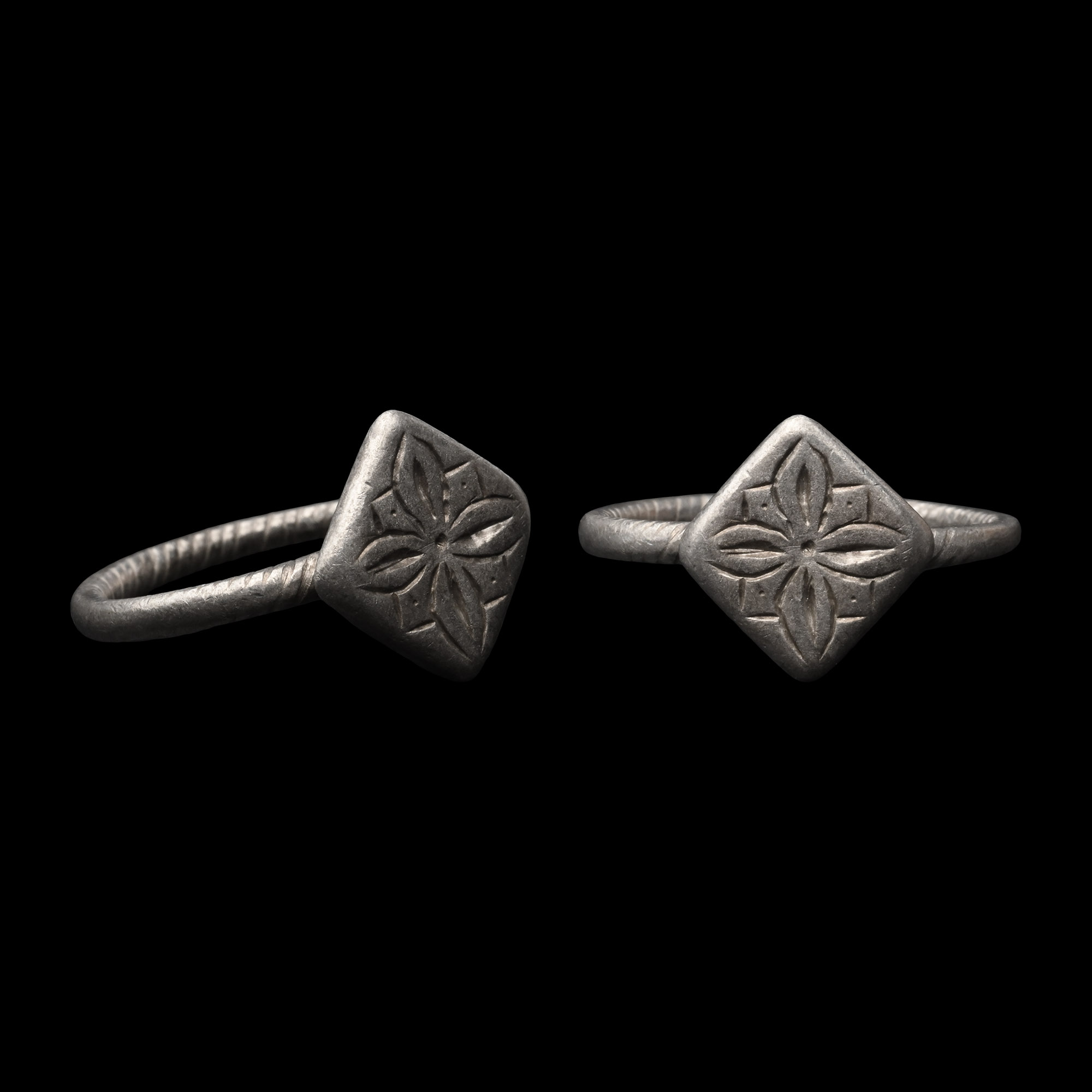
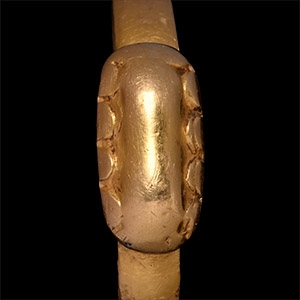
Medieval Silver Ring with Floral Cross

CIRCA 15TH-16TH CENTURY A.D.

1 in. (3.57 grams, 23.82 mm overall, 19.70 mm internal diameter (approximate size British P 1/2, USA 7 3/4, Europe 16.86, Japan 16)).

Round-section hoop with faux rope-twist, lozenge-shaped bezel with a floral cross within a rectangle.

Provenance

Ex German art market, 2000s.
Acquired from an EU collector living in London.
From the collection of a Surrey, UK, gentleman.

CONDITION

VETTING:

TimeLine Auctions follows a vetting process to ensure the authenticity and legality of all items, reinforcing our commitment to integrity and responsible trading. Each antiquity, antique, and coin lot undergoes thorough examination by a vetting committee of at least ten external specialists, professional trade association members, scientists, and archaeologists: Our Vetting Process


AUCTIONS:

TimeLine is a leading auction house specialising in antiquities, ancient art, collectables, natural history, coins, medals, and books. Our auctions offer museums, collectors, historians, and enthusiasts the opportunity to acquire unique and historically significant pieces.

LOT 1871

Medieval Silver Ring with Floral Cross

Sold for (Inc. bp): £182

Print page

RELATED LOTS

  • Medieval Gold Ring Brooch with Sapphires
    Medieval Gold Ring Brooch with Sapphires
    France, 14th century A.D. or later

    Sold for (Inc. bp): £1,950

    An annular brooch set with six cabochon sapphires, the spaces in between engraved with annulets, diamonds and a fleur-de-lis at the centre, a flower motif on each side of the pin. 6.11 grams, 20 mm


    Private English collection, formed between the late 1970s and early 1990s. Private collection, UK.

    In medieval jewellery, sapphires were revered not only for their beauty but for their rich symbolic and spiritual meaning. Associated with the heavens, they embodied divine wisdom, purity, and truth, often worn by clergy and royalty as signs of piety and authority. Believed to protect against envy, poison, and deceit, sapphires were also thought to reveal dishonesty by losing their brilliance, making them symbols of fidelity and integrity. Frequently gifted as tokens of loyal love, they were valued for their supposed healing properties, particularly for ailments of the eyes and mind. In 14th-century jewellery, the fleur-de-lis symbolised a blend of royal allegiance, religious devotion, and noble identity. As the emblem of the French monarchy, it signified loyalty to the crown and noble lineage, while its association with the Virgin Mary evoked purity and spiritual grace. Common in courtly and devotional contexts, it also reflected chivalric ideals such as honour, fidelity, and moral virtue.

    Lot Details

  • Medieval Gold Ring Brooch with Garnets
    Medieval Gold Ring Brooch with Garnets
    13th-14th century A.D.

    Sold for (Inc. bp): £390

    An annular brooch set with decorative oak leaves, tall collet at the top set with a garnet cabochon, dagger-shaped pin. 1.74 grams, 18 mm


    Private collection, UK.

    In medieval jewellery, garnets were highly prized for their deep red hue and believed mystical properties. Associated with protection, vitality, and divine love, garnets were thought to ward off illness, protect against injury, and illuminate the darkness—both literal and spiritual. Their rich colour made them a symbol of Christ’s sacrifice, and they frequently appeared in religious and funerary jewellery. Garnets were also connected to concepts of faithfulness and truth, making them a popular choice in personal adornment and ecclesiastical pieces throughout the Middle Ages. Oak trees were widely regarded as symbols of strength, stability, and endurance, owing to their longevity and robust nature. In jewellery, oak leaves could represent resilience, fortitude, and the ability to withstand adversity—virtues admired in both secular and religious life. Within Christian art and ornamentation, the oak also carried spiritual significance, evoking the Tree of Life and the strength of faith. It was often interpreted as a symbol of God’s protection, particularly in devotional objects or pieces with sacred motifs.

    Lot Details

  • Medieval Bronze Ring with Lion
    Medieval Bronze Ring with Lion
    Circa 12th-15th century A.D.

    Sold for (Inc. bp): £130

    Comprising a slender hoop and oval bezel with incuse image of a leaping lion. 2.16 grams, 19.11 mm overall, 16.29 mm internal diameter (approximate size British L 1/2, USA 6, Europe 11.87, Japan 11)


    Ex German art market, 2000s. Acquired from an EU collector living in London. From the collection of a Surrey, UK, gentleman.

    Lot Details

Stay up-to-date with the latest from TimeLine Auctions by joining our mailing list