
Loading, please wait...
_900x900.jpg "Medieval Silver Ring with Beast")
_200x200.jpg "Medieval Silver Ring with Beast")
.jpg "Medieval Silver Ring with Beast")
LOT 1848
Medieval Silver Ring with Beast
CIRCA 15TH-16TH CENTURY A.D.
1 in. (9.41 grams, 26.25 mm overall, 18.78 mm internal diameter (approximate size British O, USA 7, Europe 14.98, Japan 14)).
Comprising a keeled hoop with two raised discoid bosses on the shoulders, raised bezel with a regardant beast.
ProvenanceEx German art market, 2000s.
Acquired from an EU collector living in London.
From the collection of a Surrey, UK, gentleman.
TimeLine Auctions follows a vetting process to ensure the authenticity and legality of all items, reinforcing our commitment to integrity and responsible trading. Each antiquity, antique, and coin lot undergoes thorough examination by a vetting committee of at least ten external specialists, professional trade association members, scientists, and archaeologists: Our Vetting Process
AUCTIONS:
TimeLine is a leading auction house specialising in antiquities, ancient art, collectables, natural history, coins, medals, and books. Our auctions offer museums, collectors, historians, and enthusiasts the opportunity to acquire unique and historically significant pieces.
LOT 1848
Medieval Silver Ring with Beast
Estimate £120 - 170€140 - 200 (for guidance only)$160 - 230 (for guidance only)
-
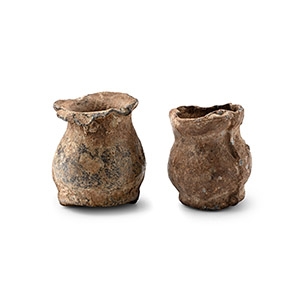
Medieval Lead Vessel Group
13th-15th century A.D.Sold for (Inc. bp): £33
Each barrel-shaped with flared rim, one pinched into a trefoil. 42 grams total, 24-25 mm
Property of a South Australian gentleman; from his father's collection formed in the 1960s-2000s; thence by descent. From the property of a late Lincolnshire, UK, gentleman. -
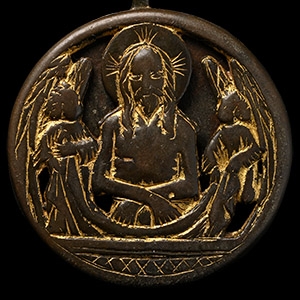
Medieval Gilt Copper Devotional Reliquary Pendant
German, 15th century A.D.Estimate: £700 - 900 (+bp*)
Opening Bid: £350
A large circular openwork pendant with a fitted lid, the lid depicting Christ between two angels holding a shroud; the reverse with seated and crowned Virgin Mary holding infant Jesus on her lap. 57.2 grams, 57 mm
Private collection, UK. -
.jpg)
Medieval Terracotta Jar
Circa 13th-15th century A.D.Sold for (Inc. bp): £40
Biconvex in profile with low neck and rolled rim; old inked inscription to the sidewall with three signatures and '1920-1927'; feint pencilled inscription to base including the word 'Polish'. 1.11 kg, 16 cm
Believed to have been in the collection of George Adolphus Gray (c.1850), Captain of a merchant vessel and avid collector. Acquired by the present owner circa 15 years ago, reportedly recovered from a skip.
