
Loading, please wait...
LOT 1807
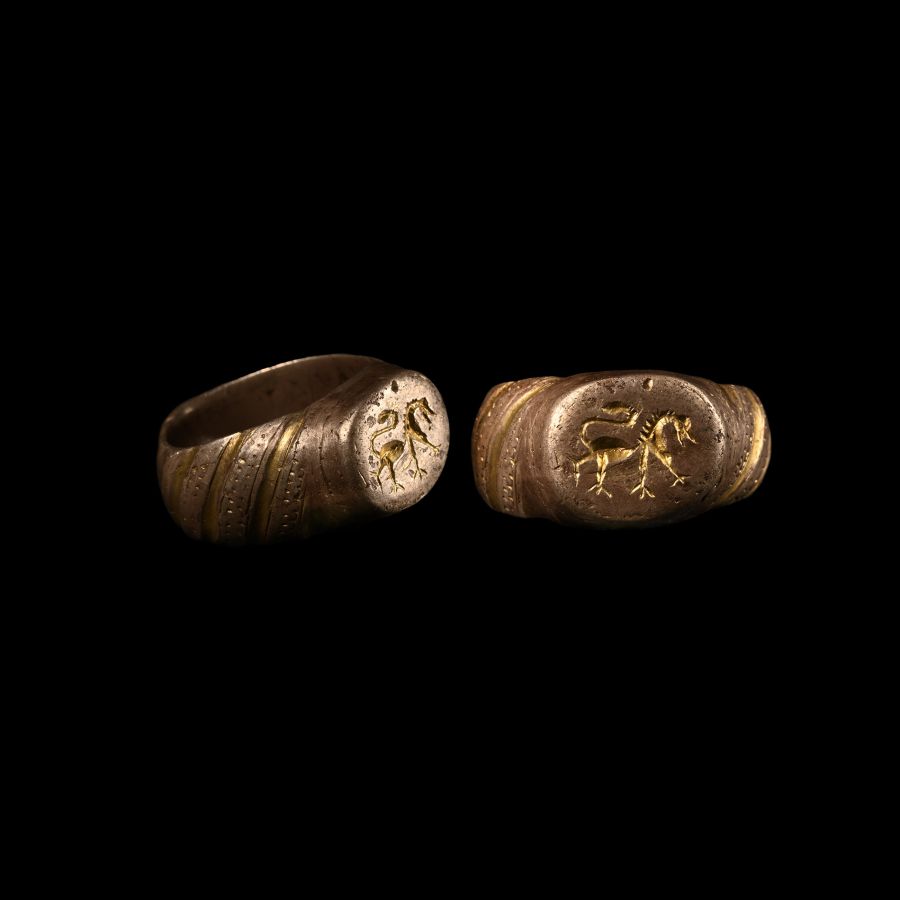
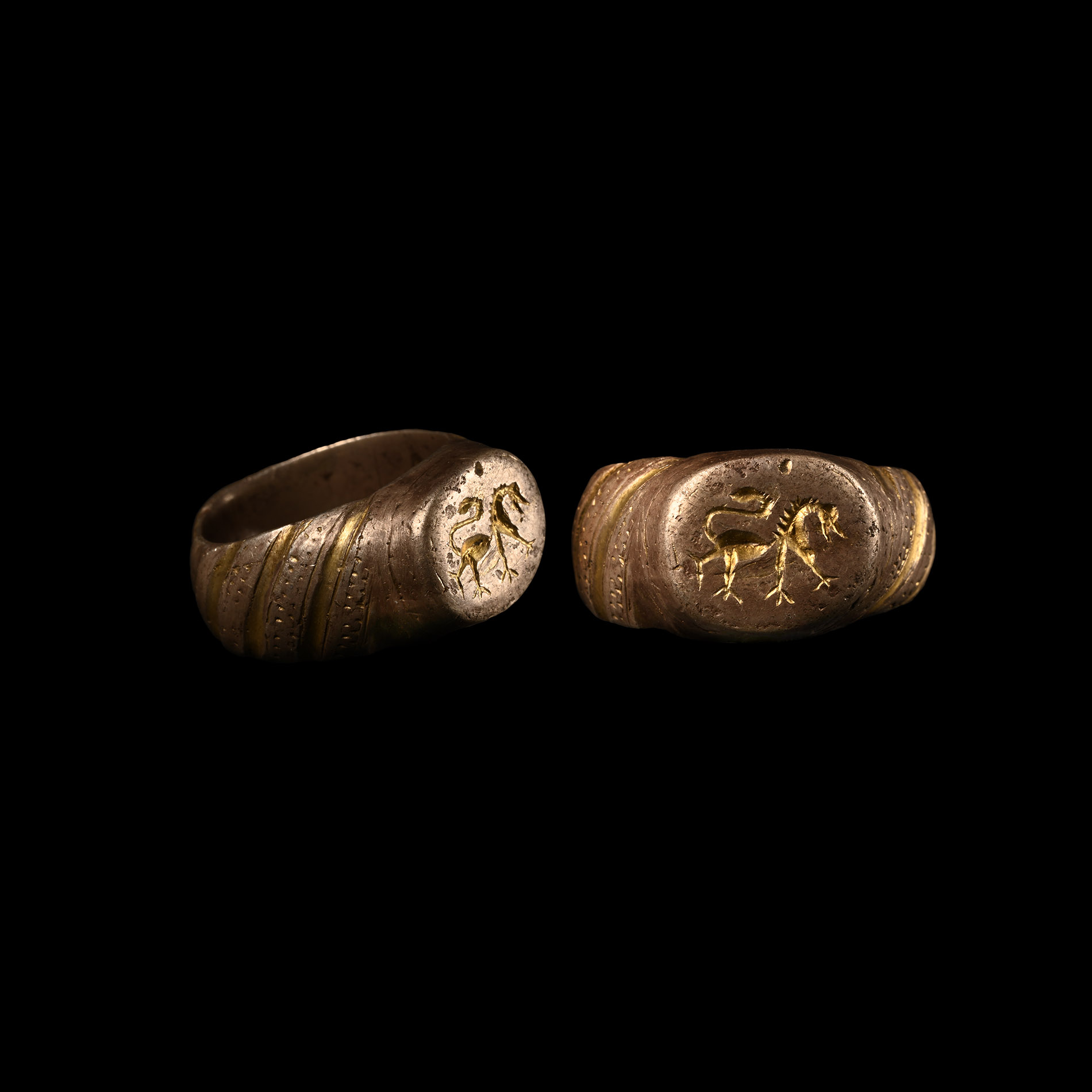
Medieval Silver-Gilt Ring with Lion Motif
15TH-16TH CENTURY A.D.
1 1/8 in. (19.16 grams, 28.28 mm overall, 18.88 mm internal diameter (approximate size British Q 1/2, USA 8 1/4, Europe 18.12, Japan 17)).
The broad hoop with convex outer face and faux twisted body ornament, stylised lion advancing right too bezel. [No Reserve]
ProvenanceFrom the collection of a North American gentleman, formed in the 1990s.
CONDITIONTimeLine Auctions follows a vetting process to ensure the authenticity and legality of all items, reinforcing our commitment to integrity and responsible trading. Each antiquity, antique, and coin lot undergoes thorough examination by a vetting committee of at least ten external specialists, professional trade association members, scientists, and archaeologists: Our Vetting Process
AUCTIONS:
TimeLine is a leading auction house specialising in antiquities, ancient art, collectables, natural history, coins, medals, and books. Our auctions offer museums, collectors, historians, and enthusiasts the opportunity to acquire unique and historically significant pieces.
-
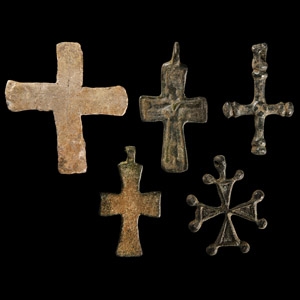
Medieval Bronze Cross Pendant Collection
14th-16th century A.D.Sold for (Inc. bp): £182
Comprising crosses of various forms, most with suspension loops, one displaying Christ crucified. 42.2 grams total, 33-43 mm
Acquired on the German art market around 2000. From the collection of a Surrey, UK, gentleman. -
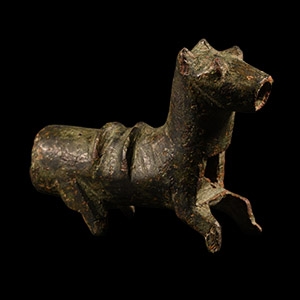
Medieval Bronze Horse Barrel Lock
12th-15th century A.D.Sold for (Inc. bp): £59
Formed with a cylindrical body and four legs, stylised eye and ear detailing, saddle over back, muzzle formed as cylindrical socket. 25.3 grams, 40 mm
English collection, circa 2000. Acquired at the London Coin Fair. -
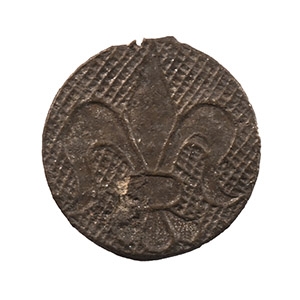
Medieval Thames Pewter Bifacial Wine Tavern Token
Circa 14th-15th century A.D.Sold for (Inc. bp): £13
Of discoid form with designs in relief: a hatched Christian cross with ornament to each quarter; a fleur-de-lis against a hatched field. 0.61 grams, 1.6 cm
Found Billingsgate spoil from the Thames foreshore, London, UK.
