
Loading, please wait...
LOT 1726
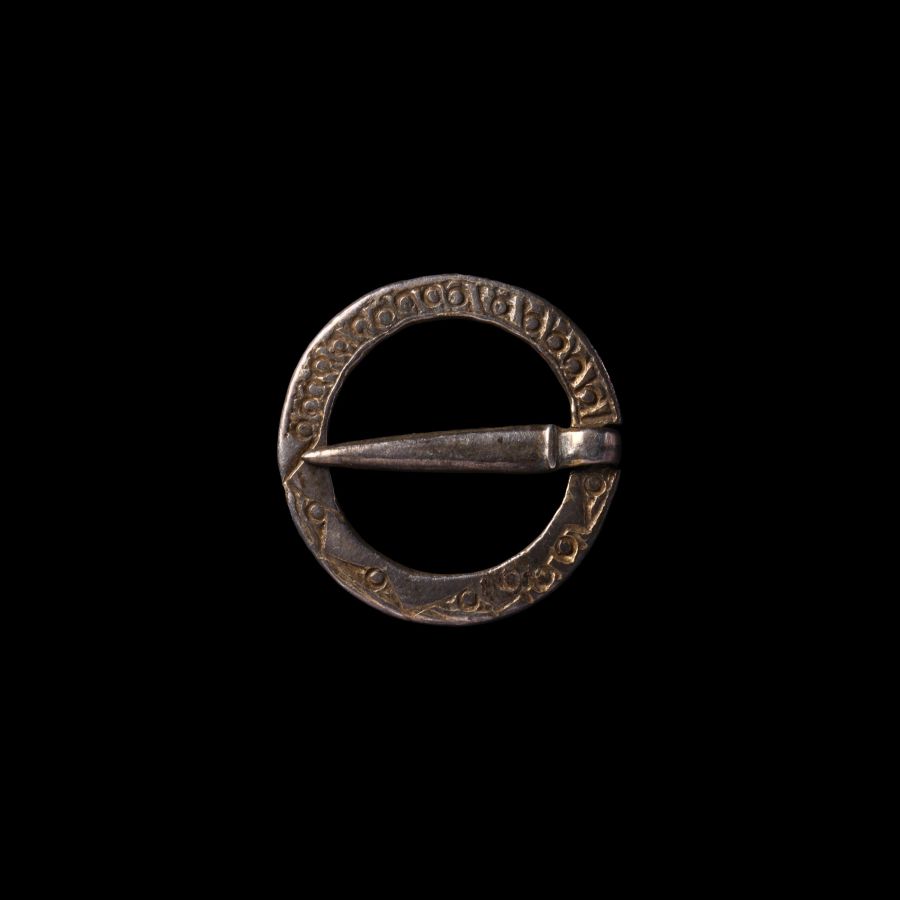
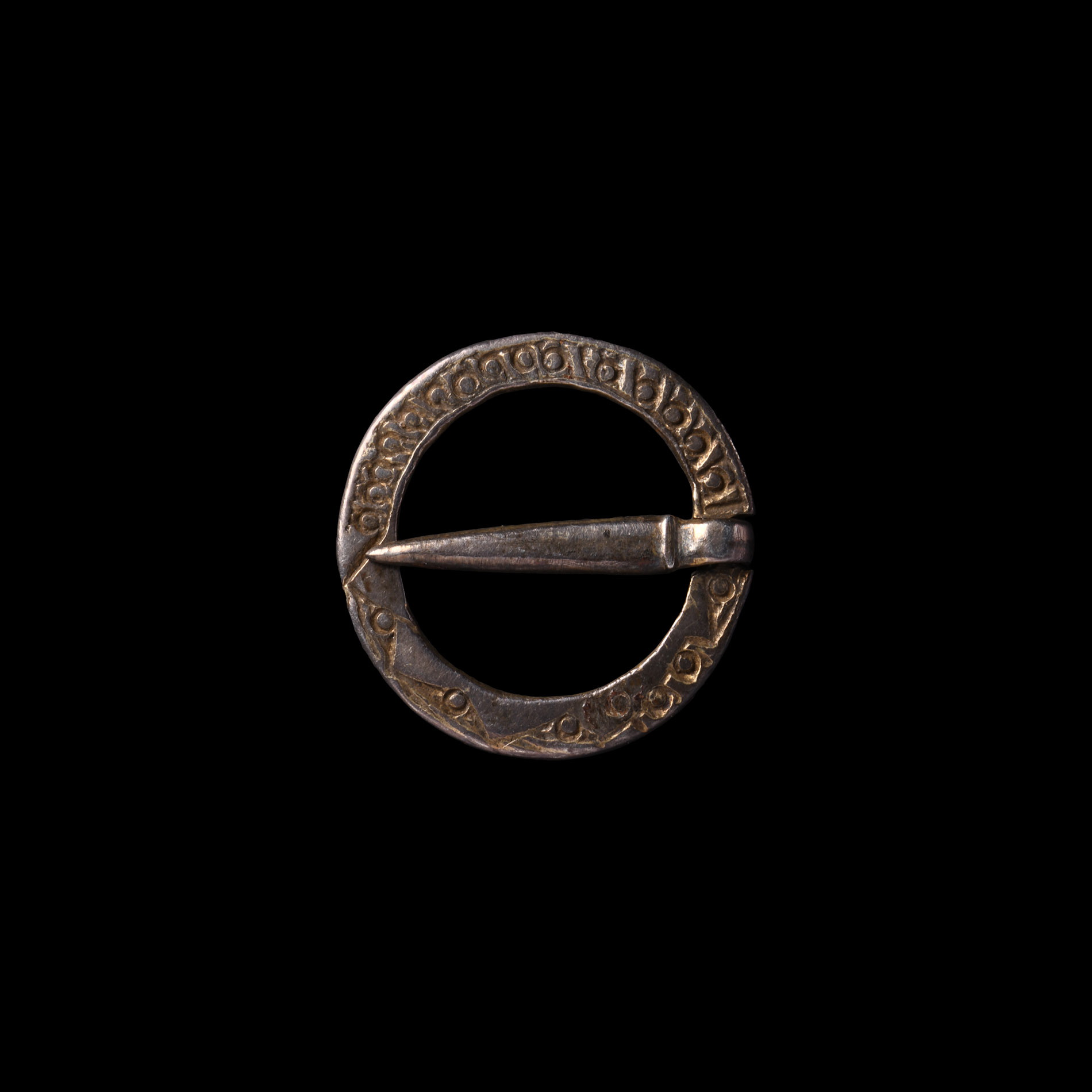
Medieval Silver-Gilt Ring Brooch
13TH-14TH CENTURY A.D.
3/4 in. (2.01 grams, 21 mm).
Retaining an articulate flat-section tongue looped around a narrow inset in the ring; the outer face decorated with radiating triangles over punched pellets. [No Reserve]
ProvenanceBuckinghamshire, UK, private collection; formed in the 1980s.
CONDITIONTimeLine Auctions follows a vetting process to ensure the authenticity and legality of all items, reinforcing our commitment to integrity and responsible trading. Each antiquity, antique, and coin lot undergoes thorough examination by a vetting committee of at least ten external specialists, professional trade association members, scientists, and archaeologists: Our Vetting Process
AUCTIONS:
TimeLine is a leading auction house specialising in antiquities, ancient art, collectables, natural history, coins, medals, and books. Our auctions offer museums, collectors, historians, and enthusiasts the opportunity to acquire unique and historically significant pieces.
-
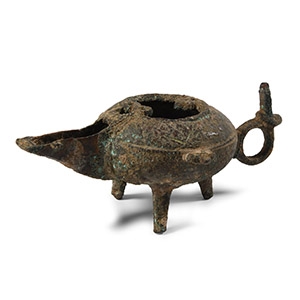
Medieval Period Eastern Bronze Oil Lamp
Circa 13th-15th century A.D.Sold for (Inc. bp): £21
The squat spherical body with ring handle and tripod feet, decorated with raised motifs and openwork foliage ornament. 398 grams, 18 cm
English collection, 1990s. Ex property of a Suffolk, UK, gentleman. -
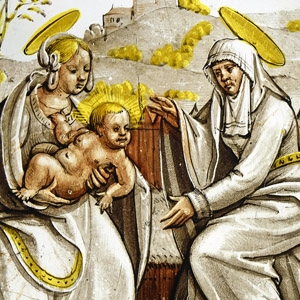
Medieval Stained Glass Panel with the Education of Christ with St Anne and the Virgin
Brussels, Belgium, circa 1520 A.D.Sold for (Inc. bp): £338
Shown seated within a garden against a rolling landscape backdrop; with polychrome detailing and lead came borders, two modern suspension loops to the top corners. 254 grams, 20.3 cm
Private collection, Paris. -
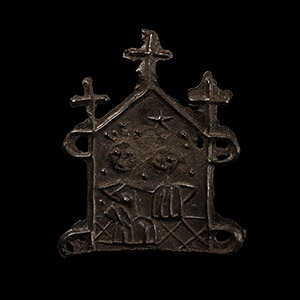
Medieval Pewter Pilgrim's Badge with Church
13th century A.D.Sold for (Inc. bp): £98
Styled as a church building surmounted by three crosses, raised hatching to one face and a scene depicting the Virgin and Child beneath a starry sky to the other; four attachment loops remaining. 6 grams, 40 mm
European collection, 1990s. Property of a Cambridgeshire, UK, gentleman.
