
Loading, please wait...
LOT 1563
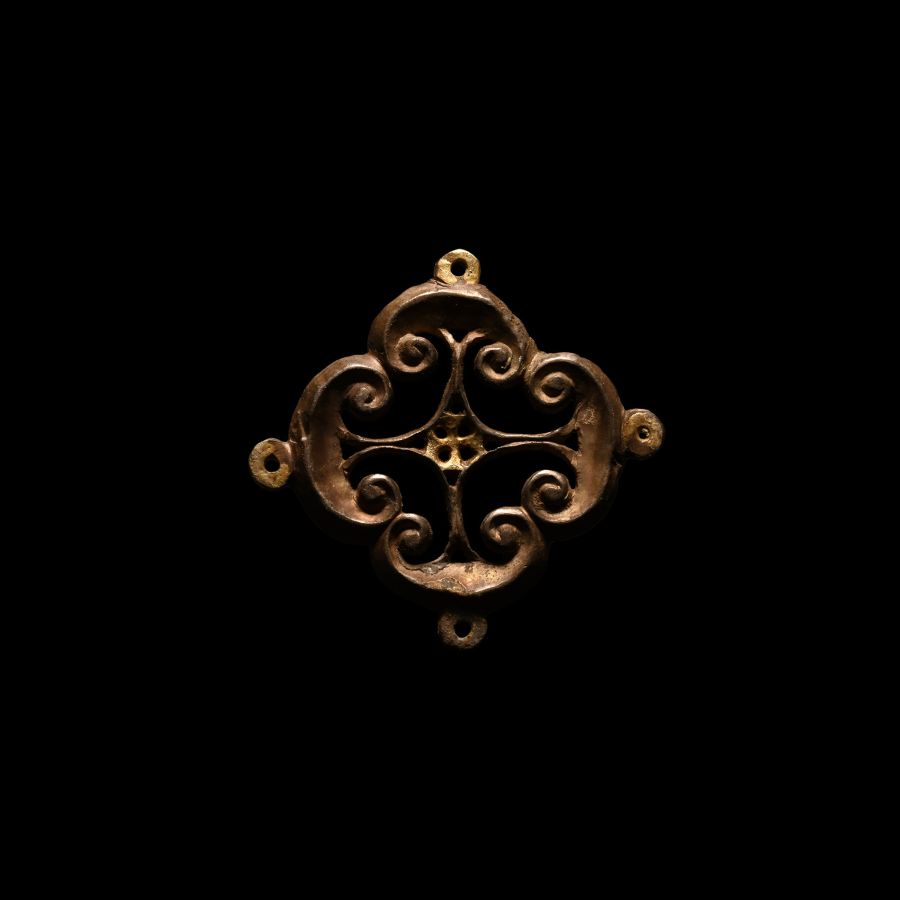
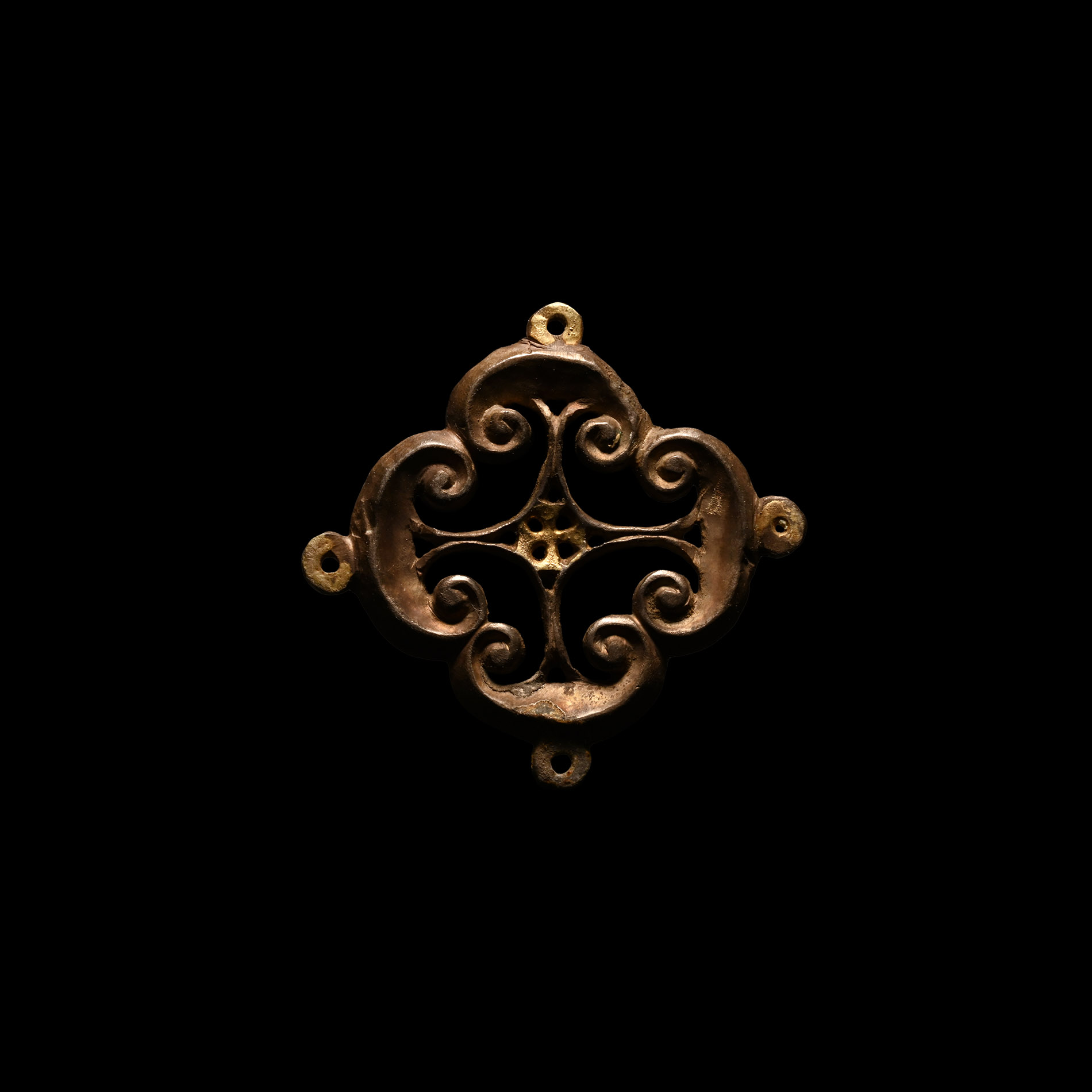
Medieval Silver-Gilt Pilgrim's Badge
CIRCA 15TH CENTURY A.D.
1 in. (3.8 grams, 25 mm).
Formed as an openwork repoussé mount with four peltoid arms extending from a lozengiform panel with central cross motif, with stitching holes on each arm. [No Reserve]
ProvenancePrivate collection, London, UK.
From the collection of a North American gentleman.
TimeLine Auctions follows a vetting process to ensure the authenticity and legality of all items, reinforcing our commitment to integrity and responsible trading. Each antiquity, antique, and coin lot undergoes thorough examination by a vetting committee of at least ten external specialists, professional trade association members, scientists, and archaeologists: Our Vetting Process
AUCTIONS:
TimeLine is a leading auction house specialising in antiquities, ancient art, collectables, natural history, coins, medals, and books. Our auctions offer museums, collectors, historians, and enthusiasts the opportunity to acquire unique and historically significant pieces.
-
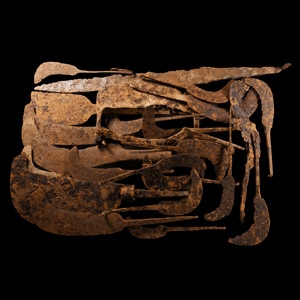
Medieval Iron Artefact Group
14th-16th century A.D.Sold for (Inc. bp): £39
Mainly comprising cleavers, sickles and knives. 2.7 kg total, 17.5-46.5 cm
Acquired 1990s-early 2000s. East Anglian private collection. -
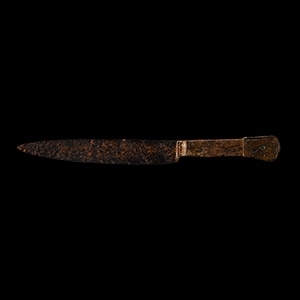
Medieval Iron Knife with Bronze Pommel
Circa 1500 A.D.Estimate: £200 - 300 (+bp*)
Opening Bid: £80
Comprising a single cutting edge, scale tang and bifacial pommel with incised motifs. 49 grams, 20.2 cm
Acquired 1960s-1990s. Late Alison Barker collection, a retired London barrister.
In the medieval knives, the tang could be attached to the tang in two ways depending on the the form of the tang. Whittle-tang knives have a tapered tang which is inserted into or through the handle. Scale-tang knives have wider and flatter tangs onto which the plates comprising the handle are attached with metal rivets. -
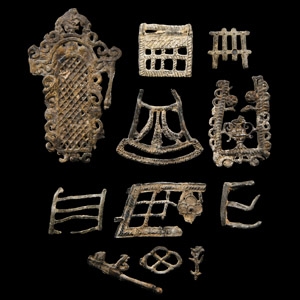
Medieval 'Thames' Pewter Toy Fragment Group
15th-16th century A.D.Sold for (Inc. bp): £7
Composed of openwork architectural and floral elements, together with other miscellaneous fragments. 20.3 grams total, 13-58 mm
Found Thames foreshore spoil, 1980s.
