
Loading, please wait...
LOT 0376
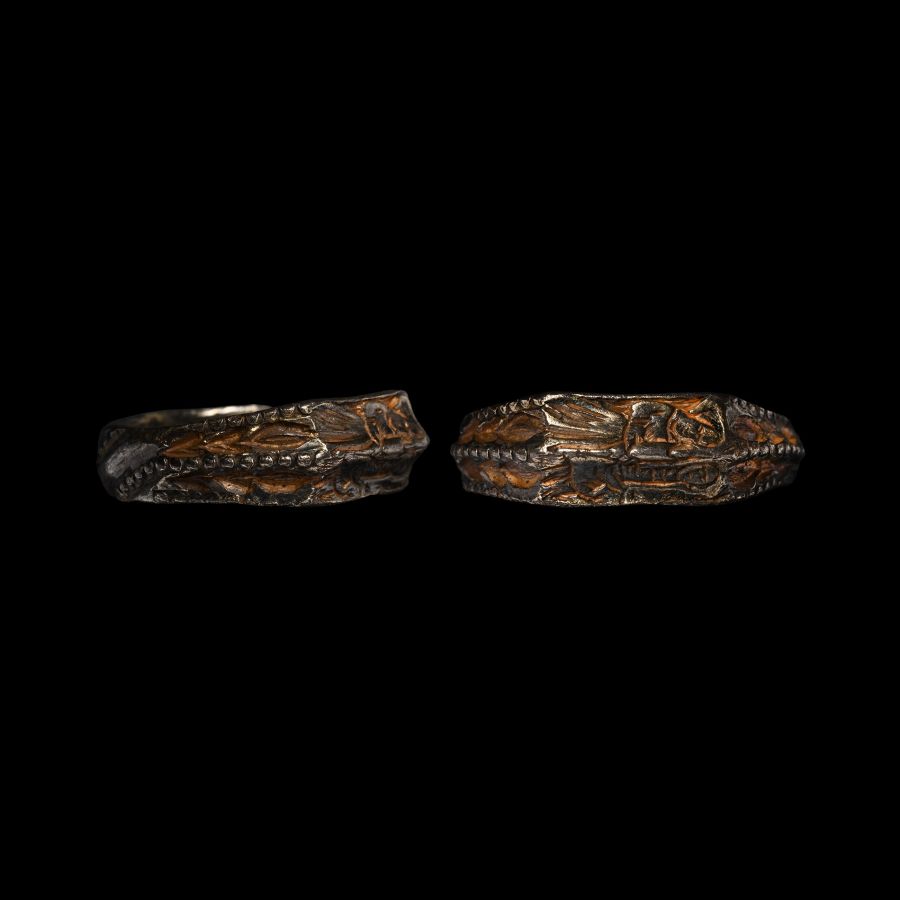
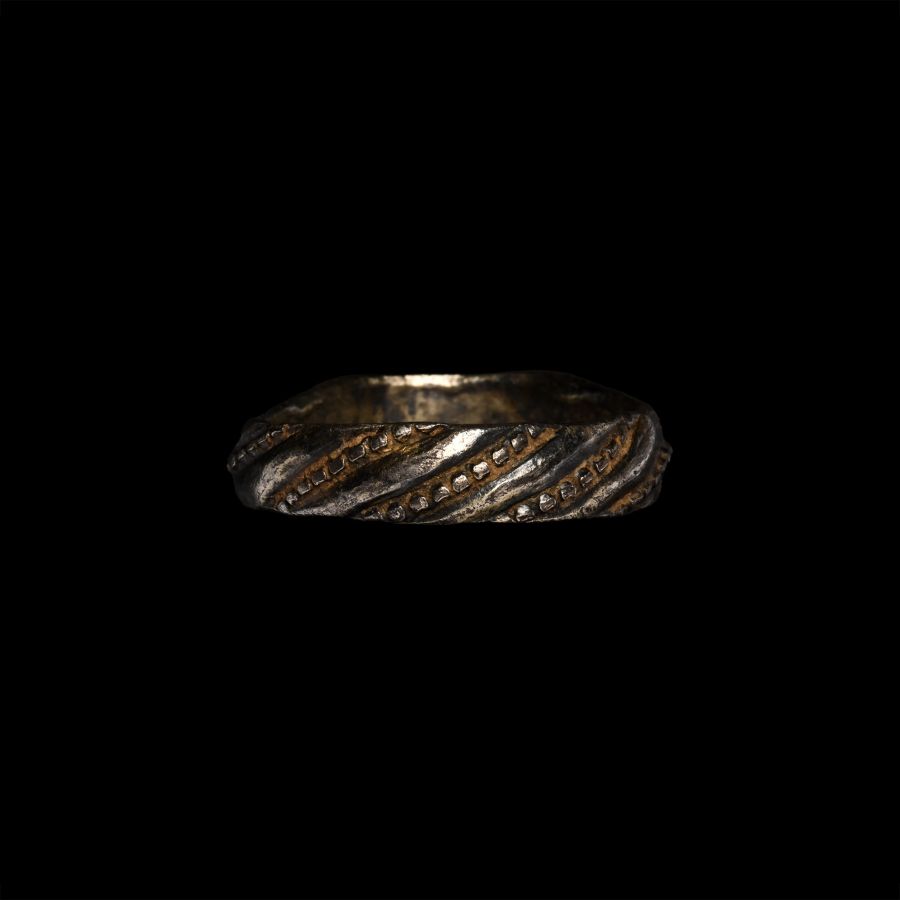
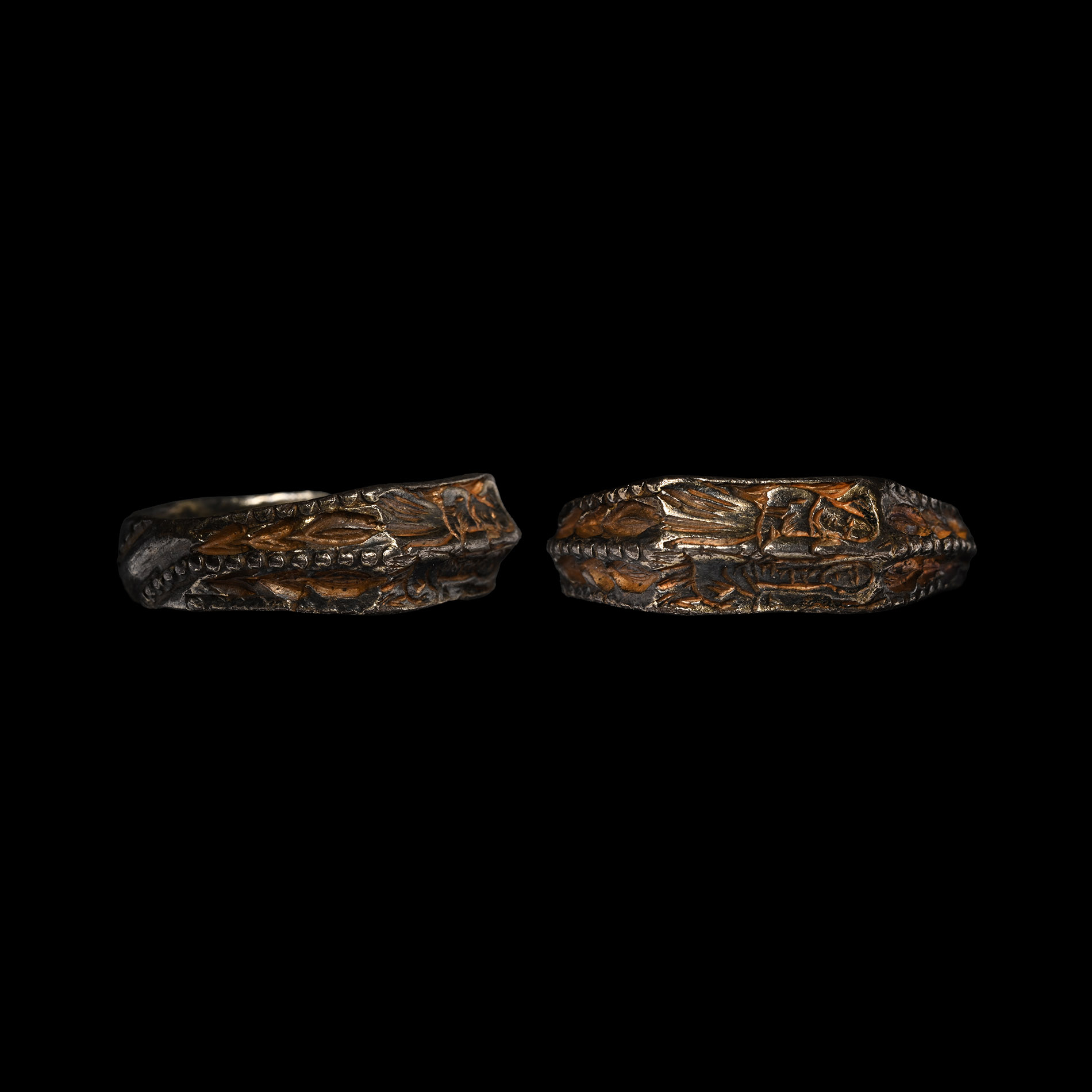
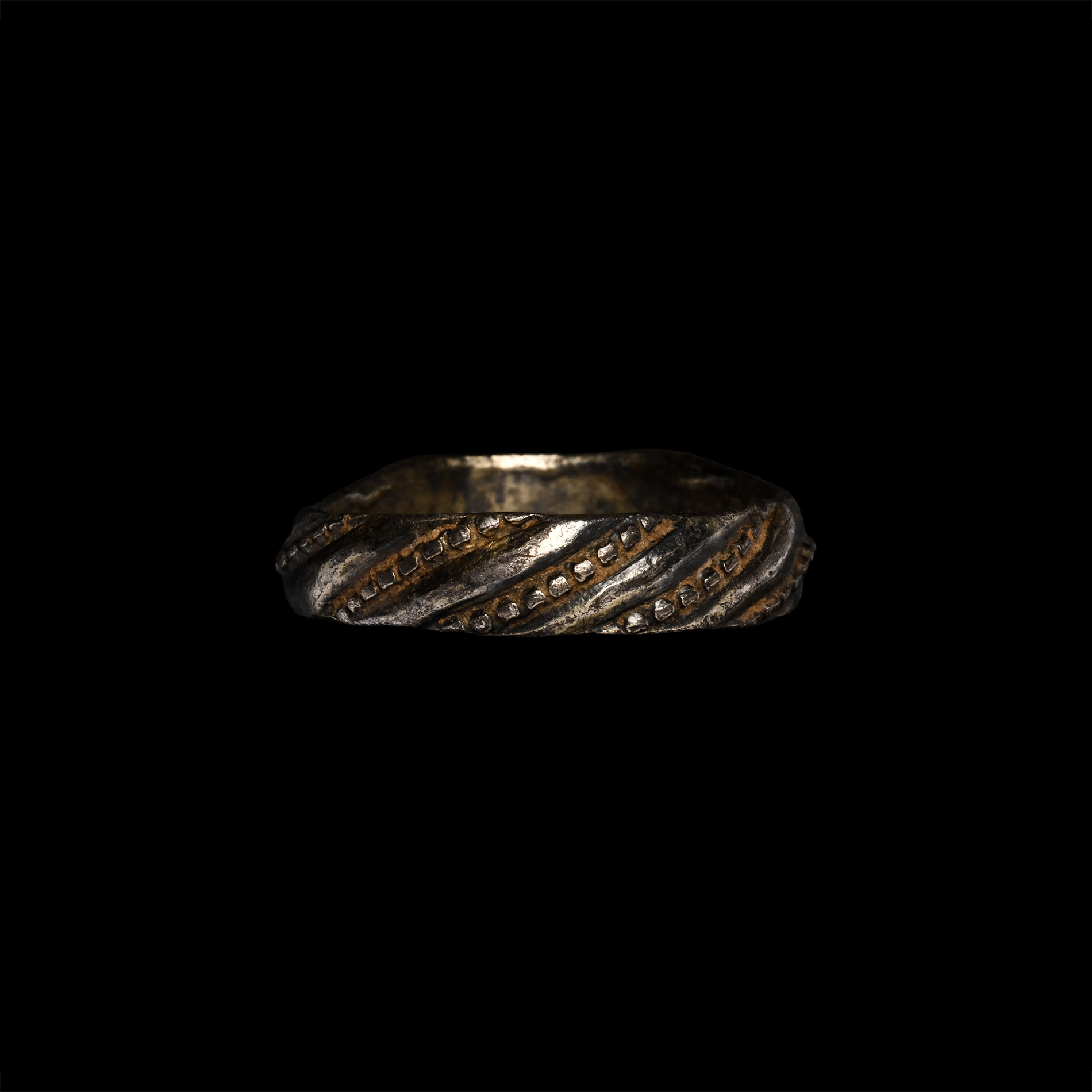
Medieval Silver Gilt Iconographic Ring with Saints
15TH CENTURY A.D.
3/4 in. (3.96 grams, 21.91 mm overall, 17.75 mm internal diameter (approximate size British N 1/2, USA 6 3/4, Europe 14.35, Japan 13)).
The lower shank with twisted ropework detailing and beaded bands, the shoulders with raised median beaded bands developing to a horizontal ridge dividing the bezel into two panels, each with a reserved standing figure: left, female saint in floor-length robe; right, facing male saint in knee-length tunic; probably Virgin Mary and St John the Baptist. [No Reserve]
ProvenanceFrom the collection of the famous author, writer and speaker, Gordon Bailey, Essex, UK; formed since 1968.
LiteratureCf. Chadour, A.B., Rings. The Alice and Louis Koch Collection, volume I, Leeds, 1994, item 587, for type.
CONDITIONTimeLine Auctions follows a vetting process to ensure the authenticity and legality of all items, reinforcing our commitment to integrity and responsible trading. Each antiquity, antique, and coin lot undergoes thorough examination by a vetting committee of at least ten external specialists, professional trade association members, scientists, and archaeologists: Our Vetting Process
AUCTIONS:
TimeLine is a leading auction house specialising in antiquities, ancient art, collectables, natural history, coins, medals, and books. Our auctions offer museums, collectors, historians, and enthusiasts the opportunity to acquire unique and historically significant pieces.
-
Medieval and Later 'Published' Thimble Collection
Circa 14th-20th century A.D.Sold for (Inc. bp): £91
Including annular, beehive and other types with irregular dimples. 65 grams total, 12-25 mm
From the collection of the famous author, writer and speaker, Gordon Bailey, Essex, UK; formed since 1968.
In England, thimbles first occurred around 1300, probably under the influence of the Hispano-Moresque examples. However, it wasn't until around 1350 that thimbles became objects of everyday use in England. -
Late Medieval Stone Mould with Phallic Motif
14th-16th century A.D.Sold for (Inc. bp): £338
A soapstone mould carved on one side with a phallic motif of an elongated double groove with domed top and projecting terminal, possibly for casting scabbard fittings; on the verso four elongated strips, possibly strap ends or pendants, with decorative terminals; with lightly incised inscription to the obverse 'IN SUN[...]SUN'. 910 grams, 20.5 cm
Acquired in the 1980s. From an old German collection. Private collection, England. -
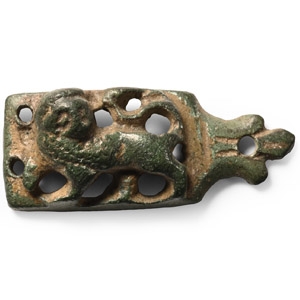
Medieval Gilt Bronze Mount with Lion
12th-13th century A.D.Sold for (Inc. bp): £104
With an openwork rectangular plaque and trefoil finial, raised lion stattant regardant to the plaque. 3.9 grams, 26 mm
Found Lincolnshire, UK. From an old private collection of Norfolk, UK, gentleman, formed since 1998.
