
Loading, please wait...
LOT 0391
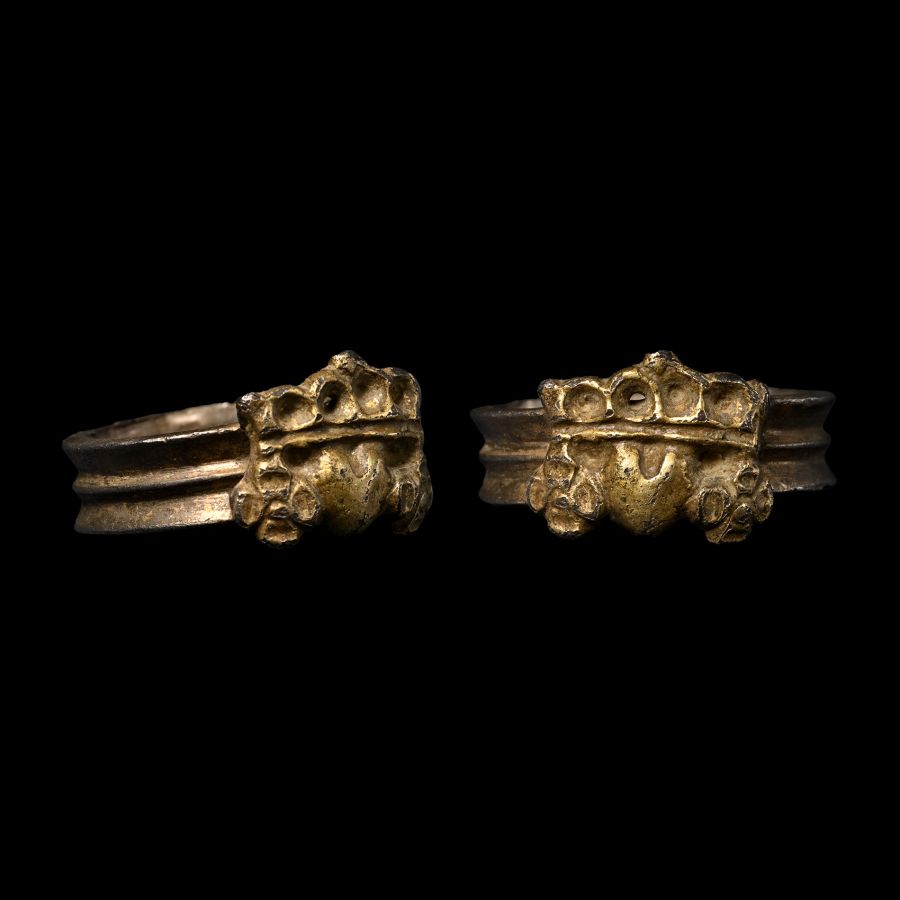
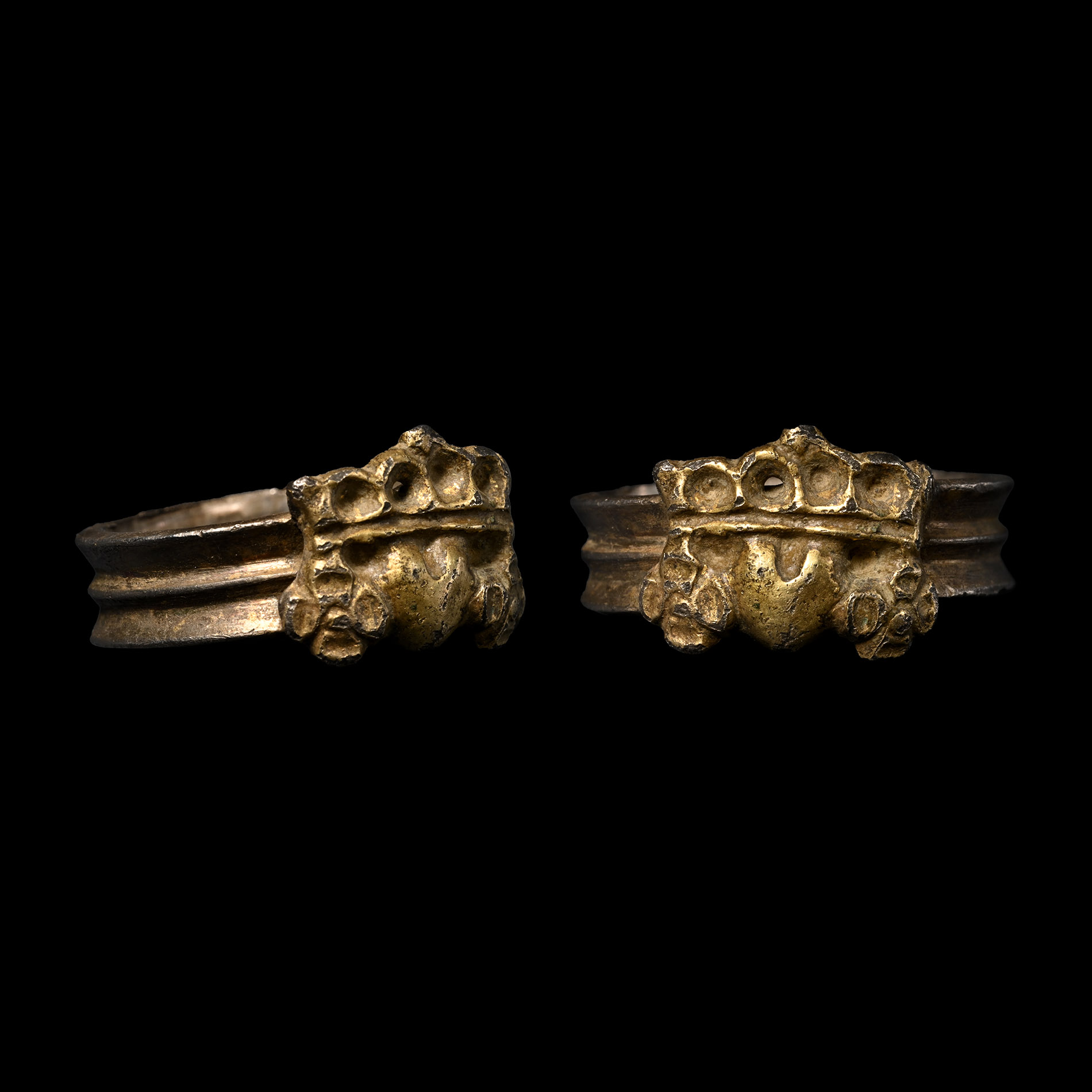
Medieval Silver-Gilt Claddagh Style Ring
15TH-16TH CENTURY A.D.
1 in. (6.19 grams, 23.75 mm overall, 19.24 mm internal diameter (approximate size British R 1/2, USA 8 3/4, Europe 19.38, Japan 18)).
Ribbed hoop, applied parcel-gilt bezel with a crowned heart flanked by quatrefoils. [No Reserve]
ProvenanceFound Norfolk, UK.
From an old private collection of Norfolk, UK, gentleman, formed since 1998.
Recorded by the British Museum's Portable Antiquities Scheme (PAS).
Accompanied by a copy of the report to HM Coroner with Treasure reference no.2017 T948.
Accompanied by a letter from the British Museum informing that the Crown's interest in this find has been disclaimed.
The design lacks the clasped hands which are a usual feature of the claddagh rings.
CONDITIONTimeLine Auctions follows a vetting process to ensure the authenticity and legality of all items, reinforcing our commitment to integrity and responsible trading. Each antiquity, antique, and coin lot undergoes thorough examination by a vetting committee of at least ten external specialists, professional trade association members, scientists, and archaeologists: Our Vetting Process
AUCTIONS:
TimeLine is a leading auction house specialising in antiquities, ancient art, collectables, natural history, coins, medals, and books. Our auctions offer museums, collectors, historians, and enthusiasts the opportunity to acquire unique and historically significant pieces.
-
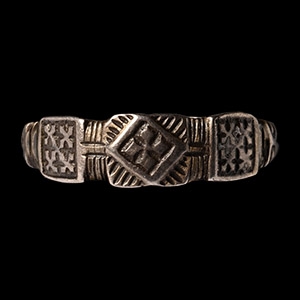
Crusader Silver and Niello Ring with Crosses
11th-12th century A.D.Sold for (Inc. bp): £1,040
The hoop with frond to each outer edge below a square panel with reserved cross-crosslet motif, square bezel with raised lozenge and reserved cross pommée. 1.41 grams, 19.05 mm overall, 16.80 mm internal diameter (approximate size British M 1/2 , USA 6 1/4, Europe 13.09, Japan 12)
From the collection of the famous author, writer and speaker, Gordon Bailey, Essex, UK; formed since 1968. -
.jpg)
Medieval and Post Medieval Iron Knife Blade Group
Circa 15th-17th century A.D.Sold for (Inc. bp): £7
Mainly comprising folding knives and other knife blades. 3.65 kg total, 2-25.5 cm
Acquired 1990s-early 2000s. Ex East Anglian private collection.
Amongst the considerable variations in Medieval knife blade shapes, the two most obvious are the blades with angled backs (like some examples here presented) and those with stepped backs. -
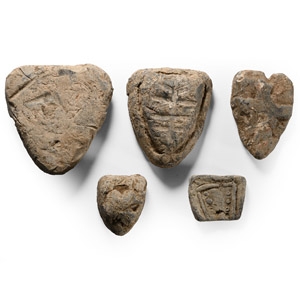
Medieval Lead Weight Group
12th-15th century A.D.Sold for (Inc. bp): £1
Mainly triangular and heater-shaped types with raised detailing. 1.4 kg total, 38-71 mm
Ex Simmons Gallery, 1990s.
