
Loading, please wait...
LOT 0393
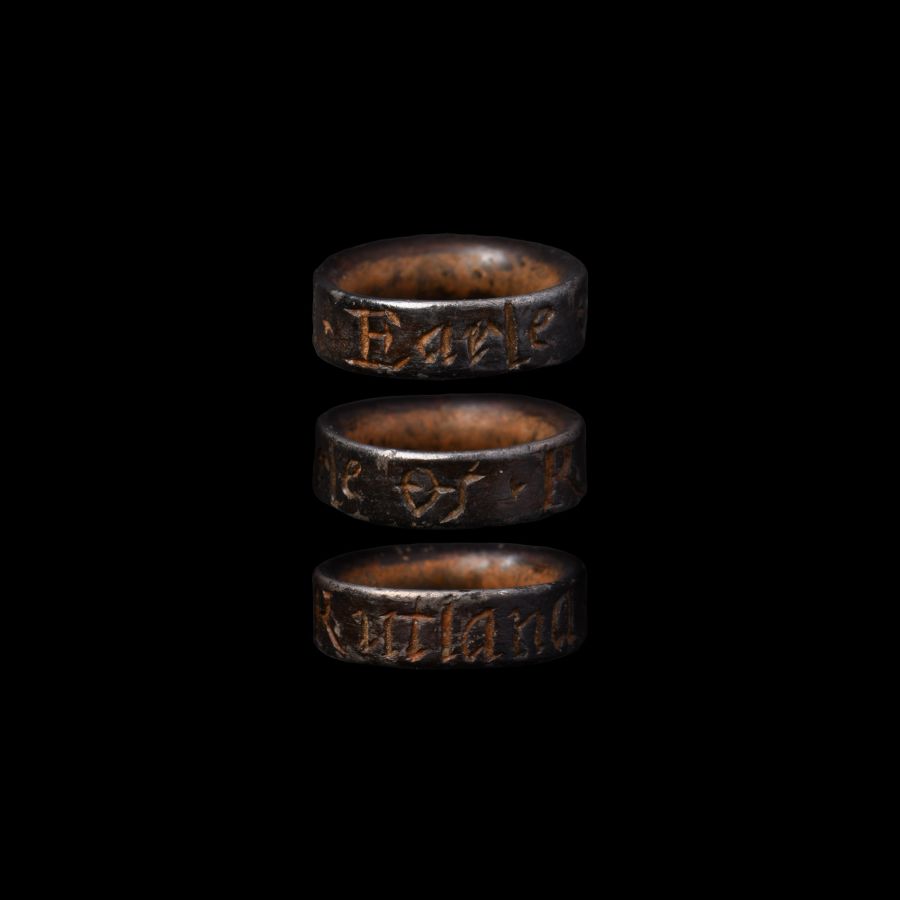
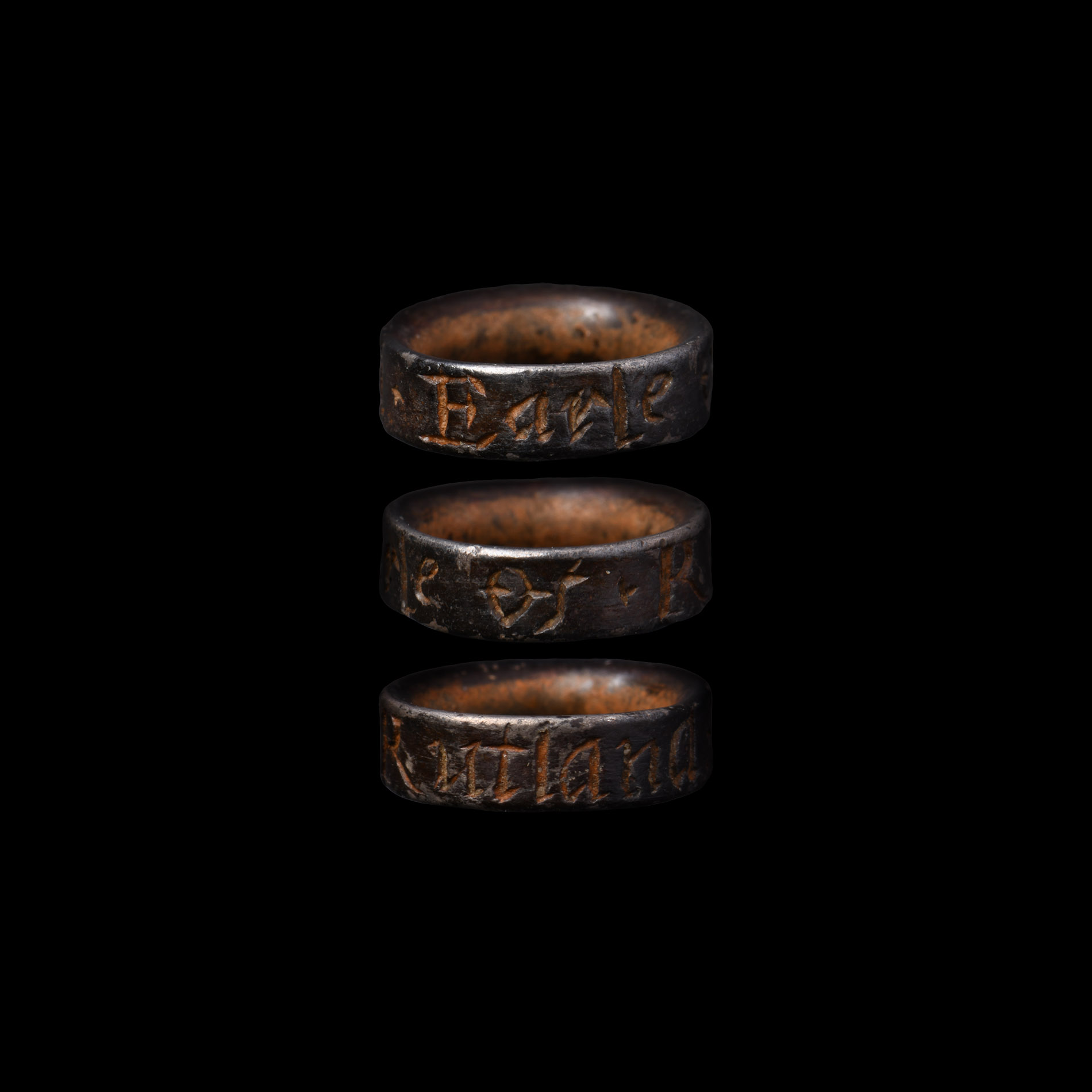
Medieval Silver 'Edmund Plantagenet, Earl of Rutland' Royal Hawking Vervel
CIRCA 1440-1460 A.D.
1/4 in. (0.56 grams, 8 mm).
Or a leg ring inscribed '+Earle of Rutland' in derivative black letter script, for a female merlin or sparrow hawk (due to the youth of Edmund Plantagenet who died aged 17); the ring with a convex interior face.
ProvenanceAcquired in the 1960s.
Ex Bursnall collection, Leicestershire, UK.
From the collection of a North American gentleman.
Lewis, M. and Richardson, I., Inscribed Vervels, Oxford, 2019; Type B listed on pp.87-8 where dated c.1450-c.1600, with the note that it was previously sold by Timeline Auctions 2 December 2011, lot 793.
FootnotesUnique and with links to royalty and the Wars of the Roses. Edmund Plantagenet, Earl of Rutland was executed after the Battle of Wakefield (probably by John Clifford) and was the son of Richard Plantagenet, 3rd Duke of York (a great-grandson of Edward III, father of Edward IV and one of the most powerful English magnates during the Wars of the Roses between the Yorkists and Lancastrians). The first Earl of Rutland was Edmund Plantagenet (grandson of Edward III and executed following the Southampton Plot against Henry V), uncle to Richard. The Earldom of Rutland has historically been closely linked to the Duchy and House of York.
CONDITIONTimeLine Auctions follows a vetting process to ensure the authenticity and legality of all items, reinforcing our commitment to integrity and responsible trading. Each antiquity, antique, and coin lot undergoes thorough examination by a vetting committee of at least ten external specialists, professional trade association members, scientists, and archaeologists: Our Vetting Process
AUCTIONS:
TimeLine is a leading auction house specialising in antiquities, ancient art, collectables, natural history, coins, medals, and books. Our auctions offer museums, collectors, historians, and enthusiasts the opportunity to acquire unique and historically significant pieces.
LOT 0393
Medieval Silver 'Edmund Plantagenet, Earl of Rutland' Royal Hawking Vervel
Sold for (Inc. bp): £9,750
-
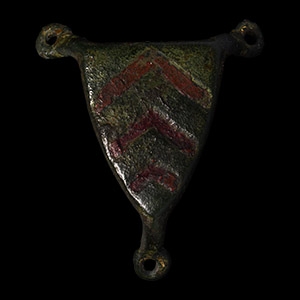
Medieval 'Clare Family' Bronze Heraldic Horse Saddle Mount
13th-14th century A.D.Sold for (Inc. bp): £338
Comprising a heater shield with three enamelled chevrons, three brackets each with a pierced lobe finial; blazoned 'or three chevrons gules', arms of the Clare family. 23.3 grams, 51 mm
Found near Gainsborough, Lincolnshire, UK. -
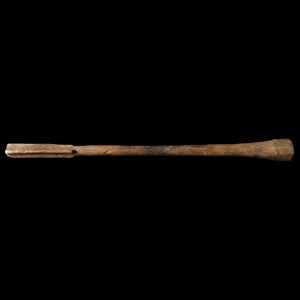
Medieval Wood Implement
14th-15th century A.D.Sold for (Inc. bp): £1
Composed of a cylindrical stem with expanded upper body and facetted bulbous head, the opposite terminal formed as three vertical ribs forming a roughly triangular cross-section. 3.53 grams, 15.5 cm
European collection, 1990s. Property of a Cambridgeshire, UK, gentleman. -
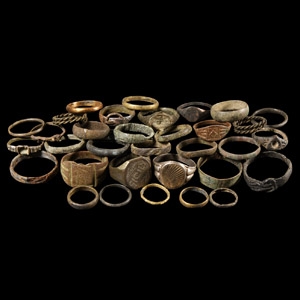
Medieval And Later Bronze Ring Collection
Circa 14th-20th century A.D.Sold for (Inc. bp): £98
Composed of rings of various sizes, dates and styles, including: plaited hoops; rolled gold; buckle designs; decoratively incised bezels; initialled bezels; together with other types. 62.8 grams total, 13-25 mm
Found Essex, UK.
