
Loading, please wait...
LOT 1692
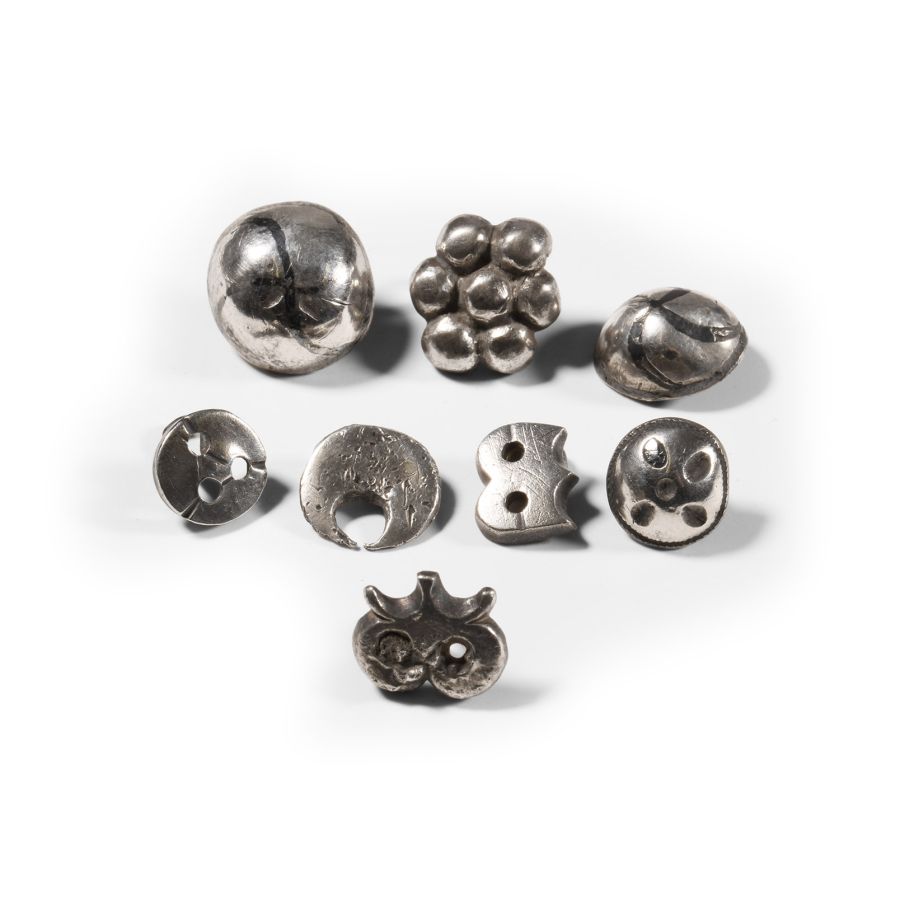
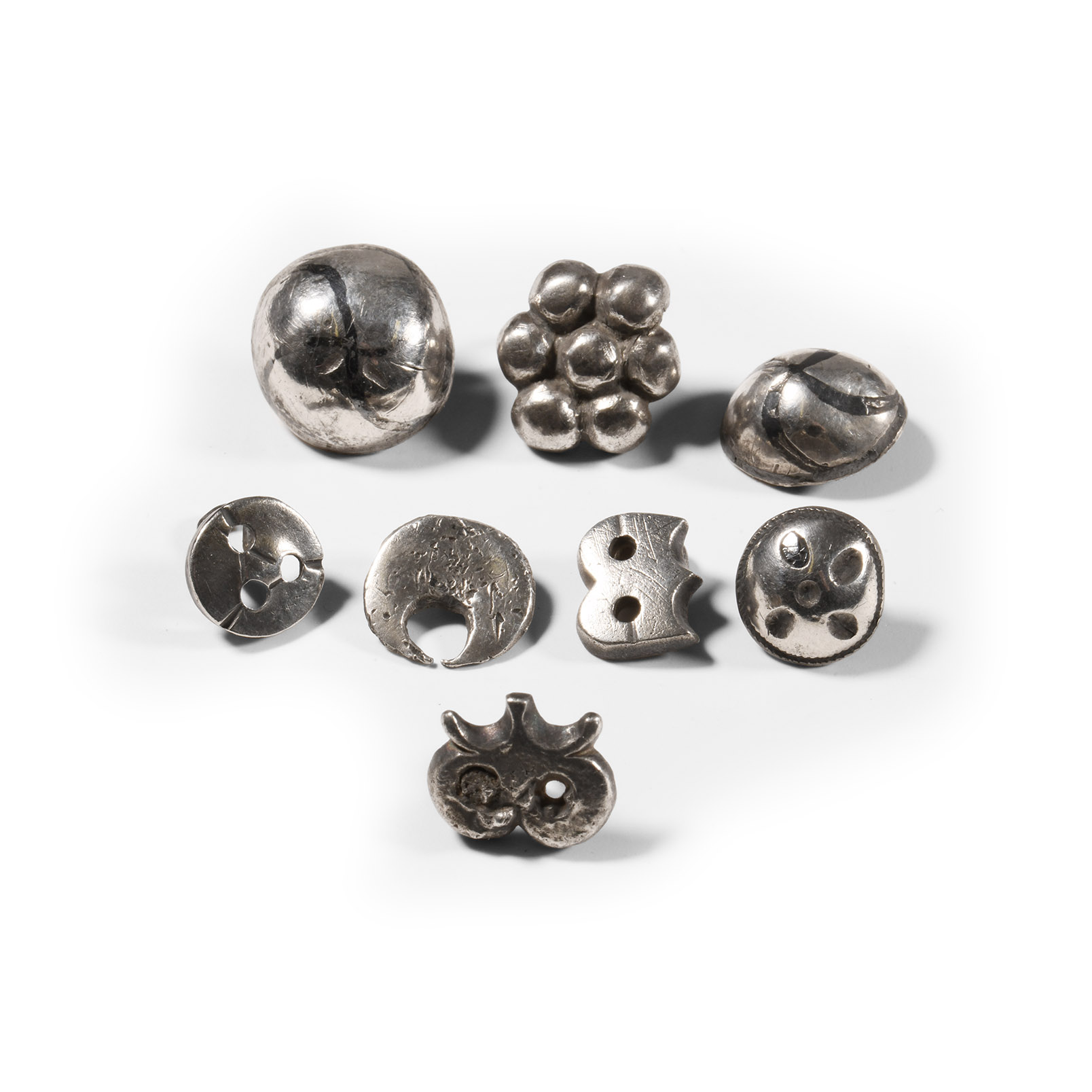
Medieval Silver Button Collection
13TH-15TH CENTURY A.D.
3/8 - 1/2 in. (14 grams total, 10-16 mm).
Each displaying a different decorative design, including: two nielloed whorl motifs; crescentic button; a triangular motif; stylised flower with nielloed petals; stylised pelletted flower, together with other designs. [8, No Reserve]
ProvenanceEnglish private collection, 1970s.
The Kusmirek Collection, UK.
TimeLine Auctions follows a vetting process to ensure the authenticity and legality of all items, reinforcing our commitment to integrity and responsible trading. Each antiquity, antique, and coin lot undergoes thorough examination by a vetting committee of at least ten external specialists, professional trade association members, scientists, and archaeologists: Our Vetting Process
AUCTIONS:
TimeLine is a leading auction house specialising in antiquities, ancient art, collectables, natural history, coins, medals, and books. Our auctions offer museums, collectors, historians, and enthusiasts the opportunity to acquire unique and historically significant pieces.
-
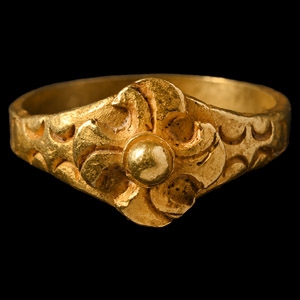
Medieval Gold Quatrefoil Ring
Circa 15th century A.D.Sold for (Inc. bp): £715
Rectangular-section hoop and flared shoulders, punched crescent detailing, raised quatrefoil with central collar and knop. 4.41 grams, 22.92 mm overall, 16.27 mm internal diameter (approximate size British L 1/2, USA 6, Europe 11.87, Japan 11)
Acquired 1970-2010. Collection of a late Japanese gentleman. -
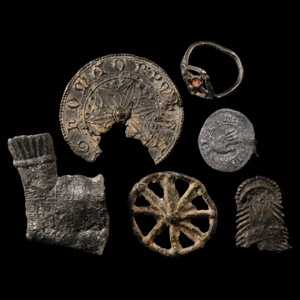
Medieval Pewter Pilgrim's Badge Group
14th-15th century A.D.Estimate: £100 - 140 (+bp*)
Opening Bid: £40
Comprising: a spoked wheel; disc with hand motif; crescent moon and standing figure; hollow-formed ampulla junction; disc with rosette and legend '+SA[NCT]E THOMA OR[A] P[RO] M[E]'; plus a finger-ring with red enamel fill to the openwork bezel. 17.1 grams total, 16-32 mm
Property of a private collector, Edinburgh (1938-2021). Collected in the 1990s from the UK art market. with Bonham's, London, UK, 7 July 2022, lot 117 (part). Ex property of a Suffolk, UK, gentleman. -
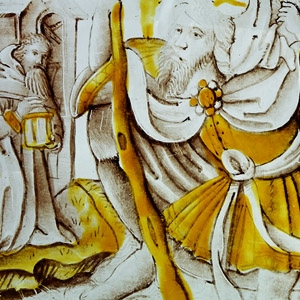
Medieval Stained Glass Roundel of Saint Christopher
Brussels, Belgium, 1510 A.D.Sold for (Inc. bp): £910
Displaying polychrome detailing and held within a lead came border with modern loop for suspension. 362 grams, 22.3 cm
Collection of Henry LHotellier (1908-1993), and by descent until 2021. Ex central London gallery.
