
Loading, please wait...
LOT 1828
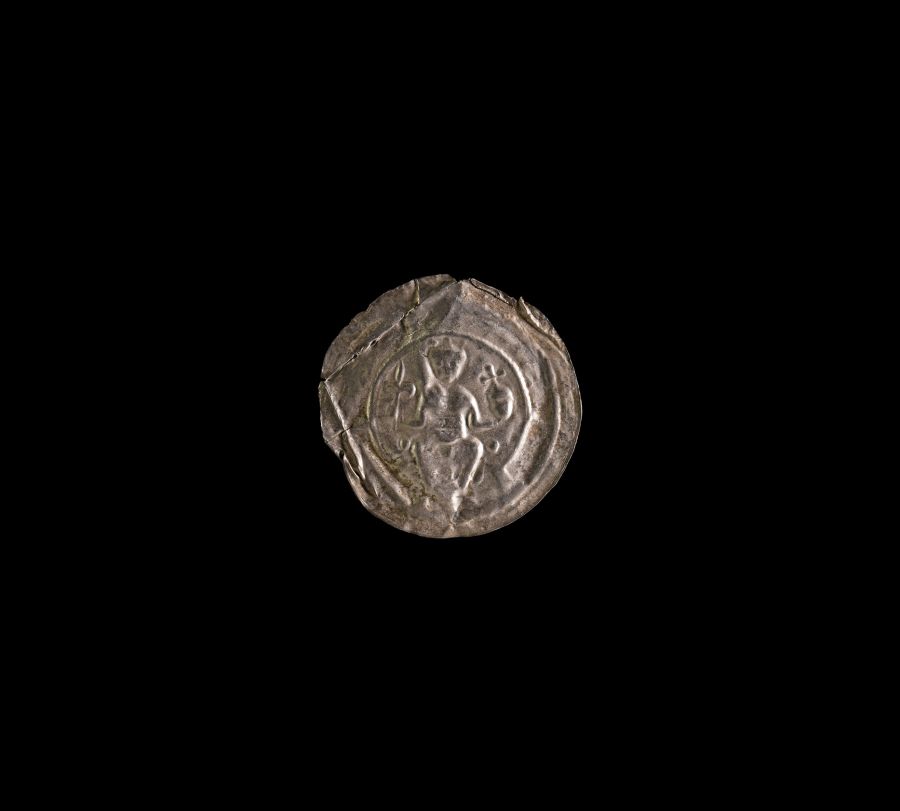
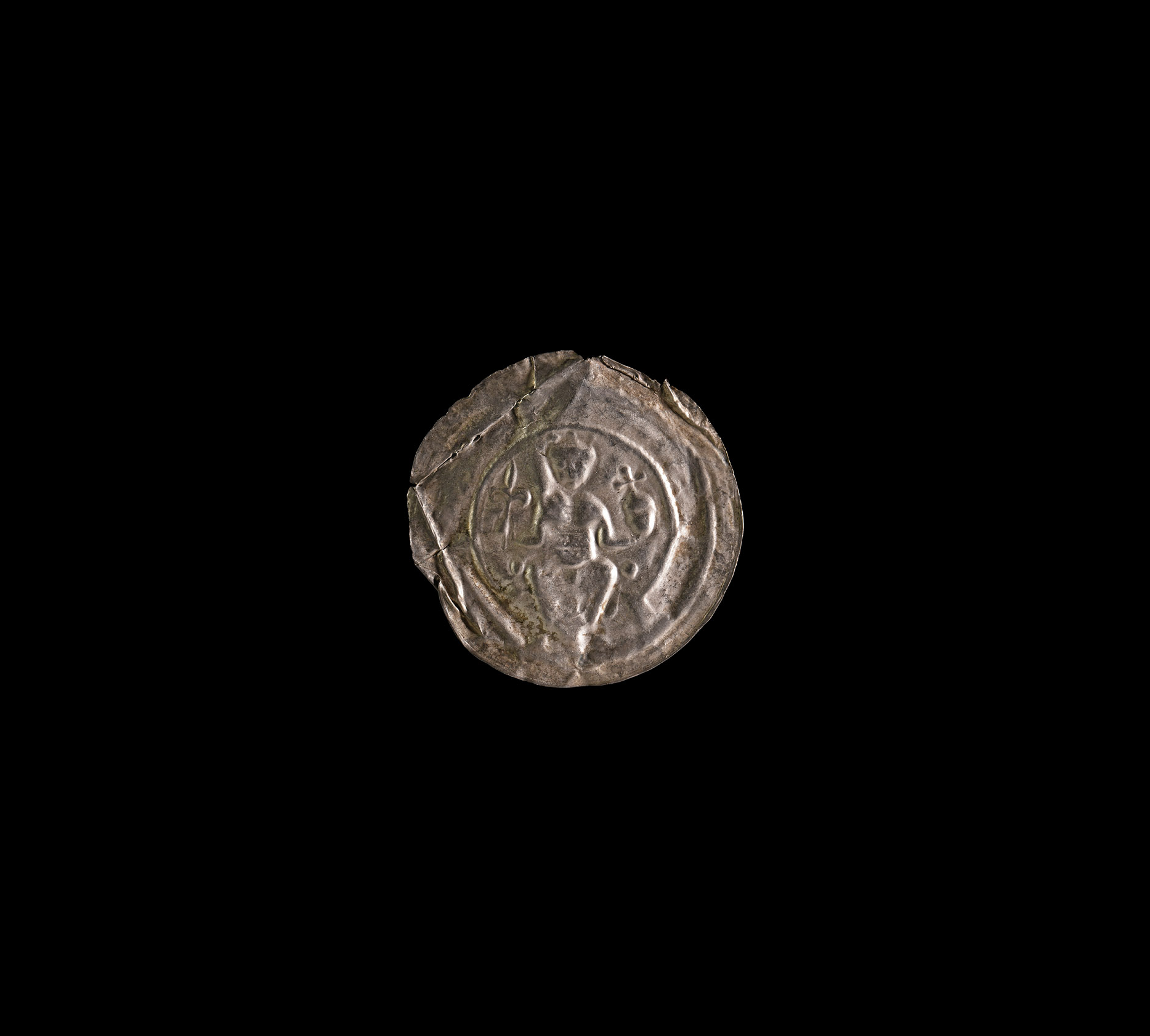
Medieval Silver Bracteate with Seated Figure
GERMANY, 11TH CENTURY A.D.
1 1/4 in. (0.95 grams, 31.5 mm).
Repoussé work with an enthroned figure holding cross-on-globe and a sceptre.
ProvenanceAcquired on the European art market between 1975-2000.
Ex property of a Dutch collector.
TimeLine Auctions follows a vetting process to ensure the authenticity and legality of all items, reinforcing our commitment to integrity and responsible trading. Each antiquity, antique, and coin lot undergoes thorough examination by a vetting committee of at least ten external specialists, professional trade association members, scientists, and archaeologists: Our Vetting Process
AUCTIONS:
TimeLine is a leading auction house specialising in antiquities, ancient art, collectables, natural history, coins, medals, and books. Our auctions offer museums, collectors, historians, and enthusiasts the opportunity to acquire unique and historically significant pieces.
LOT 1828
Medieval Silver Bracteate with Seated Figure
Estimate £250 - 350€290 - 410 (for guidance only)$340 - 470 (for guidance only)
-

Medieval Ceramic Group
15th century A.D. and laterSold for (Inc. bp): £13
Comprising glazed and unglazed handled pots, jars and skillet, one with floral motifs; together with a wooden bowl. 3.35 kg total, 11-35 cm
Acquired 1990s-early 2000s. East Anglian private collection. -
Medieval Equestrian Knight Badge Group
13th-15th century A.D.Estimate: £100 - 140 (+bp*)
Opening Bid: £28
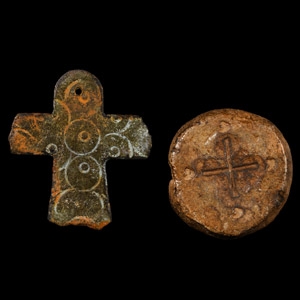
Comprising a circular stone with an incised cross to one side and a series of 13 heraldic hearts to the other; a bronze cross pendant with annulet-in-circle motifs to one side. 47 grams total, 30-36 mm
From an old Worcestershire, UK collection. The Kusmirek Collection, UK.
The copper-alloy pendant appears to be cross-shaped with the top arm forming the suspension loop. It is therefore possible to consider the pendant to be T-shaped, in the form of the Greek letter Tau. These Tau crosses often acted as miniature reliquaries which are thought to have contained a herbal compound that was used to treat the symptoms of St Anthony's fire. -

Medieval Iron Knife with Bronze Pommel
Late 14th century A.D.Sold for (Inc. bp): £234
Comprising a single cutting edge and scale tang; bifacial pommel with incised profile figure to one face and an enigmatic design to the reverse. 34 grams, 19.2 cm
Acquired 1960s-1990s. Late Alison Barker collection, a retired London barrister.
In the London excavations the largest group of knives belongs to the late 14th century A.D., and a variety of forms are represented including those with stepped backs. Most of the handles have decorative fittings, while the whittle tang handles by contrast are usually plain.
