
Loading, please wait...
LOT 0269
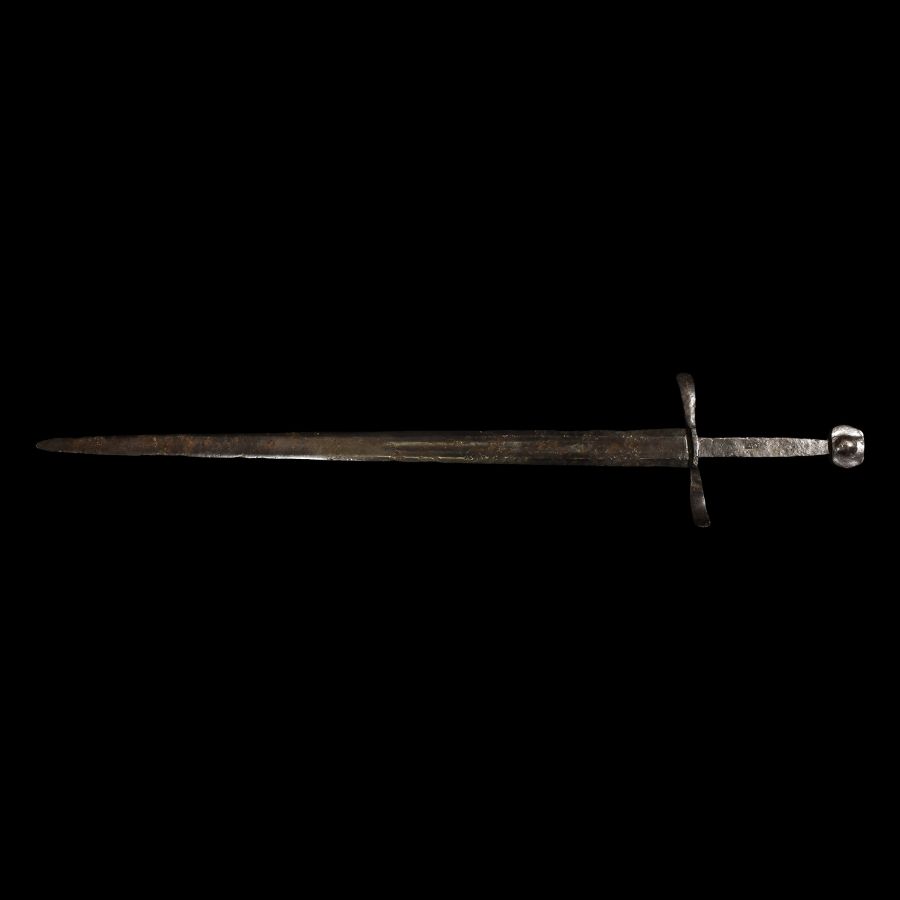
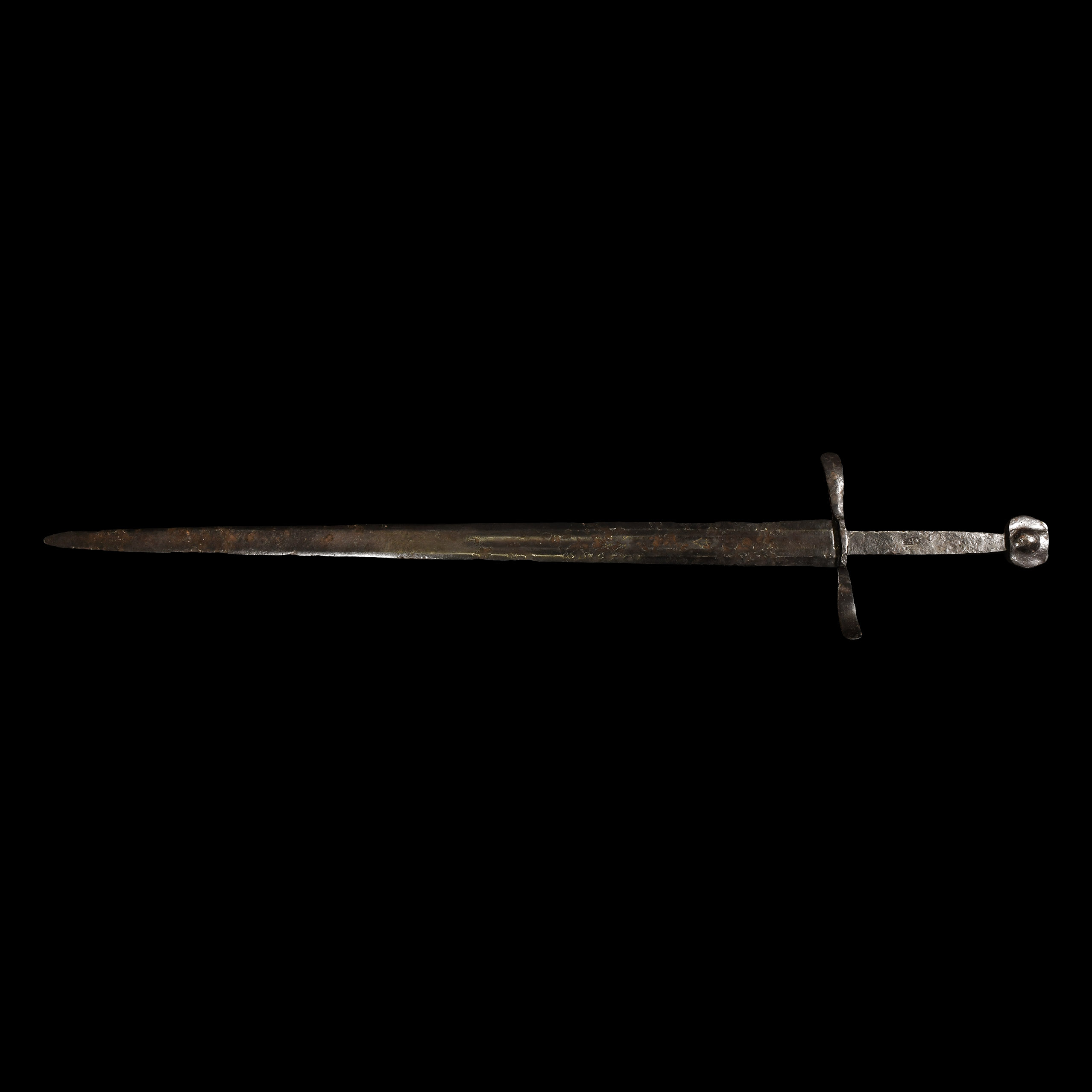
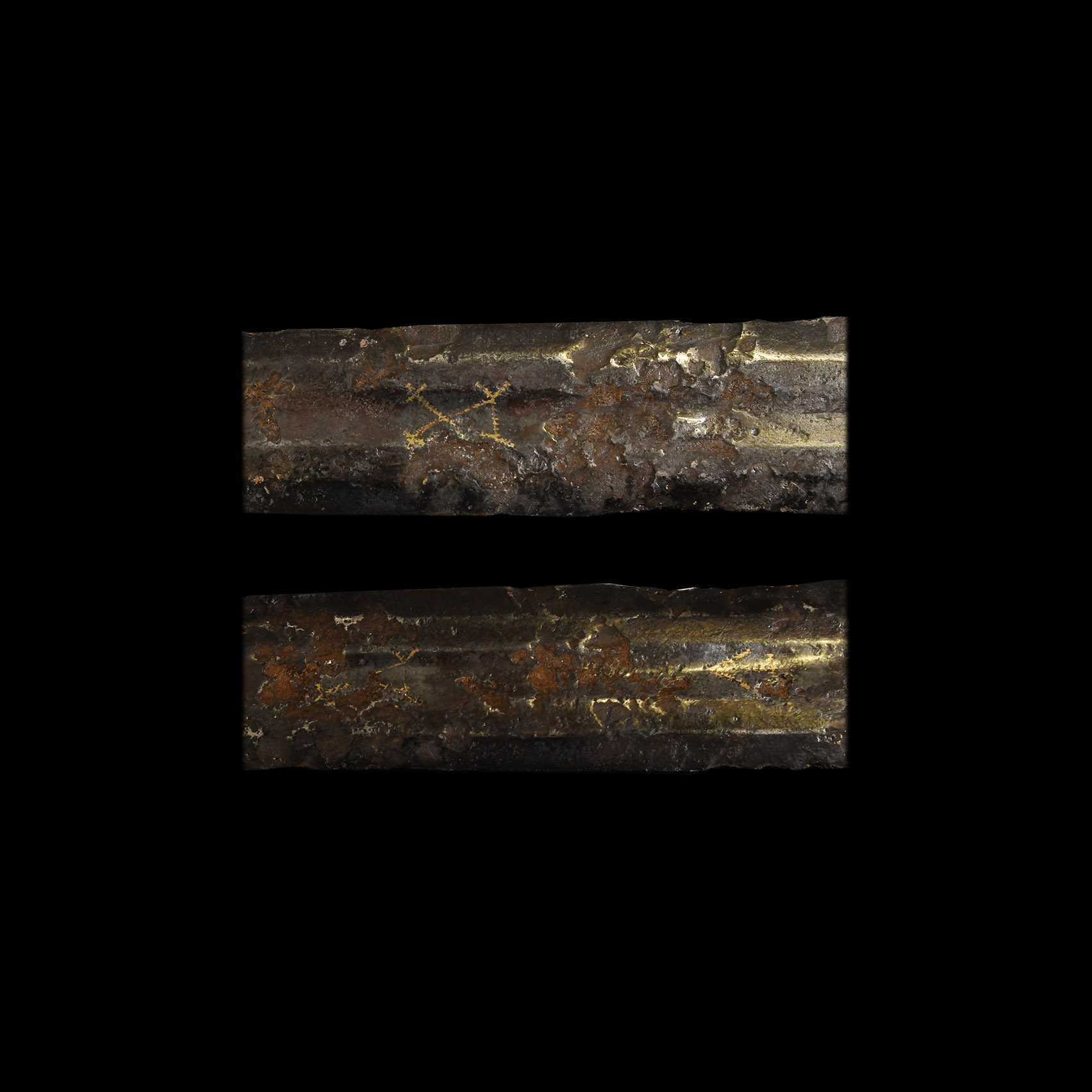
Medieval Schiavonesca Type Iron Sword with Inlay
14TH-15TH CENTURY A.D.
46 1/2 in. (1.37 kg, 1.18 m).
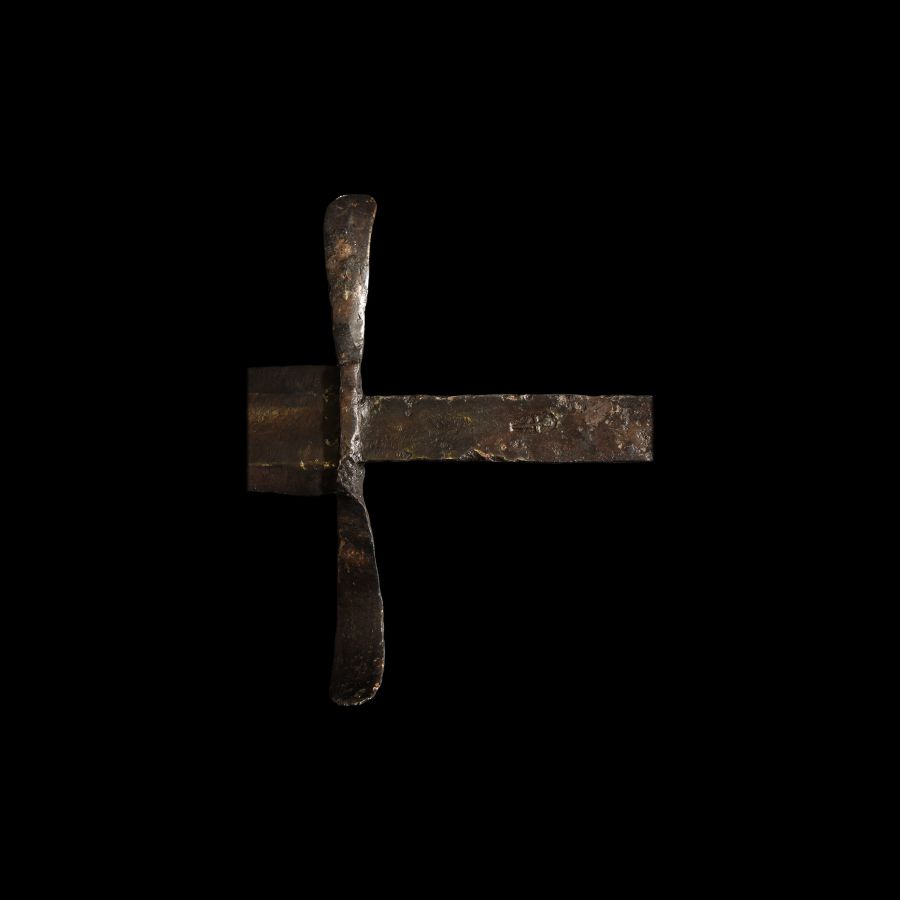
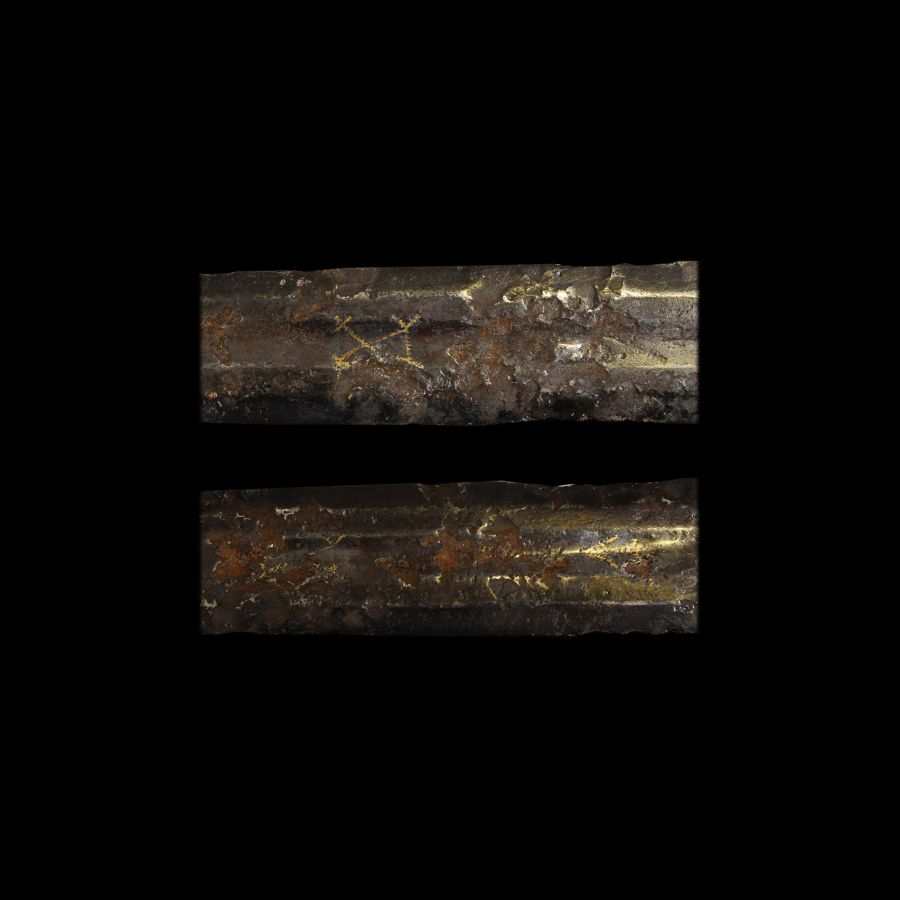
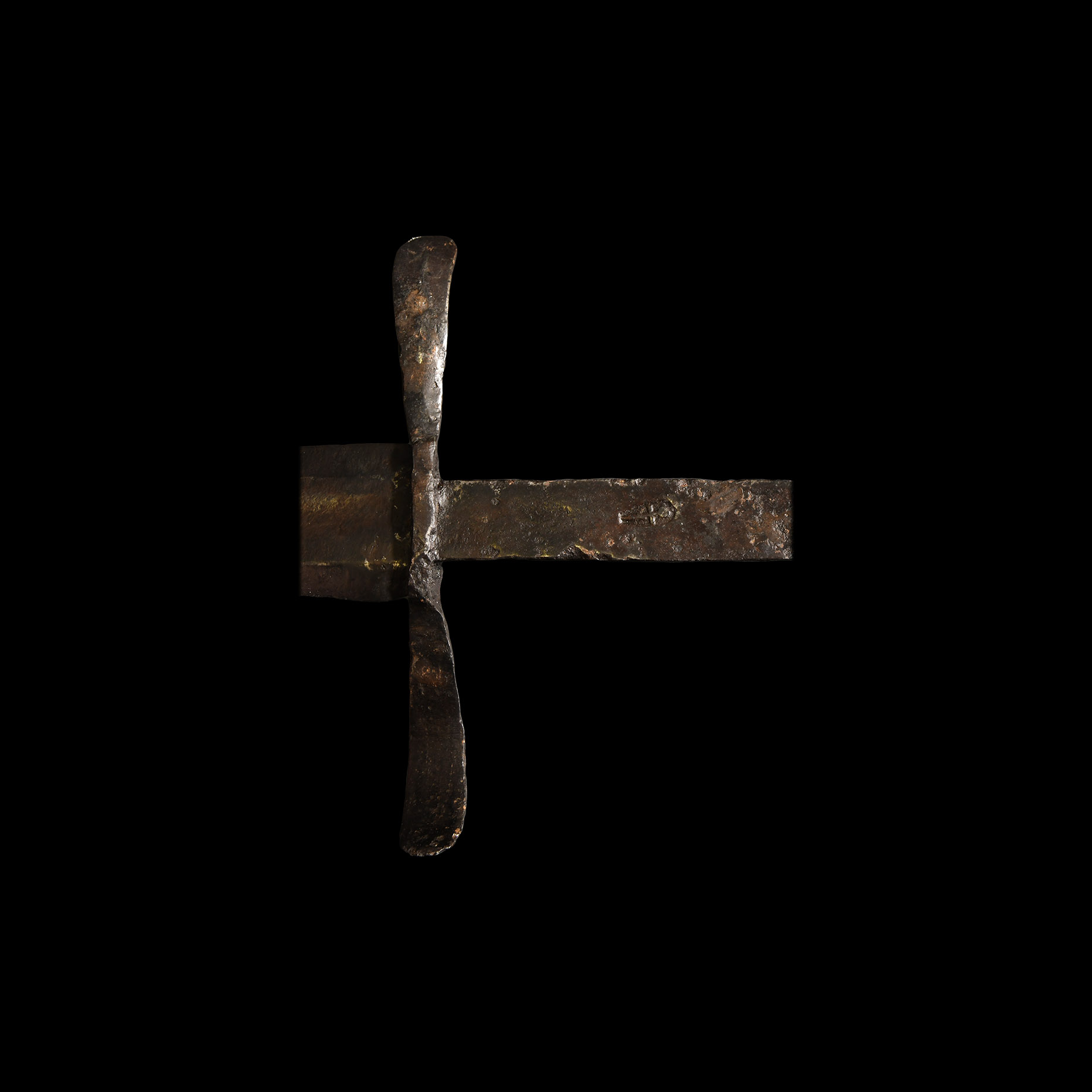
Comprising a broad, double-edged blade with rounded tip, shallow central fuller to the upper third of both sides; flat guard with stepped central panel, D-section arms formed in a horizontal S-curve, 'cat's head' truncated type pommel with an integral central boss to both faces; the tang with a sword-shaped stamp, the blade with an inlaid three-armed workshop mark and another stamp, including a V surmounted by a cross.
ProvenanceFrom an English collection, acquired 1990s.
The Kusmirek Collection, UK.
This lot has been checked against the Interpol Database of stolen works of art and is accompanied by search certificate number no.11771-203963.
See Aleksić, M., Mediaeval Swords from Southeastern Europe, material from 12th to 15th century AD, Belgrad, 2007, especially cat. nos.273, pl.17,2; similar swords at the armoury of the Ducal Palace in Venice, see Franzoi, U., L’Armeria del Palazzo Ducale a Venezia, Treviso, 1990, fig.41f.
FootnotesThe Schiavonesca sword was used by Dalmatian mercenaries serving in the Venetian state armies, and were produced by the workshops of the Serenissima to which the marks probably belong. Many of these swords were produced in Dubrovnik, a Croatian city under the Venetian rule. Dr Aleksić mentions the swordsmith Radonja Vukotić, who made an agreement with blacksmith Andrija Miletin at the beginning of September 1436, to produce swords together in the following year.
CONDITIONTimeLine Auctions follows a vetting process to ensure the authenticity and legality of all items, reinforcing our commitment to integrity and responsible trading. Each antiquity, antique, and coin lot undergoes thorough examination by a vetting committee of at least ten external specialists, professional trade association members, scientists, and archaeologists: Our Vetting Process
AUCTIONS:
TimeLine is a leading auction house specialising in antiquities, ancient art, collectables, natural history, coins, medals, and books. Our auctions offer museums, collectors, historians, and enthusiasts the opportunity to acquire unique and historically significant pieces.
-
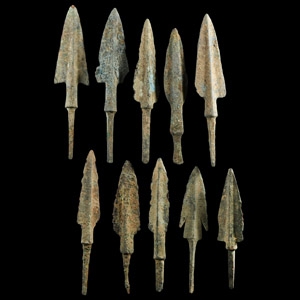
Luristan Bronze Arrowhead
2nd-1st millennium B.C.Estimate: £150 - 200 (+bp*)
Opening Bid: £80
The group comprising various types of tanged arrowheads, including barbed and leaf-shaped examples. 175 grams total, 8.1-10.5 cm
Acquired 1990s. From the collection of a late Japanese weaponry collector. -
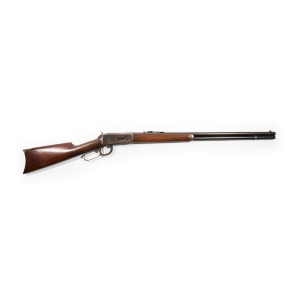
Winchester Repeating Rifle
19th century A.D.Sold for (Inc. bp): £2,600
Lever action 32/40 calibre Model 1894 with 66cm (26") round rifled barrel with buckhorn sights and full length tubular magazine; two piece wood stock with steel butt plate and fore-end; serial No. 446786 to underside of action, model, calibre and other details stamped; action working crisply. 3.55 kg, 113 cm
40 1/2 in.
Acquired from M J Noble Ltd, UK, 2015. The Kusmirek Collection, UK. Accompanied by copies of invoice and listing and original NI Police Service Certificate.
Sold as an exempt item under Section 58 (2) of the Firearms Act, 1968, to be held as a curiosity or ornament. No license required but buyer must be over 18 years of age. Overseas bidders should note that, due to UK regulations governing export of all firearms, overseas buyers will need to make arrangements for shipping this lot out of the UK directly, by air freight, with a specialist company or agent. -
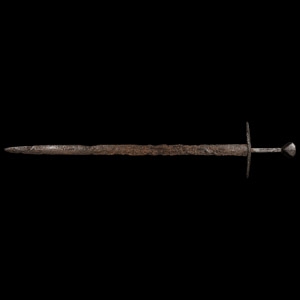
Medieval Iron Hand-And-A-Half Sword
Circa 14th-15th century A.D.Sold for (Inc. bp): £1,820
Of Oakeshott type XVIIIa or b with a strongly tapering blade of flattened diamond-section without fullers; the lower guard gently curving towards the blade, long grip; pommel of style T1 in the form of a truncated wedge. 1.35 kg, 1.07 m
Acquired 1971-1972. From the collection of the vendor's father. Property of a London, UK, collector. Accompanied by an academic report by Dr Raffaele D'Amato. This lot has been checked against the Interpol Database of stolen works of art and is accompanied by searcher certificate number no.11759-202773.
