
Loading, please wait...
LOT 1820
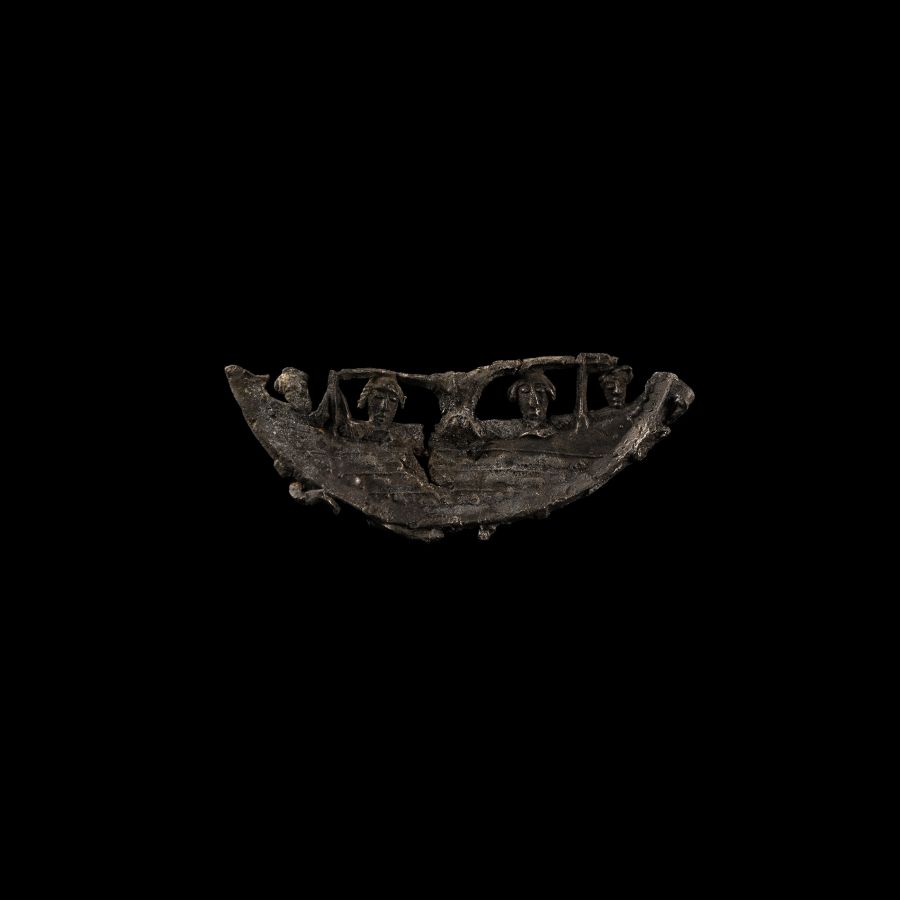
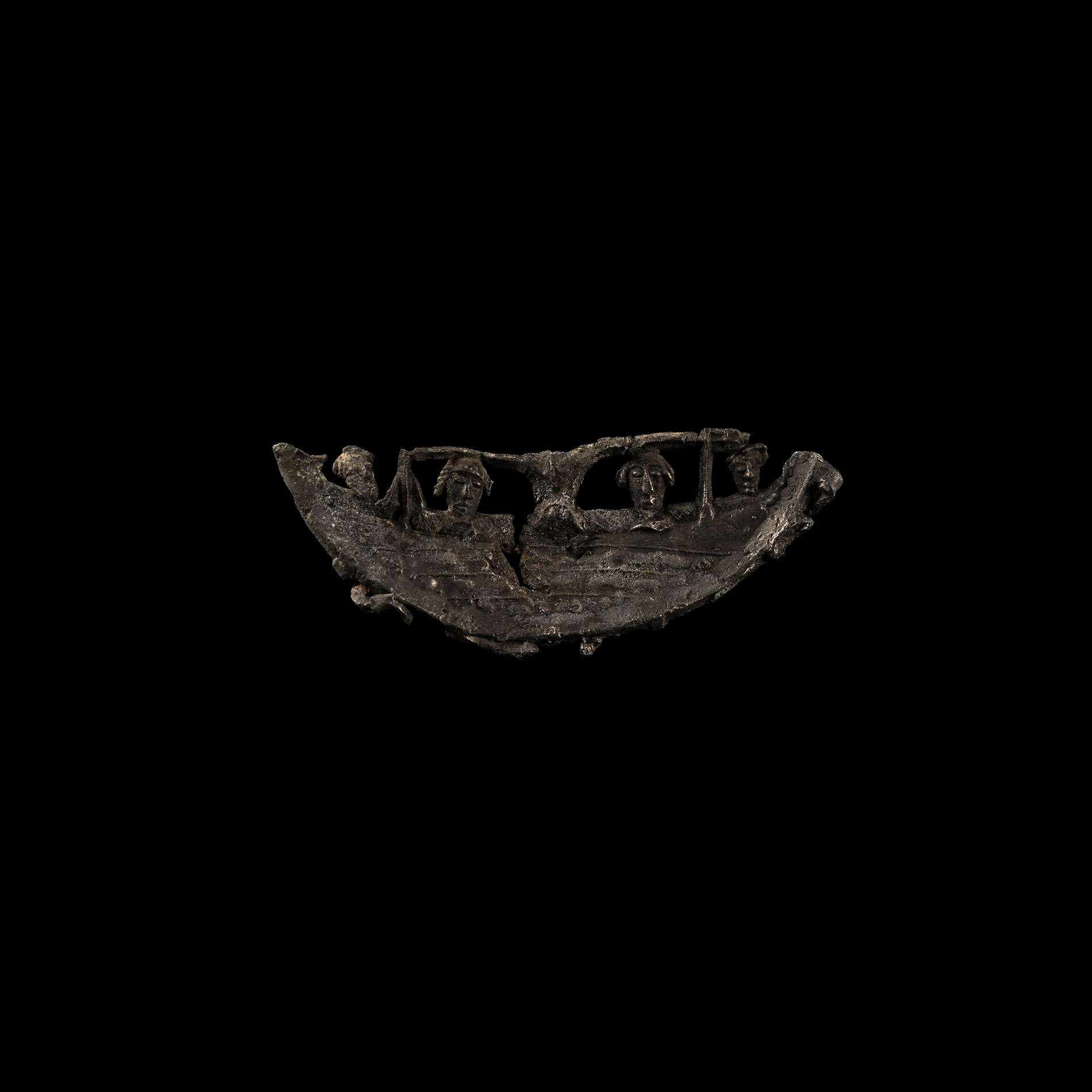
Medieval Published 'Thames' Pewter Pilgrim's Badge
15TH CENTURY A.D.
1 5/8 in. (2.2 grams, 42 mm).
Comprising the lower, semi-circular portion of an openwork badge with image of the three kings or magi from the Nativity story; produced at Cologne, Germany; held in a hinged jewellery box. [No Reserve]
ProvenanceFound Thames foreshore spoil, 1980s.
PublishedSpencer, B., Pilgrim Souvenirs and Secular Badges, Woodbridge, 2010, p.262, no.257E.
CONDITIONTimeLine Auctions follows a vetting process to ensure the authenticity and legality of all items, reinforcing our commitment to integrity and responsible trading. Each antiquity, antique, and coin lot undergoes thorough examination by a vetting committee of at least ten external specialists, professional trade association members, scientists, and archaeologists: Our Vetting Process
AUCTIONS:
TimeLine is a leading auction house specialising in antiquities, ancient art, collectables, natural history, coins, medals, and books. Our auctions offer museums, collectors, historians, and enthusiasts the opportunity to acquire unique and historically significant pieces.
-
.jpg)
Anglo-Norman Bronze Scabbard Terminal with Advancing Beast
11th-12th century A.D.Sold for (Inc. bp): £286
A Romanesque chape for a dagger sheath comprising a C-section openwork bifacial advancing beast in crouching pose bearing a lobed figure on its back; extending to the rear on each side, a slender balustered arm with leaf-shaped finial; mounted on a custom-made display stand. 31.8 grams total, 59 mm wide including stand
Fine condition.
Found Essex, 1997. Property of a Sussex gentleman. -
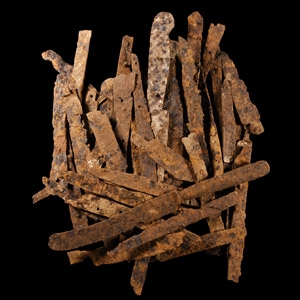
Medieval Iron Knife Blade Group
14th-17th century A.D.Sold for (Inc. bp): £1
Comprising blades and handles of various styles and dates. 1.1 kg total, 9.5-23 cm
Acquired 1990s-early 2000s. East Anglian private collection. -
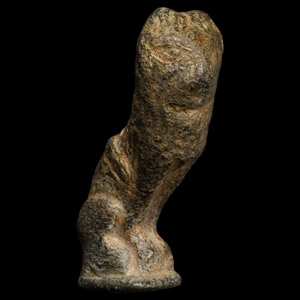
Medieval Bronze Seated Lion
15th century A.D.Estimate: £200 - 300 (+bp*)
Opening Bid: £90
Posed sejant erect on a sub-rectangular base, stylised detailing to the face and mane. 40.7 grams, 43 mm
Found near Paull, East Riding of Yorkshire, UK in 2013. Accompanied by a copy of the British Museum's Portable Antiquities Scheme (PAS) report number YORM-3F9514.
