
Loading, please wait...
LOT 1455
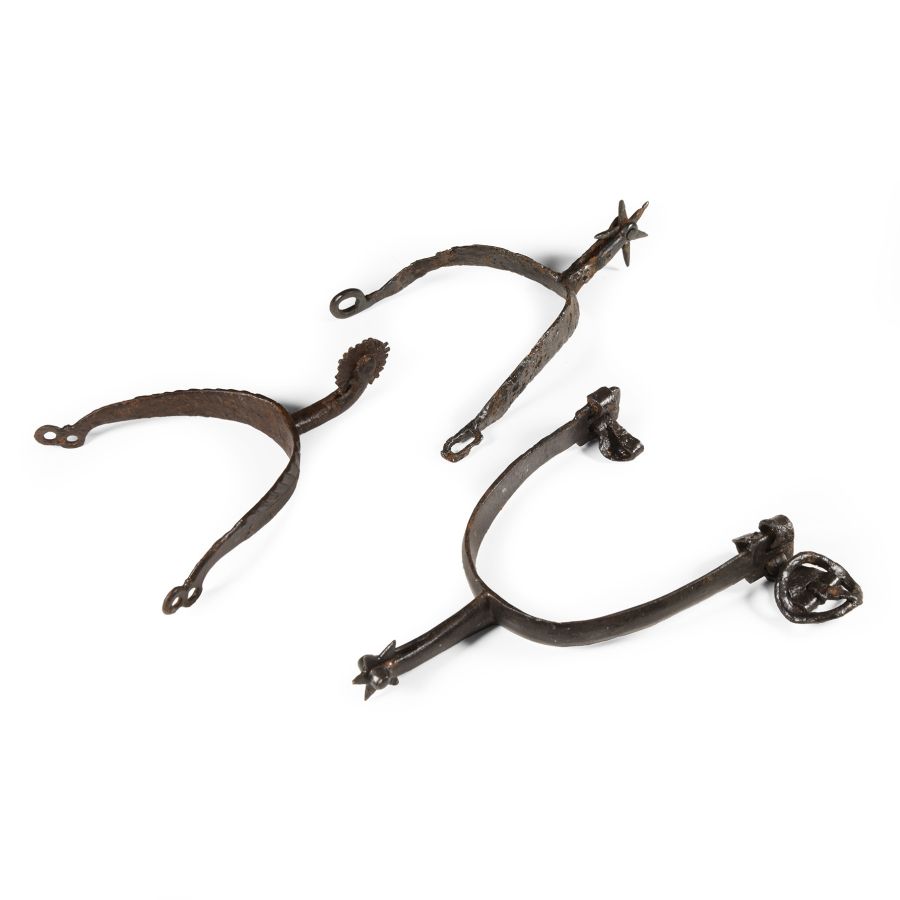
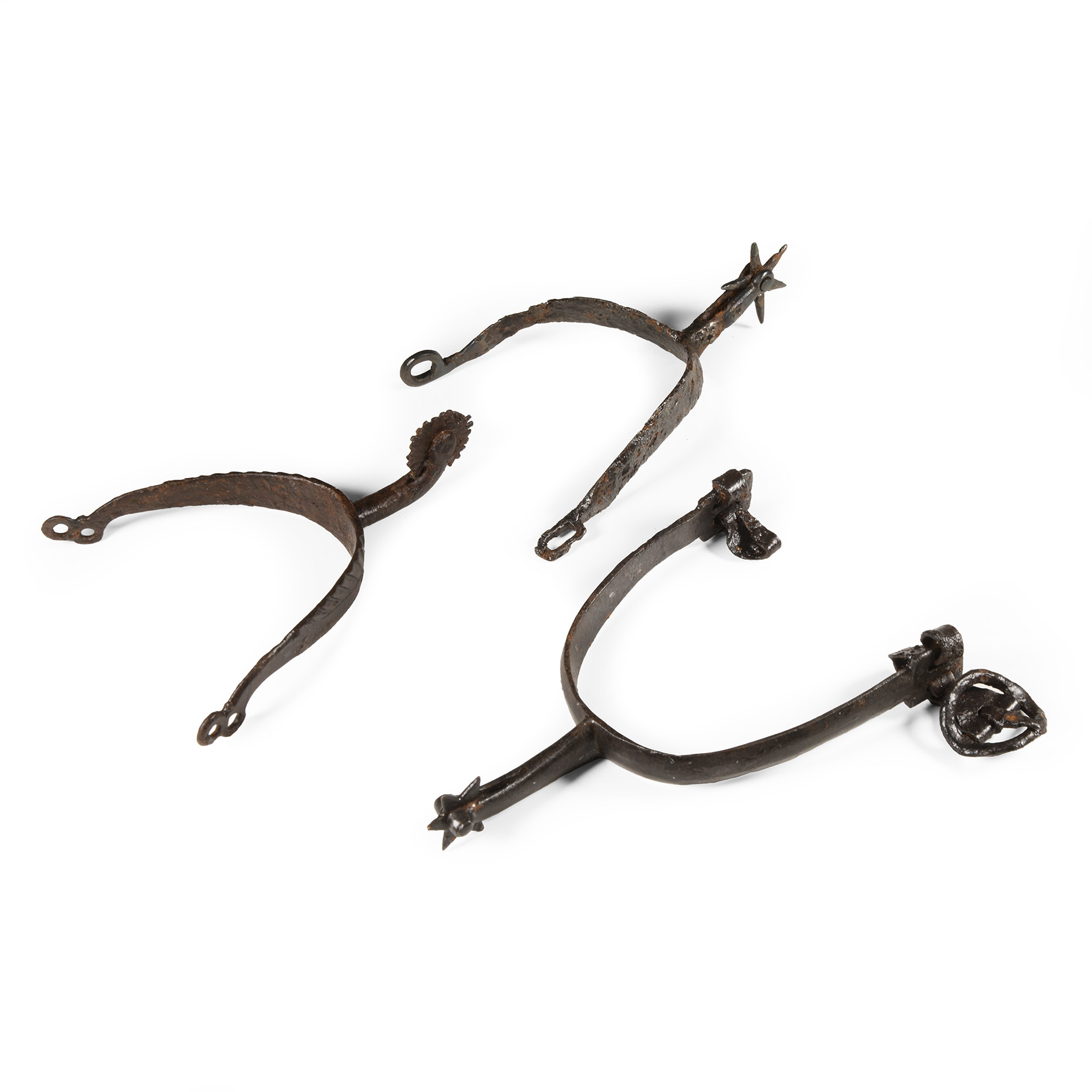
Medieval 'Published' Iron Spur Collection
CIRCA 13TH-17TH CENTURY A.D.
5 1/8 - 6 1/2 in. (280 grams total, 13.2-16.5 cm).
Comprising: a rowel spur of early 13th century date with short neck; a 14th century U-shaped rowel spur with straight neck, five star rowel and squared terminals with fittings and a buckle; a 17th century drop neck spur with multi-pointed rowel, the arched body decorated with transversal lines and bilobate terminals. [3, No Reserve]
ProvenanceFrom the collection of the famous author, writer and speaker, Gordon Bailey, Essex, UK; formed since 1968.
PublishedBailey, G., Detector finds 5, Witham, 2002, fig.4, p.32, for the 13th century spur.
LiteratureCf. Bailey, G., Detector finds, Witham, 1999, pp.93-95, for similar examples of Medieval spurs.
FootnotesBy the late 13th century A.D., rowel spurs in the West had virtually replaced the old single prick point type spur. The rowel spurs were more effective as a goad and at the same time less damaging to the flank of the horse.
CONDITIONTimeLine Auctions follows a vetting process to ensure the authenticity and legality of all items, reinforcing our commitment to integrity and responsible trading. Each antiquity, antique, and coin lot undergoes thorough examination by a vetting committee of at least ten external specialists, professional trade association members, scientists, and archaeologists: Our Vetting Process
AUCTIONS:
TimeLine is a leading auction house specialising in antiquities, ancient art, collectables, natural history, coins, medals, and books. Our auctions offer museums, collectors, historians, and enthusiasts the opportunity to acquire unique and historically significant pieces.
-
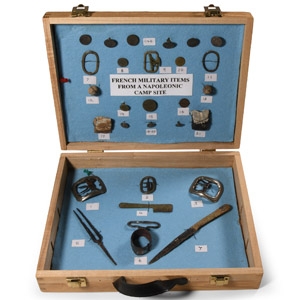
Cased Napoleonic 'Published' French Military Artefact Collection
Early 19th century A.D.Sold for (Inc. bp): £338
Including musketballs, military buckles and frames, musket flints, buttons, a single-edged knife and other items in a hinged wooden case; many of these objects are published in the Detector Finds book series. 1.56 kg total, 32 x 25 x 7.5 cm including case
From the collection of the famous author, writer and speaker, Gordon Bailey, Essex, UK; formed since 1968. -
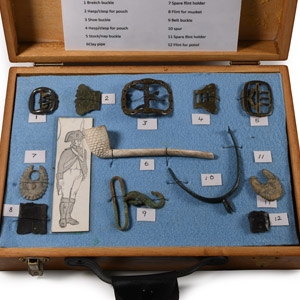
Cased British Military 'Published' Artefact Collection
Late 17th-early 19th century A.D.Sold for (Inc. bp): £124
Comprising: breech and shoe, hat, belt ands stock/nap bronze buckles; clasps for pouches; a clay pipe; spare flint holders; a flint for musket; a flint for pistol; a bronze spur; military buttons for Royal Marine, Artillery, Coldstream and Dragoon Guards from 1795 to 1820; an officer’s whistle; a bayonet holder. 1.36 kg total, case: 30.5 x 22 x 6.5 cm
From the collection of the famous author, writer and speaker, Gordon Bailey, Essex, UK; formed since 1968.
Various military items have been recovered from the military sites of the Napoleonic Wars. Buttons are the most common items, made of copper, with some signs of gilding and silvering. Also small buckles are frequent finds, as well as musket balls and musket parts. These latter are rare because the individual soldiers were responsible for the care and maintenance of their fire-arms. -
.jpg)
Luristan Spear Tip Group
13th-6th century B.C.Sold for (Inc. bp): £234
Comprising four tips with triangular blades; each with a raised midrib and a long tang. 143 grams total, 13.5-18.2 cm
Acquired 1980-2015. Ex Abelita family collection.
Although some of them are different in shape, these arrowheads are apparently related types of a polythetic group. Two basic deltoid forms are represented: one has a sharp, flat blade, the ends of which extend to form wings or barbs, and a prominent midrib extending into a long tang that often has a stop; the blade shape varies from deltoid to more manifestly triangular. The other form has no barbs, but it has a prominent midrib extending to the tang, and a narrow leaf-shaped blade.
